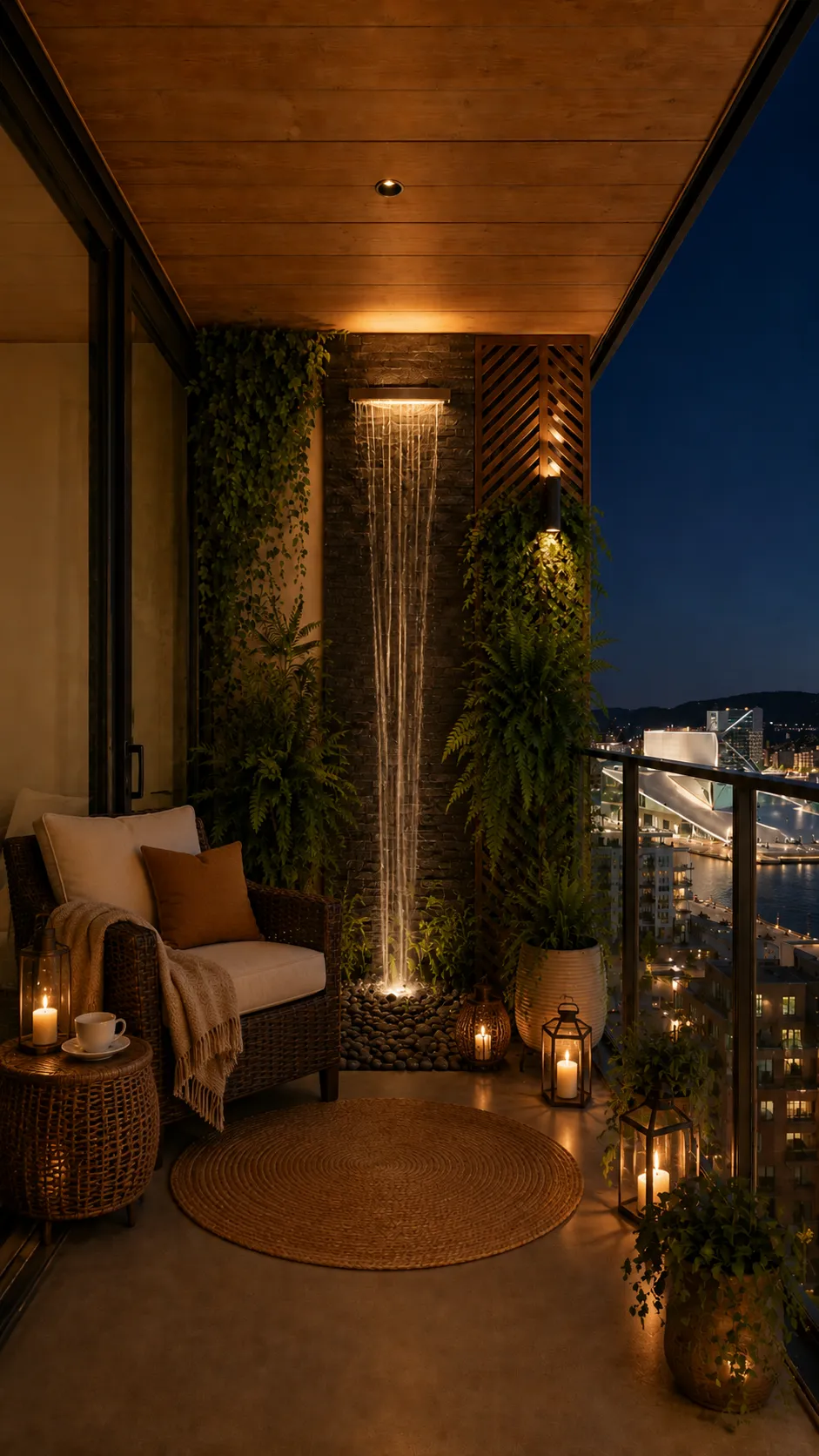
There are two water installations on this balcony and they mustn't be confused: the waterfall, which recirculates the same water forever, and the irrigation for the living wall, which has to be clean water running to waste. Sharing them is the mistake that kills a vertical garden within a season. With that settled, the rest is making the most of things: the fall takes the corner, which is the metre nobody uses, the greenery goes vertical, and the floor is left whole for a chair and a rug.
Items shown are similar to those in the video, not necessarily identical.
Rigid modules with planting cells, hung on a rail and added together until the wall is covered. Against fabric solutions they take the weight of saturated substrate better and let you remove a whole module to replace plants without dismantling the rest. Check whether the system includes a collection tray at the base: if not, that has to be solved separately before anything goes up.
See similar on Amazon(paid link)A felt panel with sewn pockets, the cheap alternative to a modular system. It's light and hangs from a few hooks, but felt breathes across its whole surface, so it dries out much faster and needs watering more often. Put a waterproof membrane between the felt and the wall, because otherwise the damp passes into the structure and a stain appears on the other side.
See similar on Amazon(paid link)A self-contained unit that draws from a container and distributes by drip, made for balconies with no water supply. It's what makes a living wall viable where there's no tap, and it lets you programme several short waterings a day, which is what a vertical system needs. Use a lidded container with a filter on the intake: without a lid it breeds mosquitoes, and without a filter one blocked emitter leaves half the wall dry.
See similar on Amazon(paid link)A panel of slats crossed in a herringbone pattern, closing one side without taking light or air. On a balcony it does three jobs at once: it partly screens the neighbour, supports a climber and takes a wall light, which a façade wall doesn't always allow. Outdoors choose pressure-treated or thermally modified timber, and fix it clear of the wall so it ventilates behind.
See similar on Amazon(paid link)A lightened mix of coir, perlite and bark, formulated to weigh little and drain fast. On a vertical wall the weight isn't a detail but the constraint: ordinary garden soil, saturated, multiplies the load on the fixings and on the balcony slab. In exchange it holds less water, so compensate with shorter, more frequent waterings rather than one long one.
See similar on Amazon(paid link)Some links on this page are affiliate links. If you make a purchase through them, we may earn a commission at no extra cost to you.
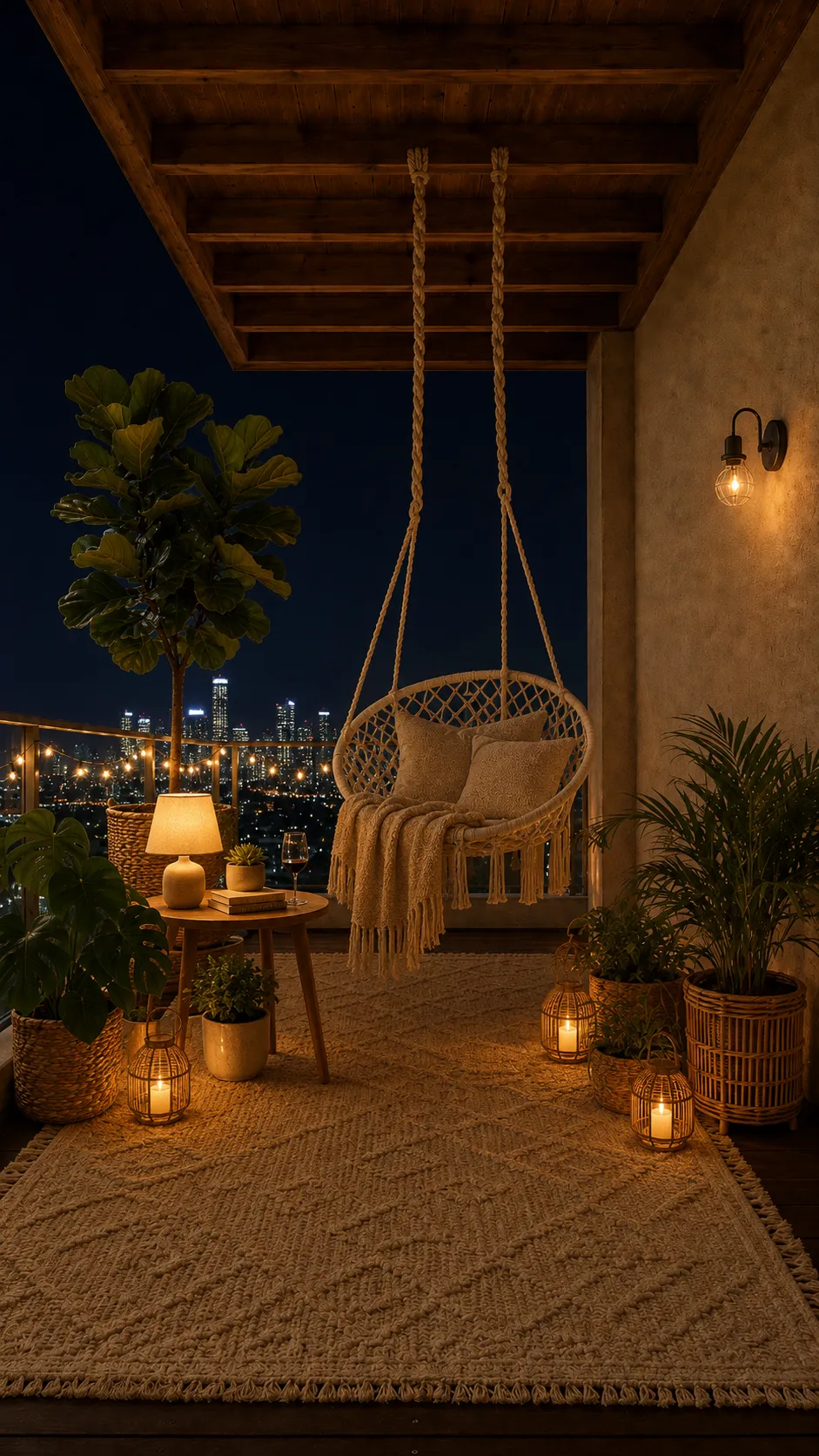 Terrace
Boho Chic
What makes this balcony possible isn't obvious at first: it's the timber beam roof. Because of it…
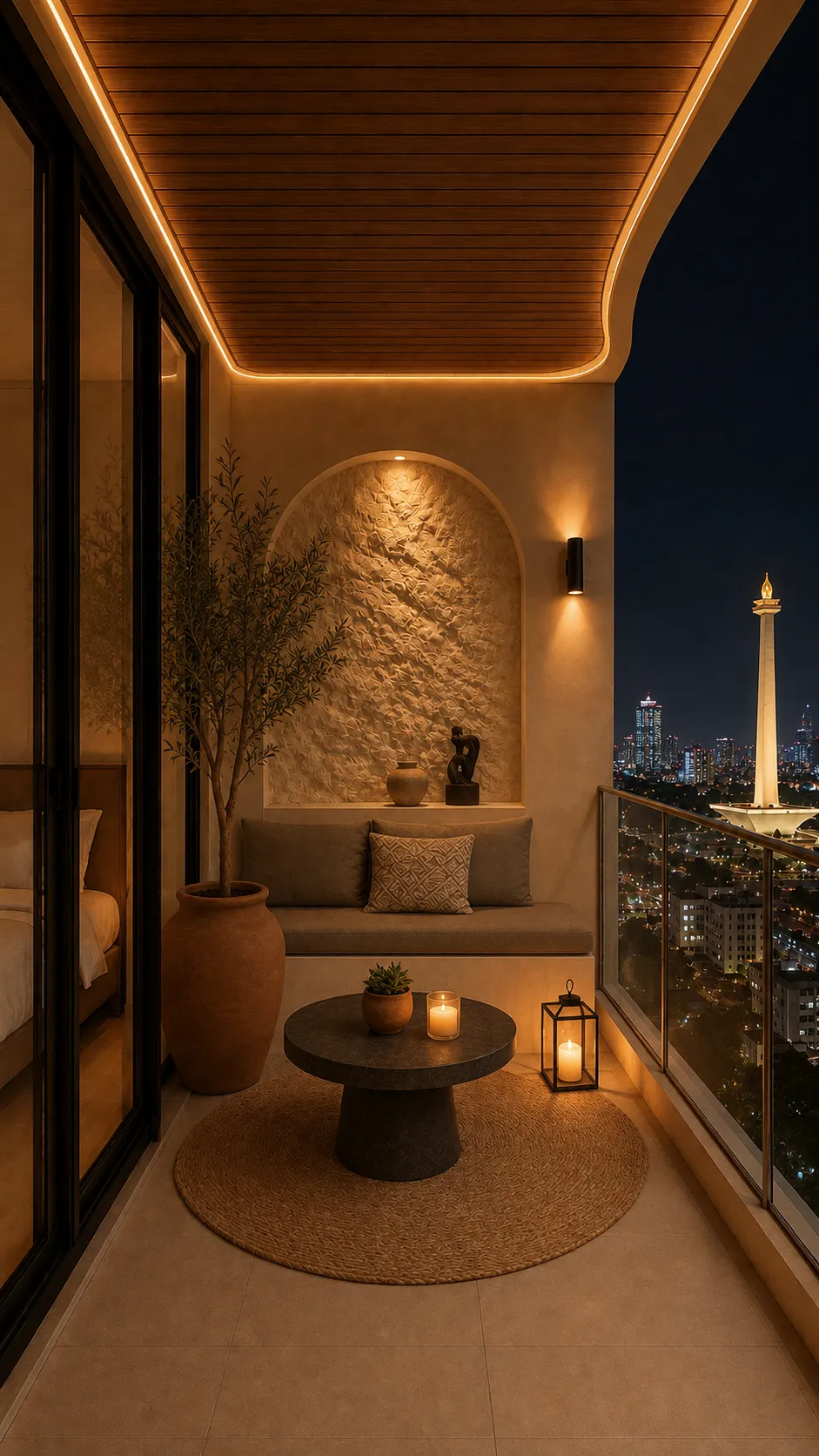 Terrace
Mediterráneo Contemporáneo
This balcony opens straight off the bedroom, and that explains everything on it: a masonry bench…
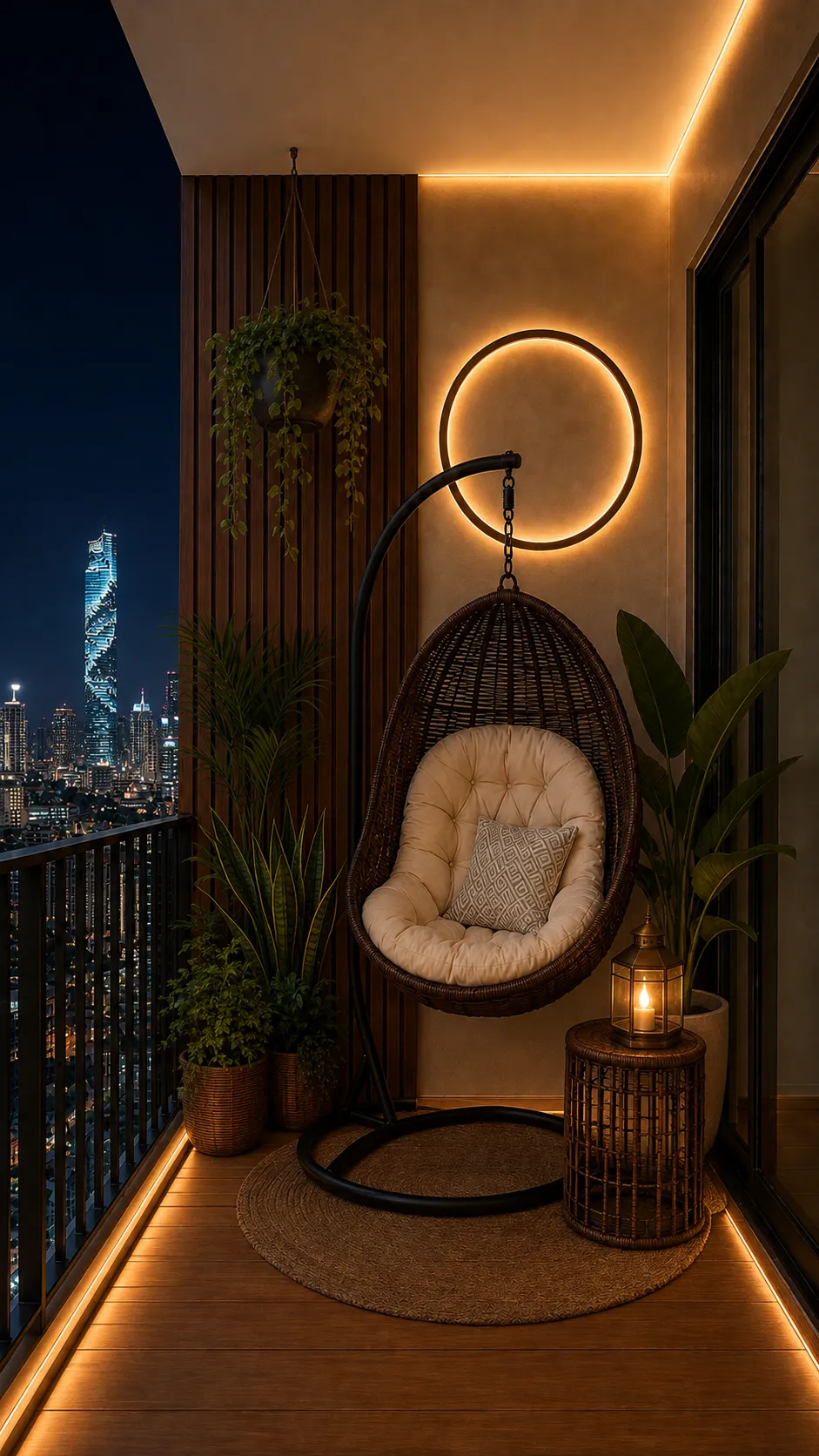 Terrace
Boho Urbano
The chair on this balcony doesn't hang from the ceiling: it rests on its own steel stand, and that…
 Tu Casa