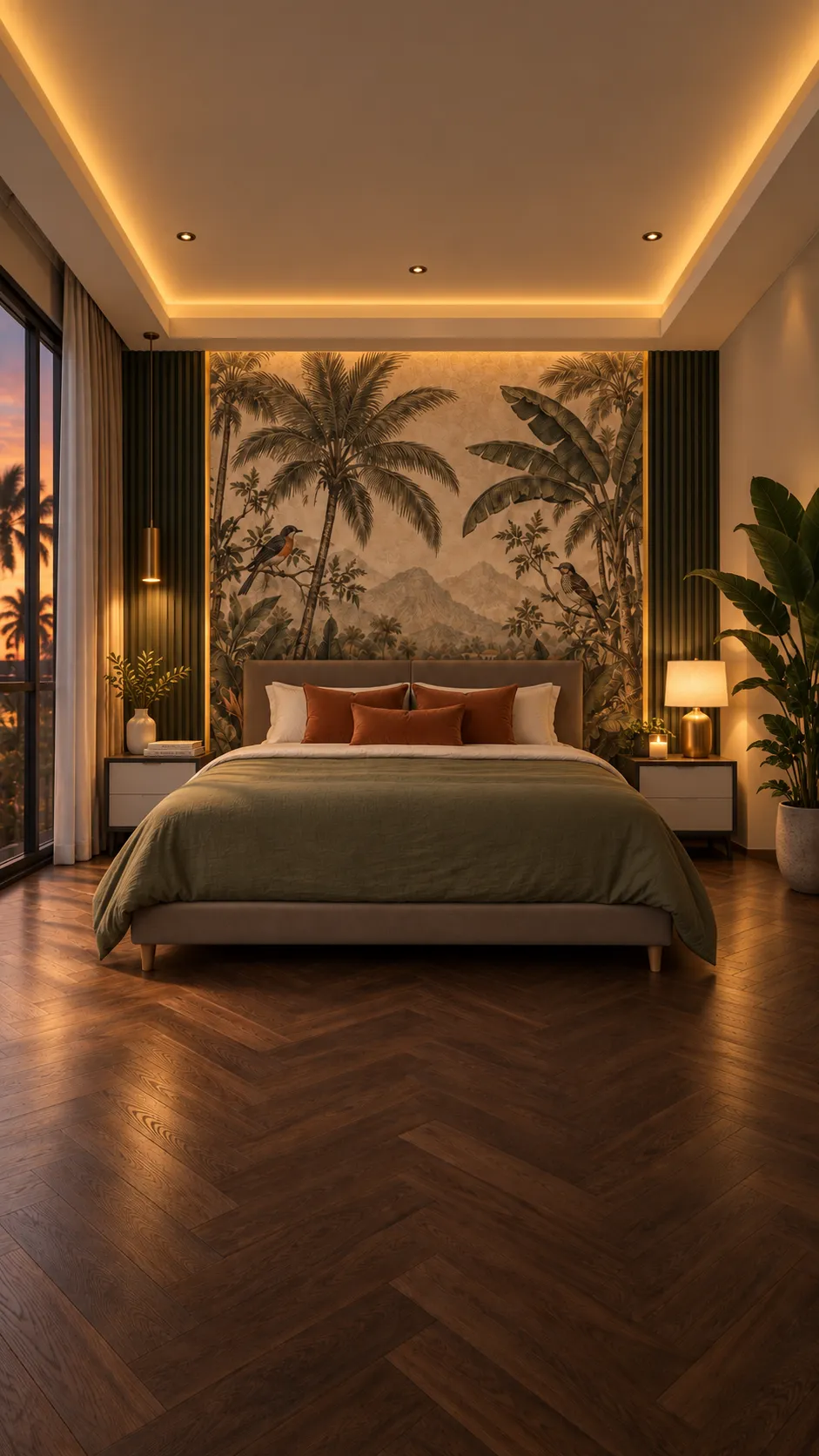
The thing that took most work in this room is the floor and it barely gets looked at: herringbone boarding, laid piece by piece and needing fifteen to twenty per cent more material than a straight-laid board. Above it, two matching nightstands with two lamps that don't match, a pendant on one side and a table lamp on the other. It isn't an oversight: when the two sides of a bed have neither the same space nor the same wiring, insisting on the same lamp means giving something up.
Items shown are similar to those in the video, not necessarily identical.
A short plank with a click tongue-and-groove reproducing the herringbone pattern without gluing or a specialist fitter. It's considerably cheaper than solid timber herringbone and much quicker to lay, though the bevelled edge shows close up. When ordering, check both pieces are included, left and right, because the pattern needs them alternated and they're sold paired in the same box.
See similar on Amazon(paid link)A panel finished in colour at the factory, which in a dark tone is practically compulsory: the backing between slats can't be reached properly with a roller and painted at home always comes out lighter than the visible face. In a deep green choose a matt finish, because dark satin returns the reflection of every light source and turns the band into an uneven mirror. Check the edge comes lacquered too rather than raw.
See similar on Amazon(paid link)A set of blocks the same thickness as the spacing you want, placed between slats while they're fixed. It's what makes a made-to-measure panel look factory-built, because measuring each gap with a tape accumulates error and on a three-metre wall the last slat ends up out of true. If you don't buy them, cut several blocks from the same offcut instead, but cut them all at once and from the same piece.
See similar on Amazon(paid link)Washed linen in a muted green, the tone that holds up beside a leaf-heavy mural without competing with it. Linen always creases and that creasing is part of the finish, but in a dark colour it shows the packing folds more for the first few weeks. Wash it alone the first few times, because dark plant-based dyes release some colour in the first washes.
See similar on Amazon(paid link)A skirting of ten centimetres or more, which is what suits a patterned floor because it closes the perimeter where the herringbone is cut against the wall. Lacquered white or in the wall's tone it disappears; in the floor's tone it becomes a dark line dividing the room at floor level. Check the top edge is square or minimally profiled, because heavily worked mouldings gather dust and clash with a contemporary floor.
See similar on Amazon(paid link)Some links on this page are affiliate links. If you make a purchase through them, we may earn a commission at no extra cost to you.
 Bedroom
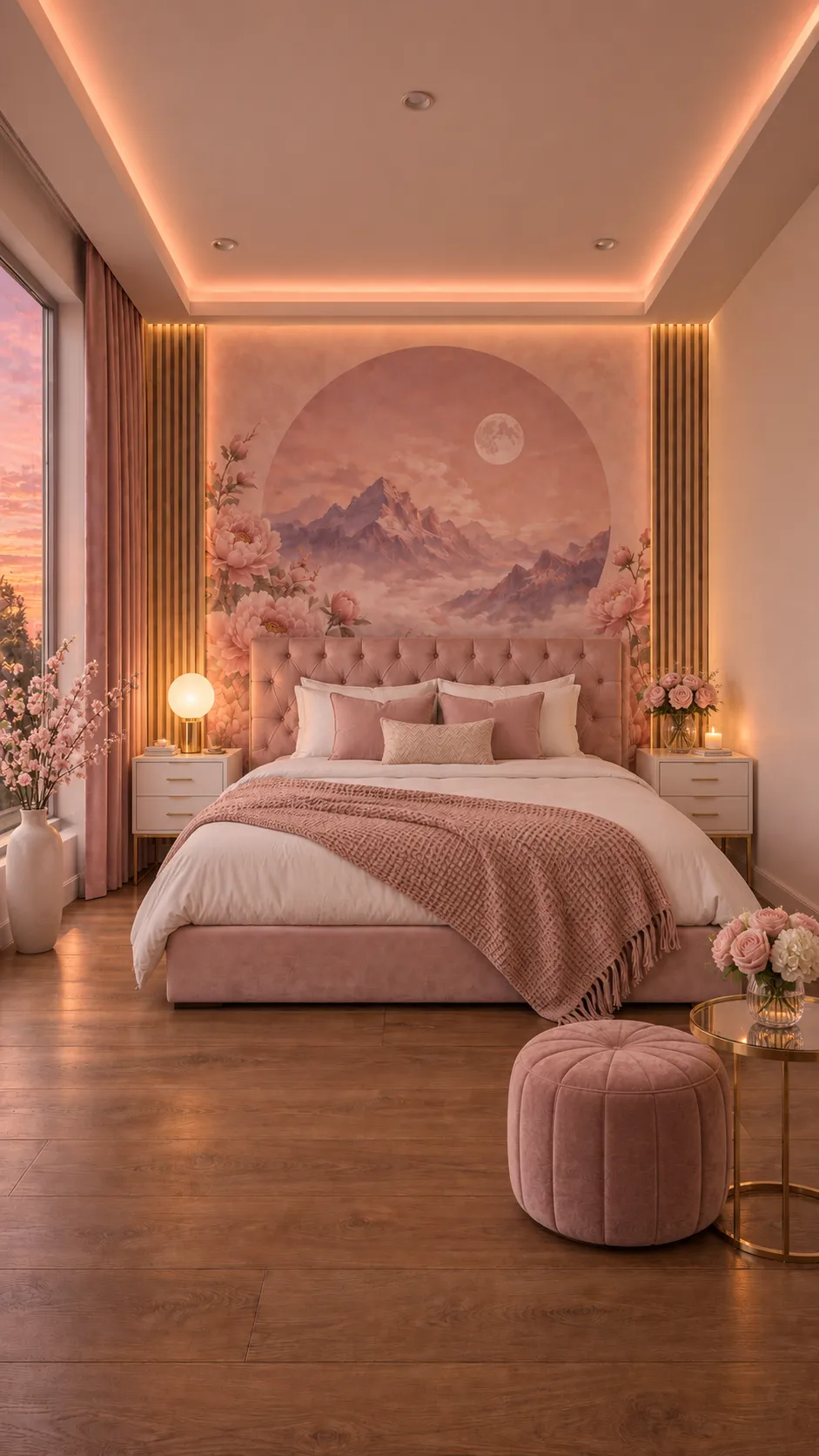
Clásico Rosado
A mural cut as a circle doesn't work like a rectangular one, and the difference isn't shape but…
 Bedroom
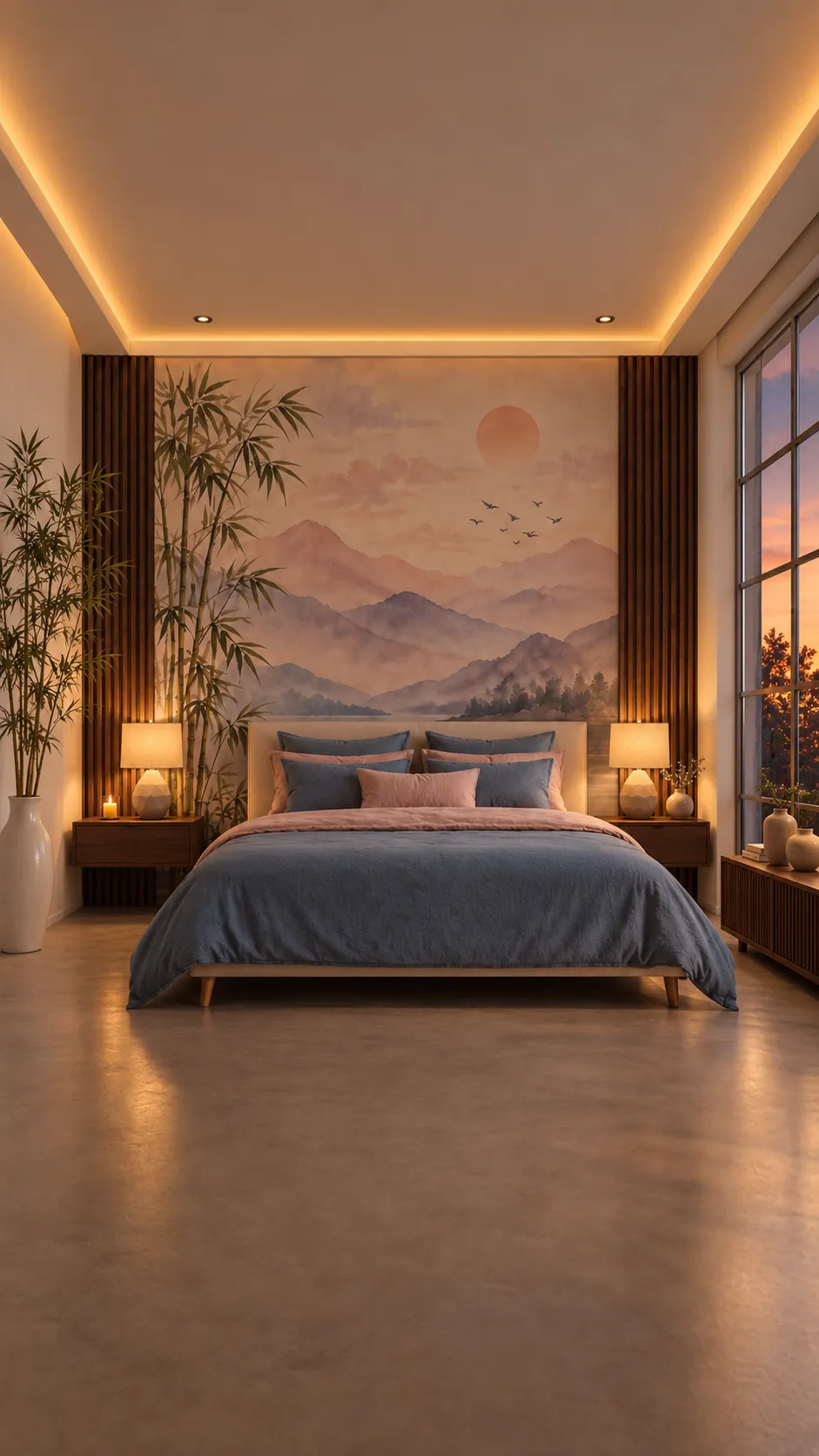
Minimalista Natural
The mural is pink and the bed is blue, and that's the decision holding the room together. The…
 Bedroom
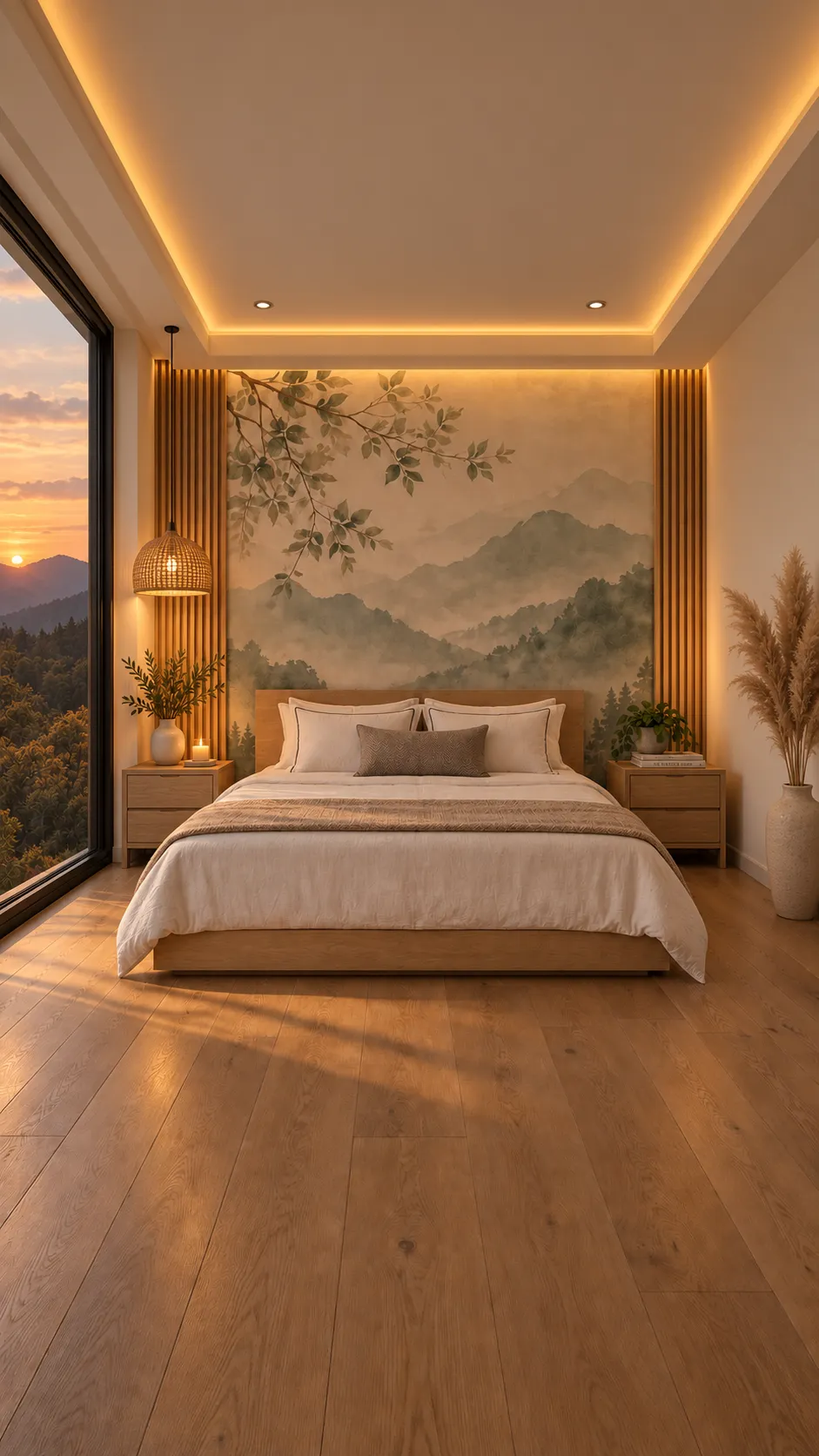
Japandi
The idea behind this room fits in one line: the mural repeats the landscape on the other side of…
 Tu Casa