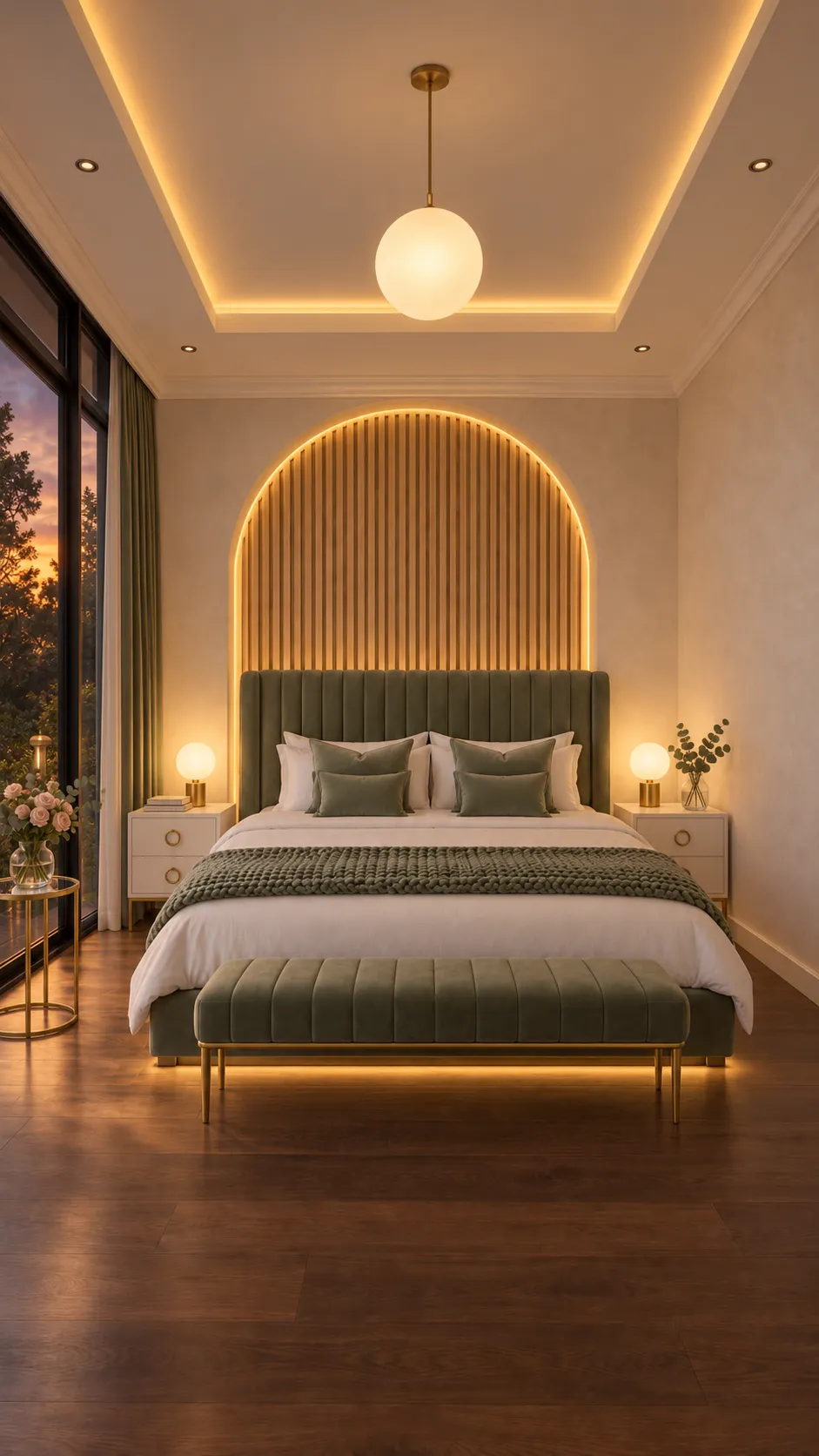
The panel behind the bed isn't a rectangle of slats but an arch, and that changes the work entirely: every slat measures something different from the last and the top edge has to be cut following a curve. It's one of the few ways of using vertical slats without the wall looking like every other room's. In front, the headboard deliberately stands a few centimetres clear of it, which is what lets the outline's light escape.
Items shown are similar to those in the video, not necessarily identical.
Slats sold individually and in generous lengths, which is what an arch needs: every piece is cut to a different size and none repeats. A commercial panel on a backing won't do here, because cutting the curve exposes the board's edge all round the outline. Order ten per cent more pieces than calculated, because on a curved cut mistakes can't be reused in another position.
See similar on Amazon(paid link)A bar with two heads, one a point and one a pencil, for drawing large circles on a wall. It's what separates a properly set-out arch from one drawn by eye, which always shows because the curve changes radius without you being able to say why. For radii over a metre choose the extending bar model; below that, string, a pin and a pencil will do, though string introduces some error as it stretches.
See similar on Amazon(paid link)Rubber or felt pieces stuck to the back of a headboard so it doesn't rub against the wall lining. They solve two things: they stop upholstery and timber marking each other as the bed moves, and they leave a gap light can escape through if the panel is backlit. Choose the thickness by how far you want to hold it off, because they range from a few millimetres to several centimetres.
See similar on Amazon(paid link)An elongated bench with vertical channel tufting, meant for the foot of the bed. The key dimension is length: it has to stay under the bed's width, so on a 160 bed a bench of 130 or 140 works. Check the seat height too, which ideally matches the bed base rather than the mattress, because that way the two pieces read as stepped rather than as one block.
See similar on Amazon(paid link)A spherical opal glass bulb, the kind used exposed in a shadeless holder. Being opal it diffuses rather than showing the filament, so it can hang at the centre of a bedroom without dazzling from the bed. Check the diameter before buying: the 125-millimetre ones give the globe look, while smaller sizes just read as an ordinary round bulb.
See similar on Amazon(paid link)Some links on this page are affiliate links. If you make a purchase through them, we may earn a commission at no extra cost to you.
 Bedroom
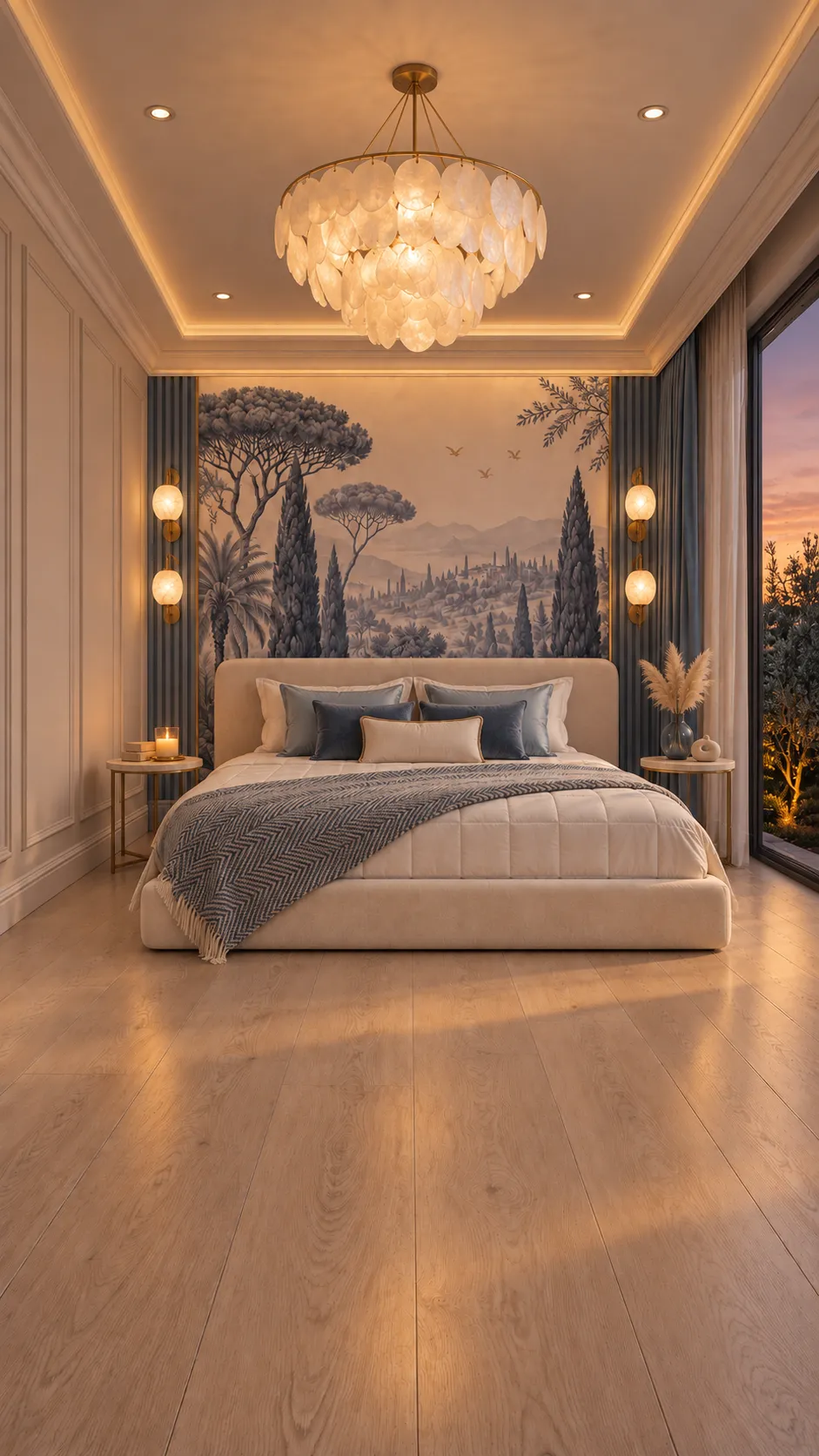
Grisalla Toscana
The Tuscan landscape on the headboard wall, with its pines, cypresses and hills in the distance…
 Bedroom
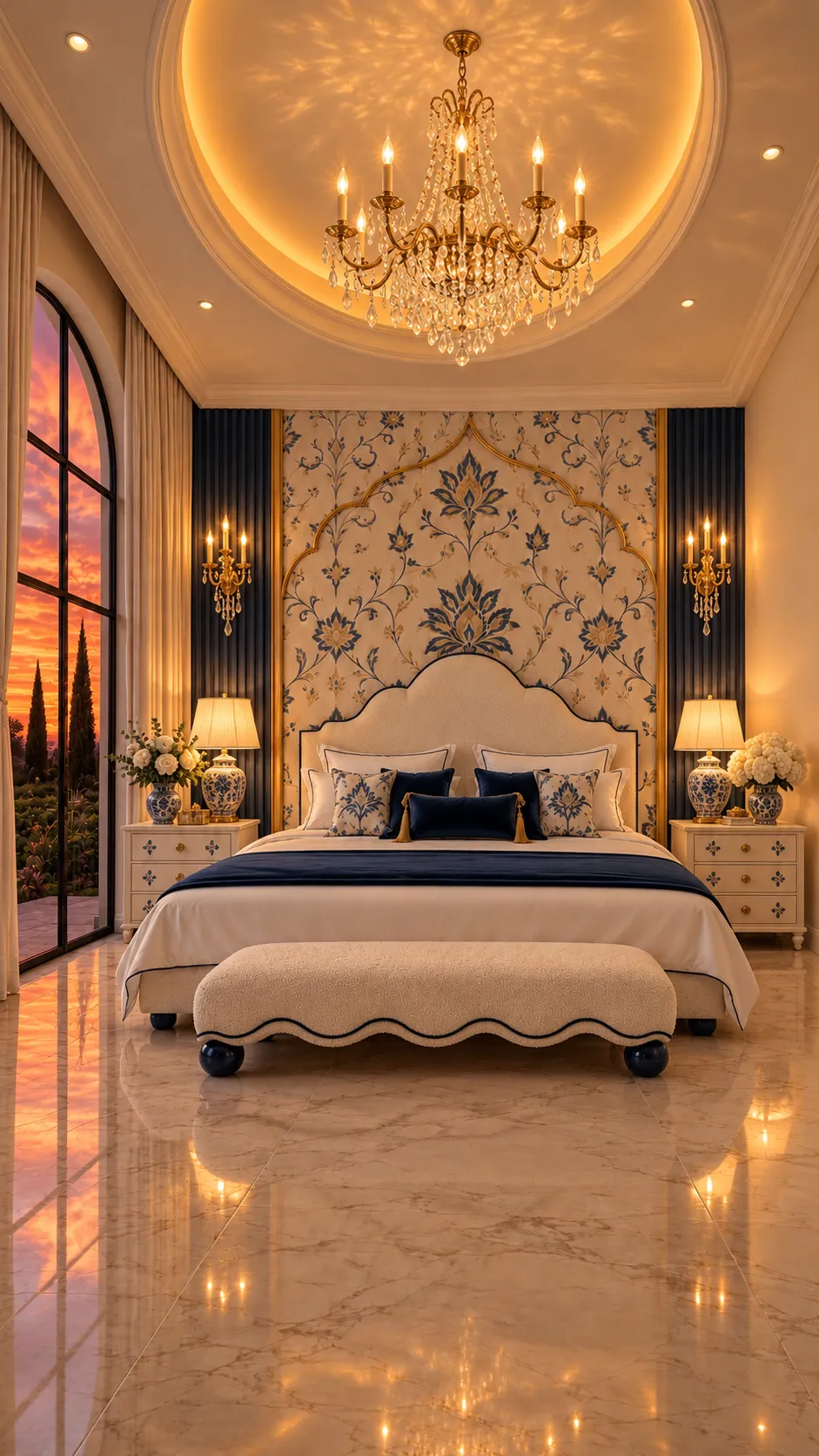
Azul y Blanco Clásico
This room's ceiling has a circle recessed directly above the bed, with indirect light all round…
 Bedroom
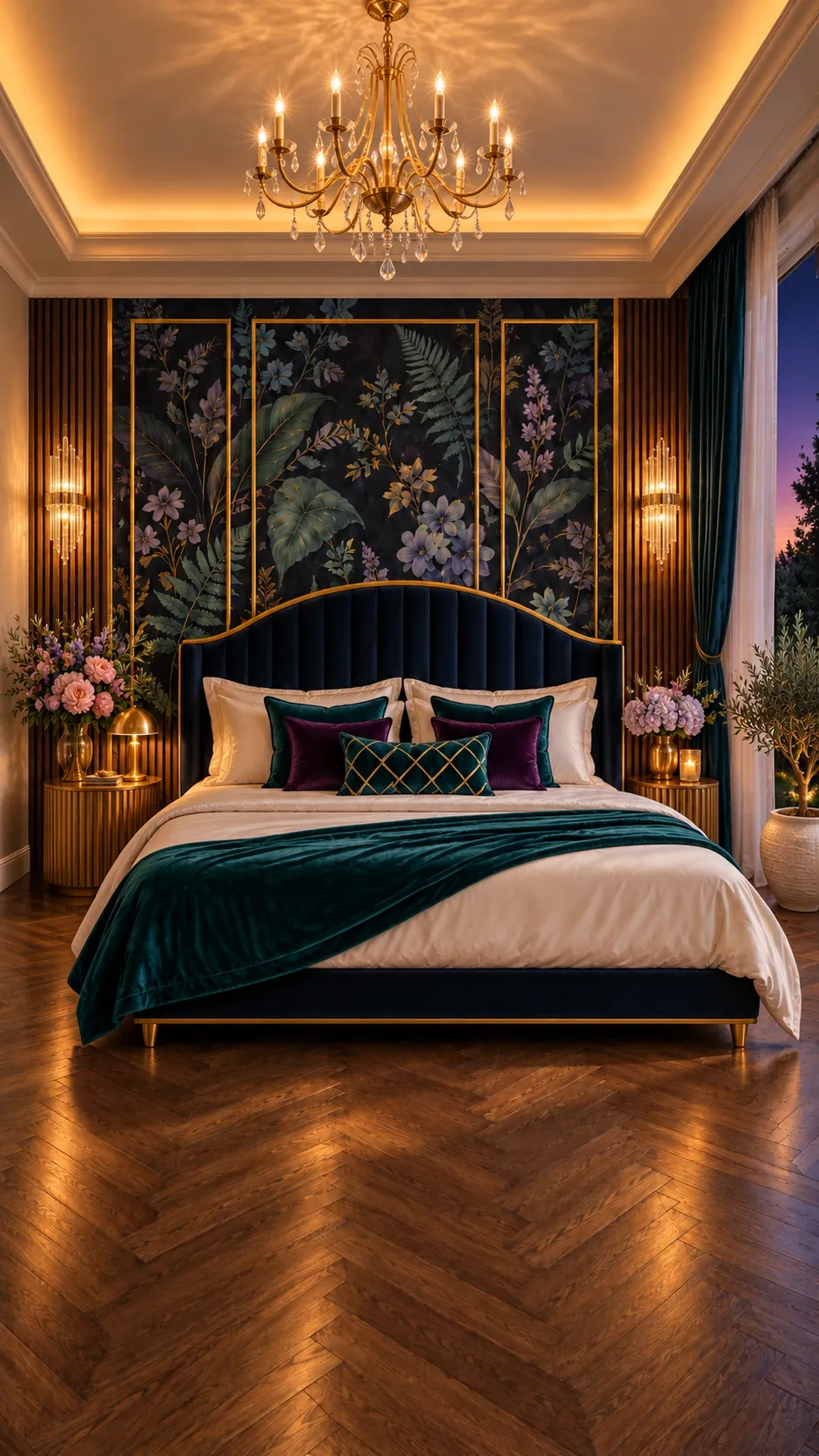
Art Déco Nocturno
A room with a botanical mural on a near-black ground is not lit like a white one. Pale walls…
 Tu Casa