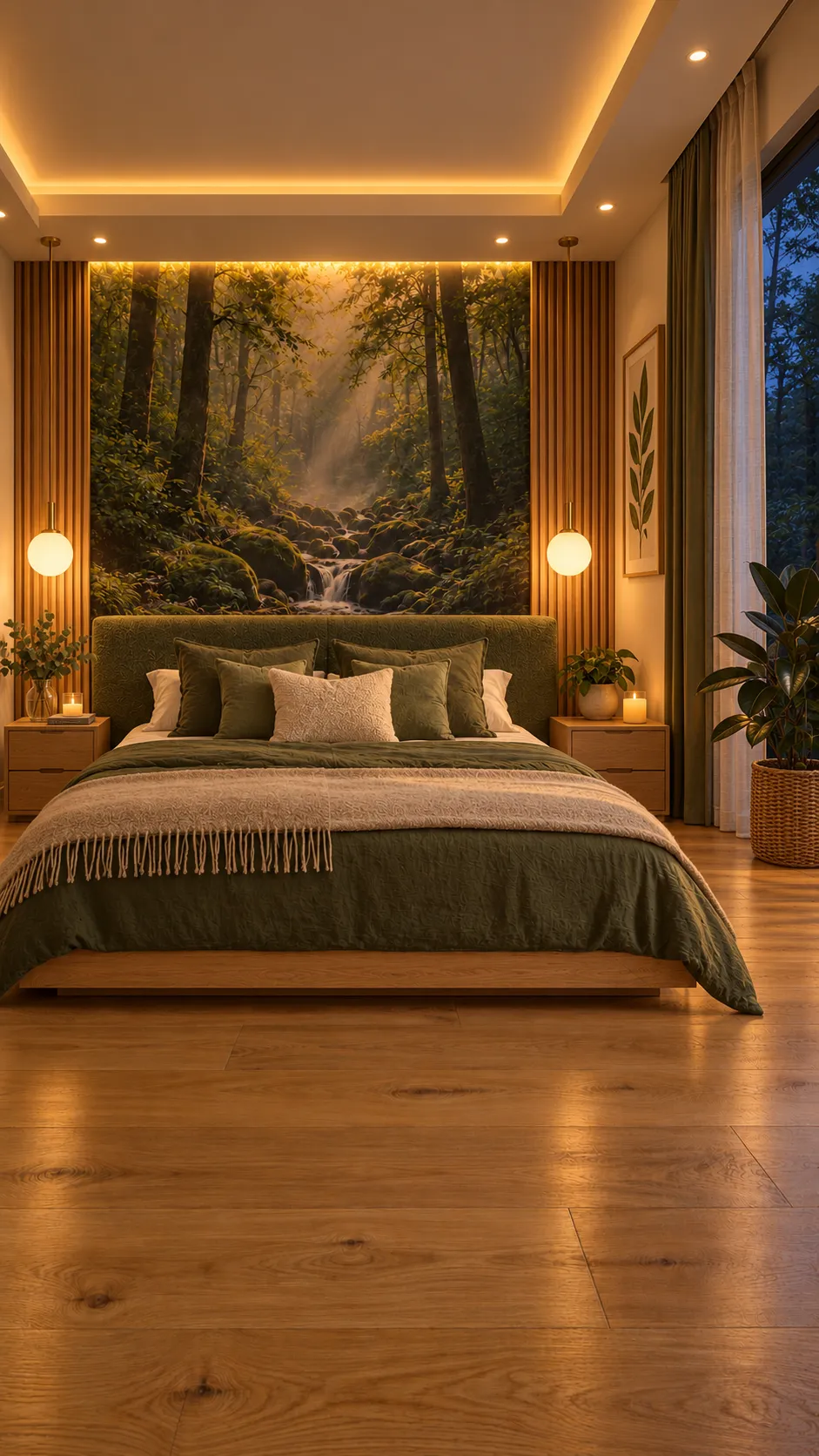
The forest mural has no spotlight aimed at it. The light comes from a hidden slot along the top edge and washes down the paper, so the plane is lit only at the top and fades out towards the skirting. That does two things at once: the mural looks like a lit screen rather than paper stuck on a wall, and the brightness in the artwork itself, which has a sunlit clearing at its centre, reads as though it came from the room.
Items shown are similar to those in the video, not necessarily identical.
A strip with many LEDs per metre, the only kind that does not show dots when lighting a nearby surface. To wash a mural from above, mount it three to five centimetres off the paper: closer and it draws the LEDs' rhythm across the artwork. Buy the dimmer too, because at full power a backlit mural dazzles from the bed.
See similar on Amazon(paid link)A landscape wall mural with a distant background, the kind that enlarges a room because the eye reads distance behind the wall. When ordering, send the headboard height as well as the wall's: the artwork's depth centre has to sit above the pillows, and many makers let you choose the height the design is cropped from.
See similar on Amazon(paid link)Loose oak slats or panel for the two planes framing the mural, fitted flush with the paper's edge and not over it. Measure the real height at both ends of each plane: on site the ceiling is never at the same level on both sides, and a slat cut to one dimension leaves a shadow wedge at the top visible from the door.
See similar on Amazon(paid link)An opal glass ball pendant, spreading light in every direction and never showing the filament from any angle. In a room with the mural backlit, hang it outside the mural's plane: in front, it casts its shadow on the paper. And check the cable length, because opal looks best when the ball sits above eye level when sitting up in bed.
See similar on Amazon(paid link)A prefabricated profile stuck around the ceiling perimeter, leaving the channel for the LED strip without building a full suspended ceiling. Check headroom first: it drops twelve to fifteen centimetres, and in a 2.4-metre room it leaves the ceiling too low. Hold the profile six or seven centimetres off the ceiling so the light spreads rather than drawing a band.
See similar on Amazon(paid link)Some links on this page are affiliate links. If you make a purchase through them, we may earn a commission at no extra cost to you.
 Bedroom
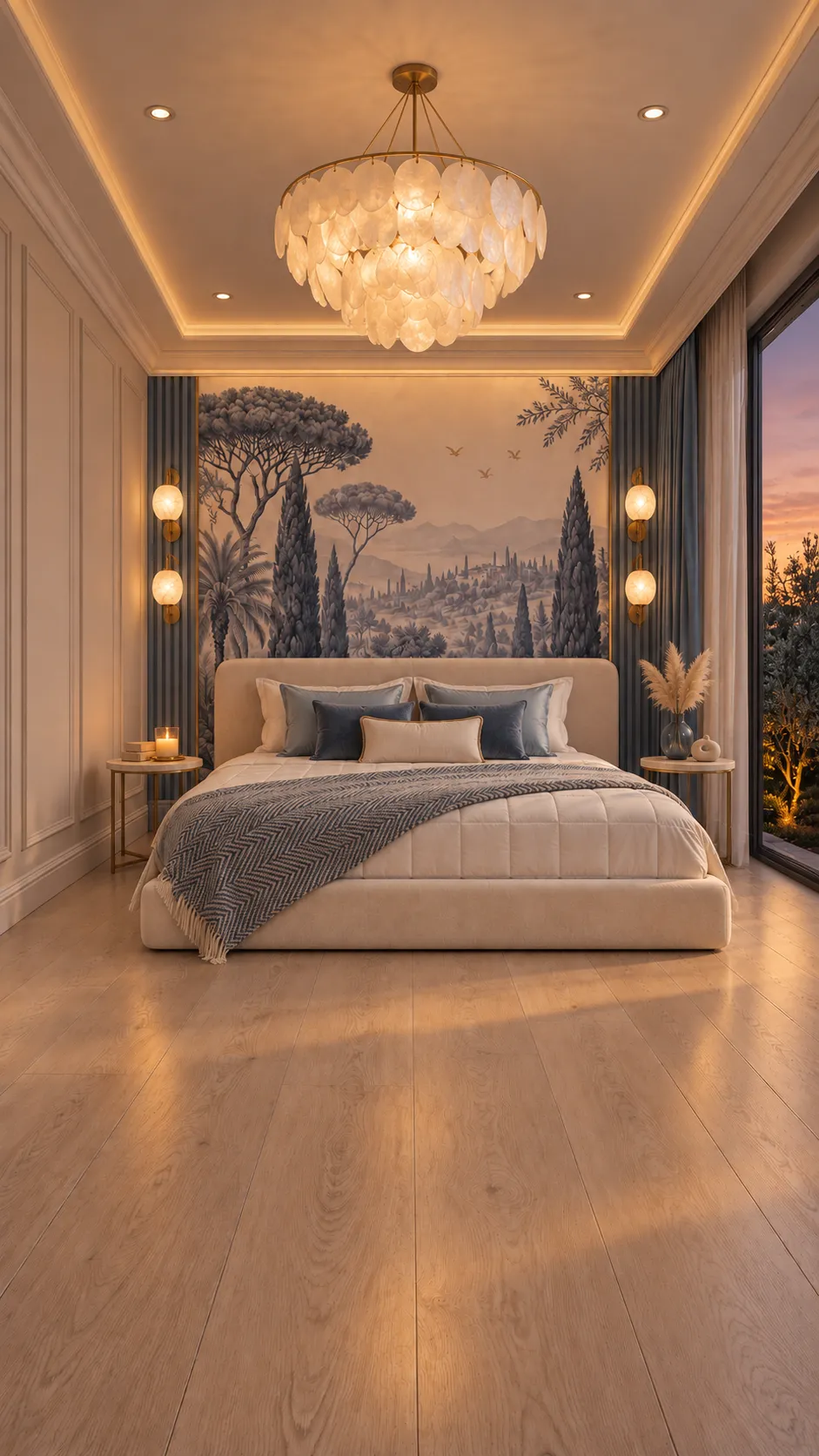
Grisalla Toscana
The Tuscan landscape on the headboard wall, with its pines, cypresses and hills in the distance…
 Bedroom
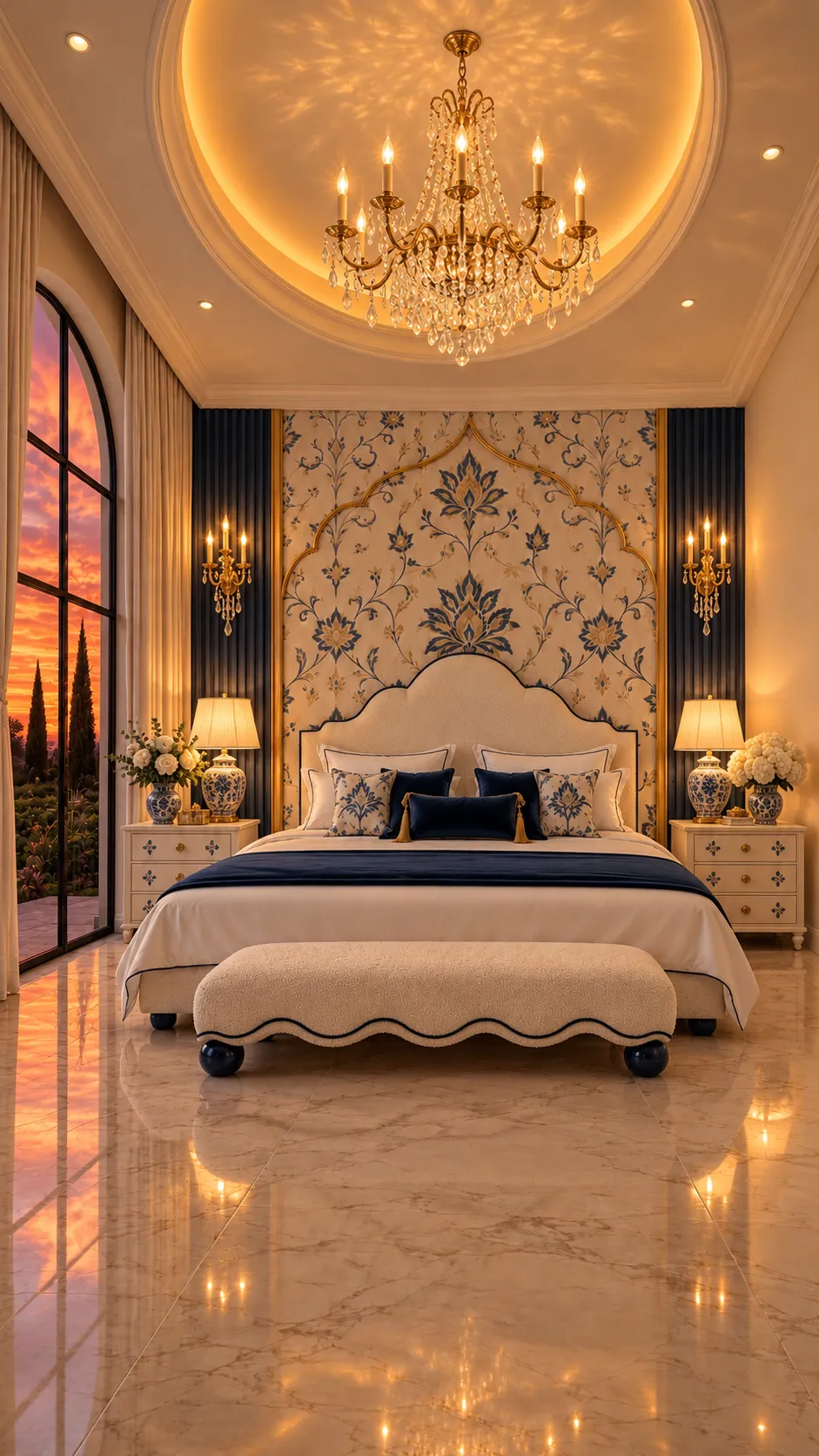
Azul y Blanco Clásico
This room's ceiling has a circle recessed directly above the bed, with indirect light all round…
 Bedroom
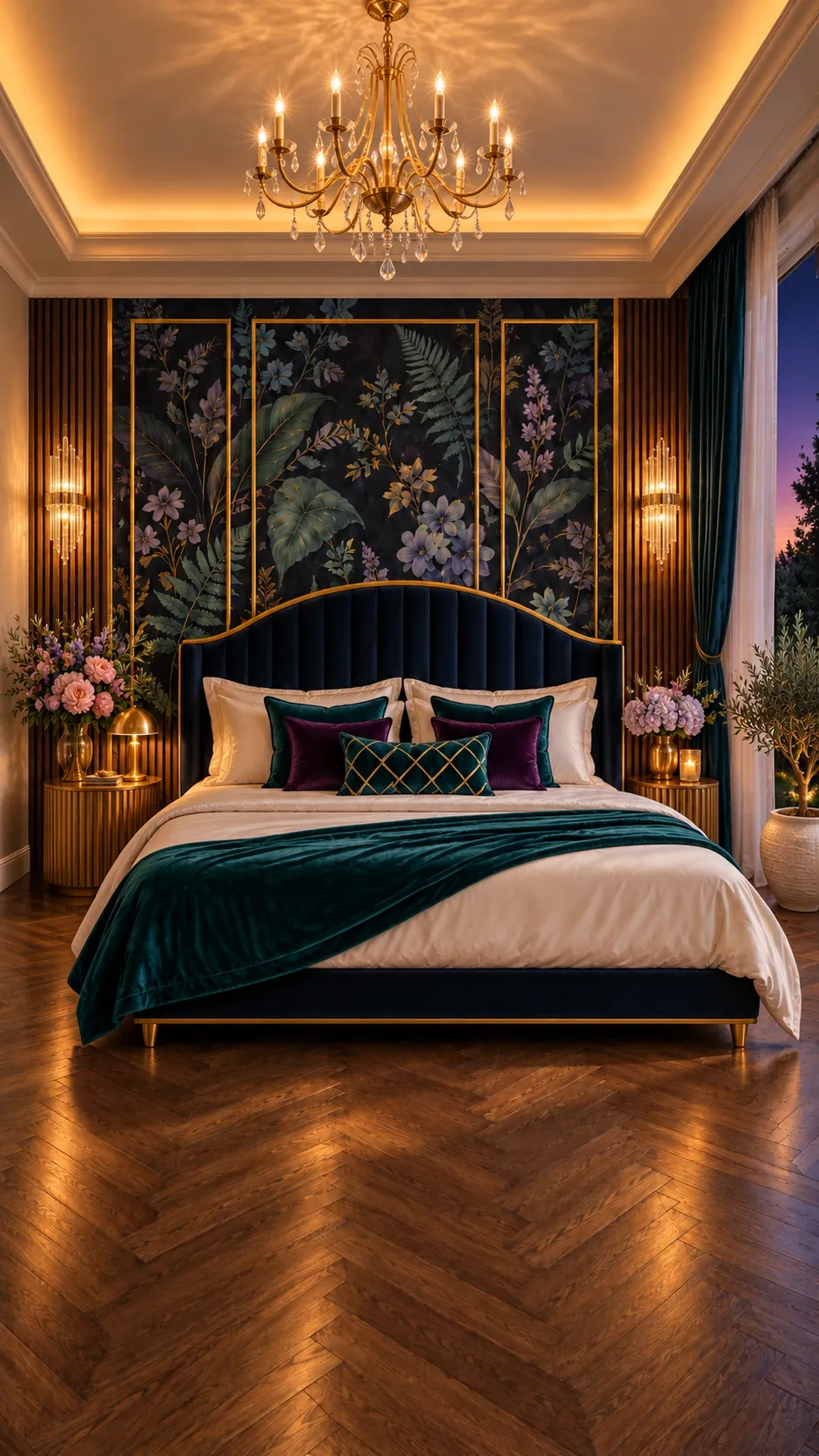
Art Déco Nocturno
A room with a botanical mural on a near-black ground is not lit like a white one. Pale walls…
 Tu Casa