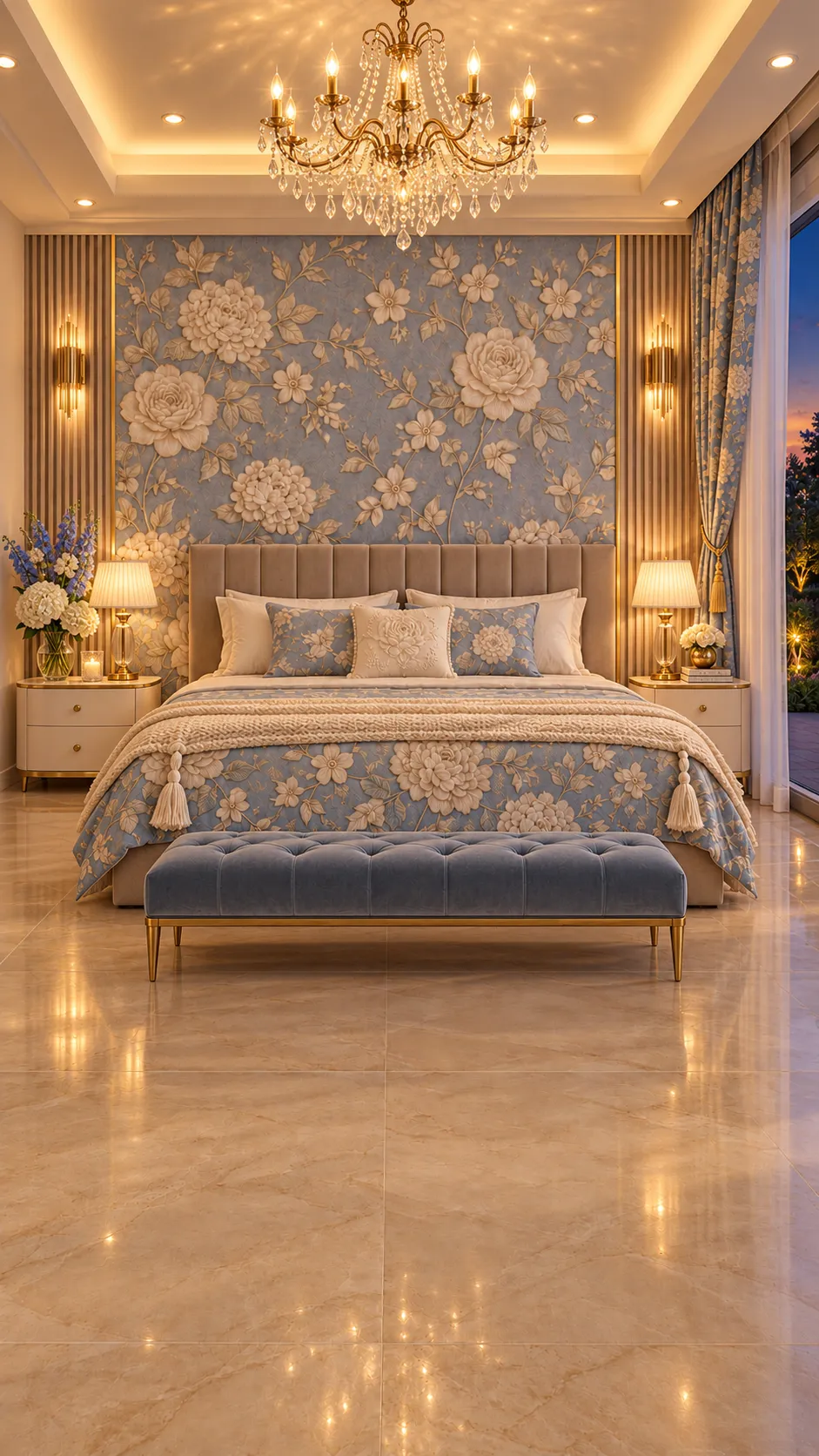
Repeating one pattern on the wall, the bedding and the curtains sounds excessive, and done badly it is. Done well it is the opposite: when the pattern is a single one, the eye recognises it and stops searching, and the room is perceived as calmer than one with three unrelated fabrics. The condition is that everything else stays plain, and that the pattern changes size going from the wall to the textile.
Items shown are similar to those in the video, not necessarily identical.
Paper with a floral motif and relief texture, which casts its own shadow and does not look flat beside a textile. Before buying the rolls, ask whether the house does the same collection as fabric by the metre: that is what lets you genuinely coordinate the bed and the curtains. And check the pattern repeat figure, because a large-drop motif means buying more metres than the wall measures.
See similar on Amazon(paid link)Fabric from the wallpaper's own collection, the only way the colour genuinely matches between wall and textiles. Always ask for a sample before the metres and look at them together in daylight and under a bulb: many greens and pinks that agree at noon part company at night. Allow ten per cent extra for matching the pattern at the seams.
See similar on Amazon(paid link)A cover with the floral motif at reduced scale, the version of the pattern that works on a bed. Check the composition if you will wash it often: cotton percale takes sixty degrees while printed linen wants thirty, because the colour fades sooner. And measure the duvet rather than the bed, which is the commonest mistake buying a cover.
See similar on Amazon(paid link)Made-to-measure making-up in your own fabric, the service to look for when the cloth comes from the paper's collection. Always ask for gathering of at least twice the window width: a patterned curtain with little fullness leaves the pattern taut and flat, losing exactly the effect you wanted. And decide the heading first, because eyelets cut the motif along the top.
See similar on Amazon(paid link)Plain linen cushions for the front of the bed, giving visual rest in a room with a single repeated pattern. Choose the motif's background tone rather than one of the flowers: the background is the colour covering the area and the one tying the three fabrics together. Two of the same size work better than three different ones when the pattern already runs the room.
See similar on Amazon(paid link)Some links on this page are affiliate links. If you make a purchase through them, we may earn a commission at no extra cost to you.
 Bedroom
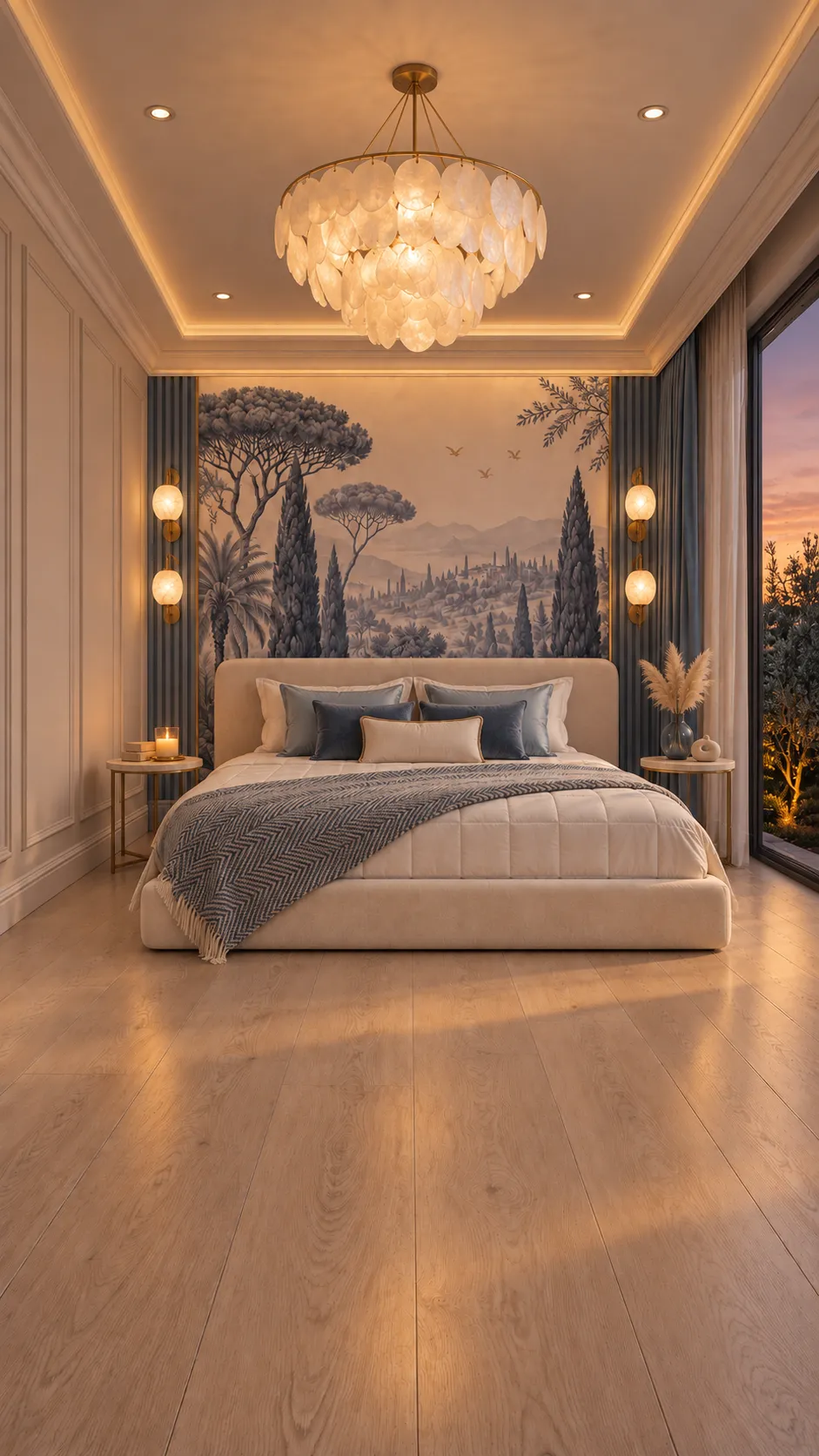
Grisalla Toscana
The Tuscan landscape on the headboard wall, with its pines, cypresses and hills in the distance…
 Bedroom
Azul y Blanco Clásico
This room's ceiling has a circle recessed directly above the bed, with indirect light all round…
 Bedroom
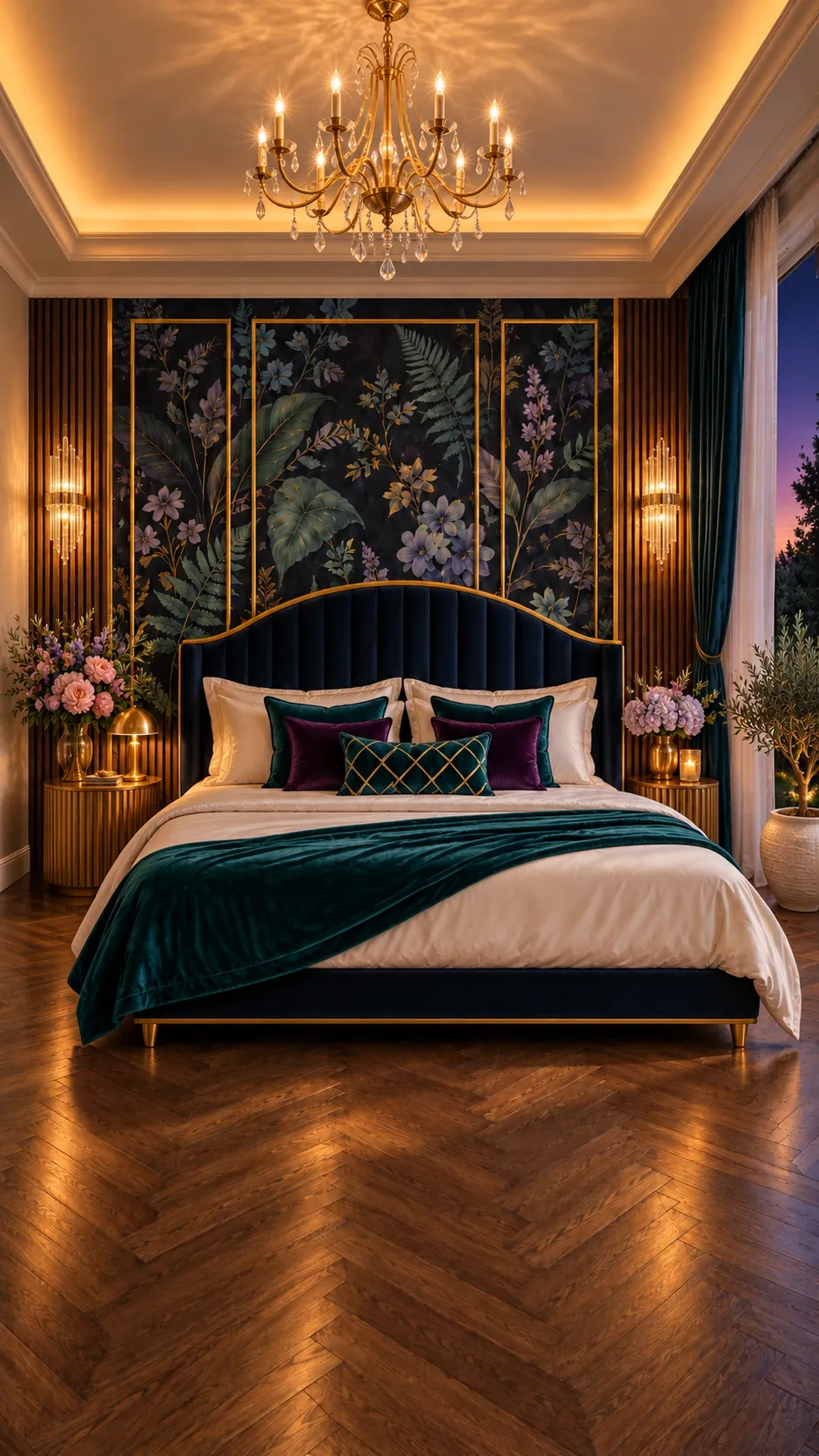
Art Déco Nocturno
A room with a botanical mural on a near-black ground is not lit like a white one. Pale walls…
 Tu Casa