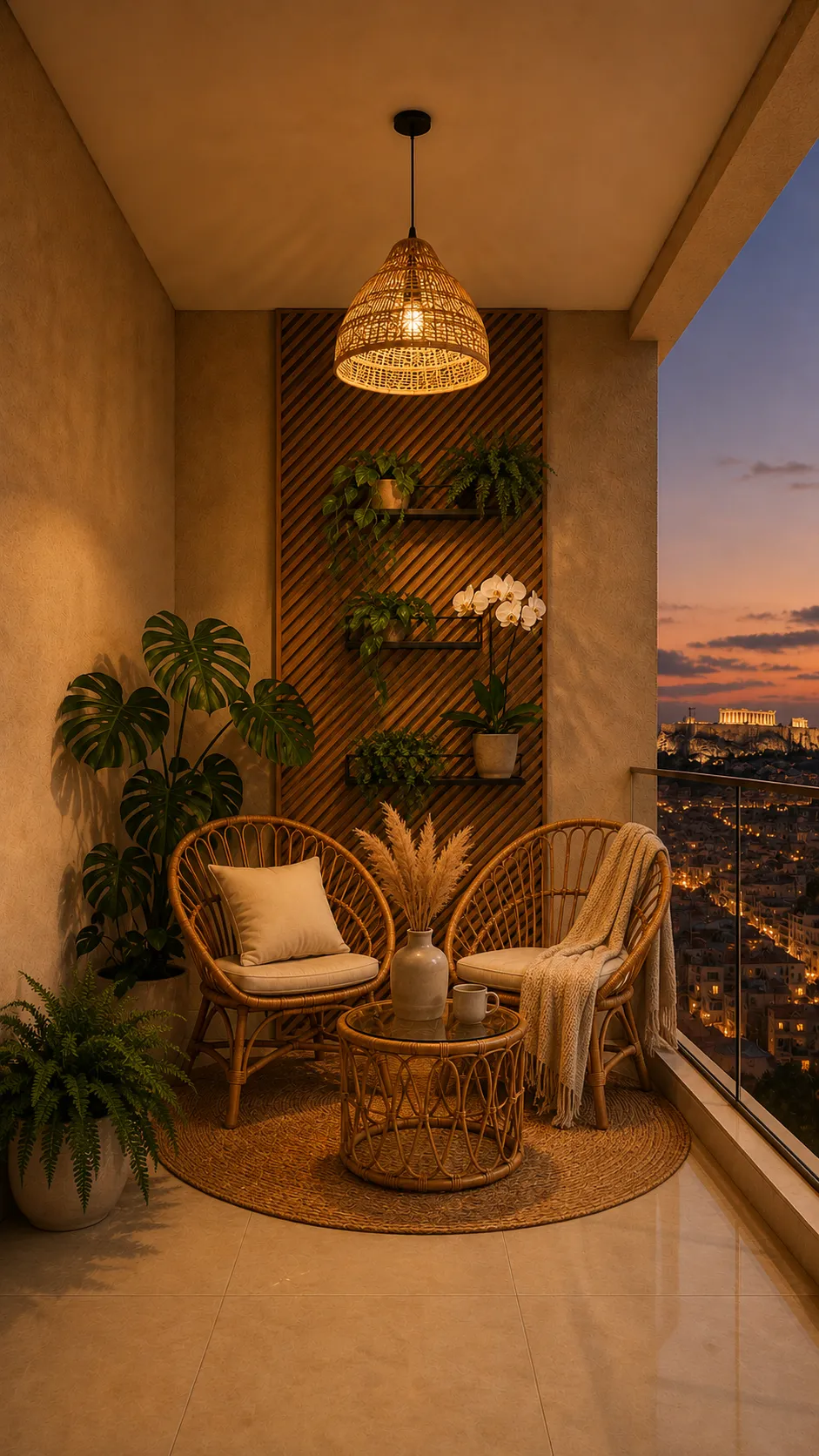
Taking the plants up the wall is the most direct way of having greenery on a balcony where the floor is already taken by two chairs. What almost never gets mentioned when a wall like this is shown is what happens the day it needs watering: the water running out of the bottom of the top pot lands on the one below, and whatever neither of them absorbs ends up on the balcony floor or, worse, on the neighbour's. It's solvable, but it has to be decided before the shelves go up.
Items shown are similar to those in the video, not necessarily identical.
A watering can with a long, fine spout, the sort that lets you get the flow between the leaves and down to the soil without wetting plant or wall. For shelf pots it's close to essential, because the angle from below with an ordinary can ends with water running over the rim. A litre or a litre and a half is plenty: full, it's heavy, and you're holding it at arm's length above head height.
See similar on Amazon(paid link)Exposed L-brackets for mounting a shelf straight onto the wall. With pots, choose a bracket reaching nearly the full depth of the shelf rather than a short one: the weight sits away from the wall and a short bracket leaves the board cantilevering, which is when it sags. Check the plugs supplied suit your wall, because the stock ones tend to be generic and won't hold in hollow block.
See similar on Amazon(paid link)Rigid plastic saucers under each pot, which on a shelf stop being an accessory and become what prevents water falling onto the plant below. Clear ones show far less than terracotta and weigh almost nothing, which matters up high. Empty them if water is still standing after half an hour, because a permanently waterlogged root rots sooner than one that goes thirsty.
See similar on Amazon(paid link)The long-flowering orchid sold everywhere, which stays in bloom for months if left alone. It's planted in bark rather than soil, so it's watered by soaking for a few minutes and then drained completely, never left standing in water. The clear pot isn't decorative: its roots photosynthesise, and the green or silver colour they show is what tells you whether it needs watering.
See similar on Amazon(paid link)A panel of slats crossed on the diagonal, halfway between a solid slat panel and nothing at all. It screens enough while letting air through, which on a high balcony is what saves you oversizing the fixings, and it lets a climber take hold. Mount it on battens clear of the wall and treat it if it will take sun or rain; and remember it carries no weight: any shelf or mirror anchors to the wall behind, passing through the lattice.
See similar on Amazon(paid link)Some links on this page are affiliate links. If you make a purchase through them, we may earn a commission at no extra cost to you.
 Terrace
Boho Chic
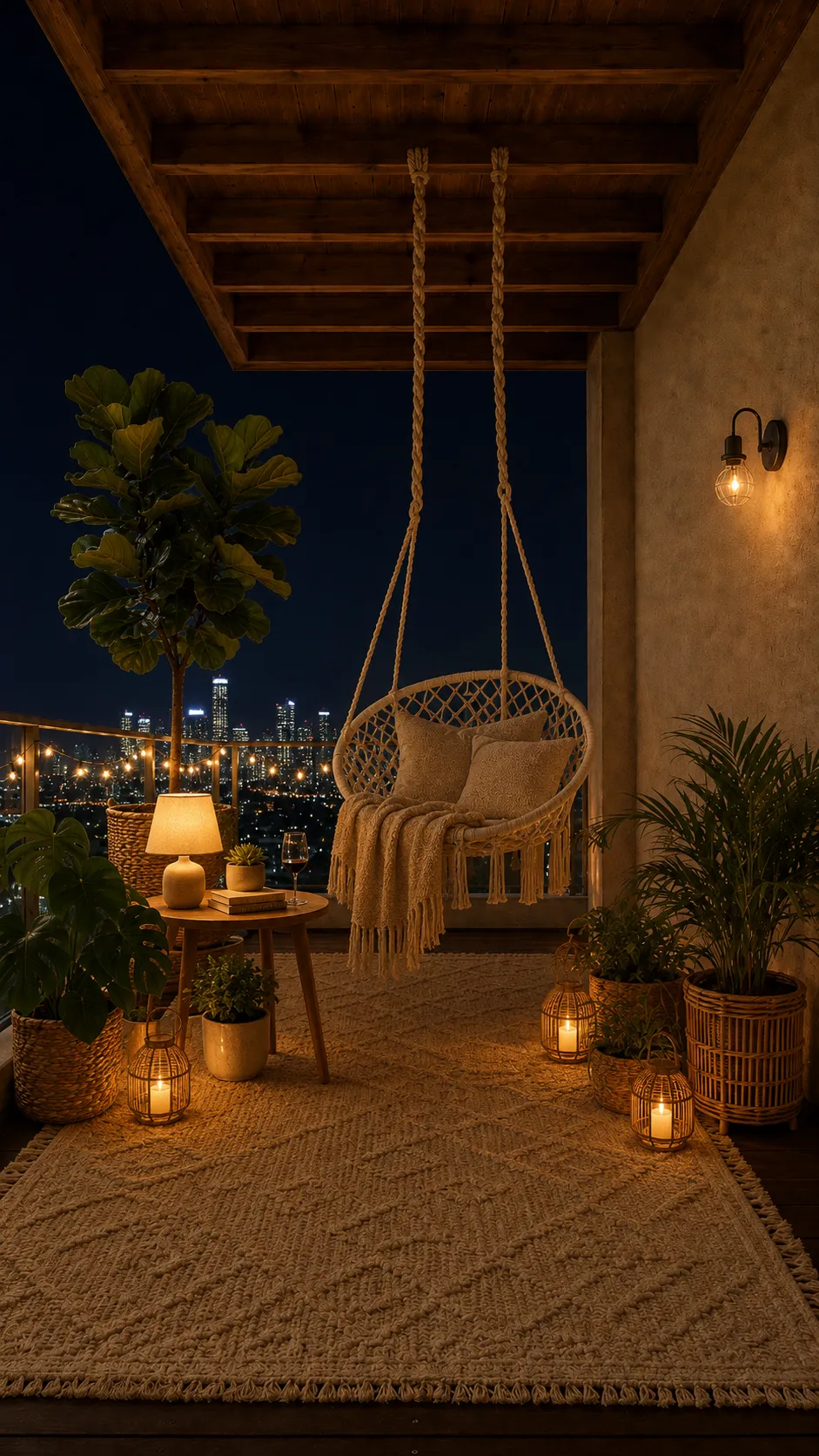
What makes this balcony possible isn't obvious at first: it's the timber beam roof. Because of it…
 Terrace
Mediterráneo Contemporáneo
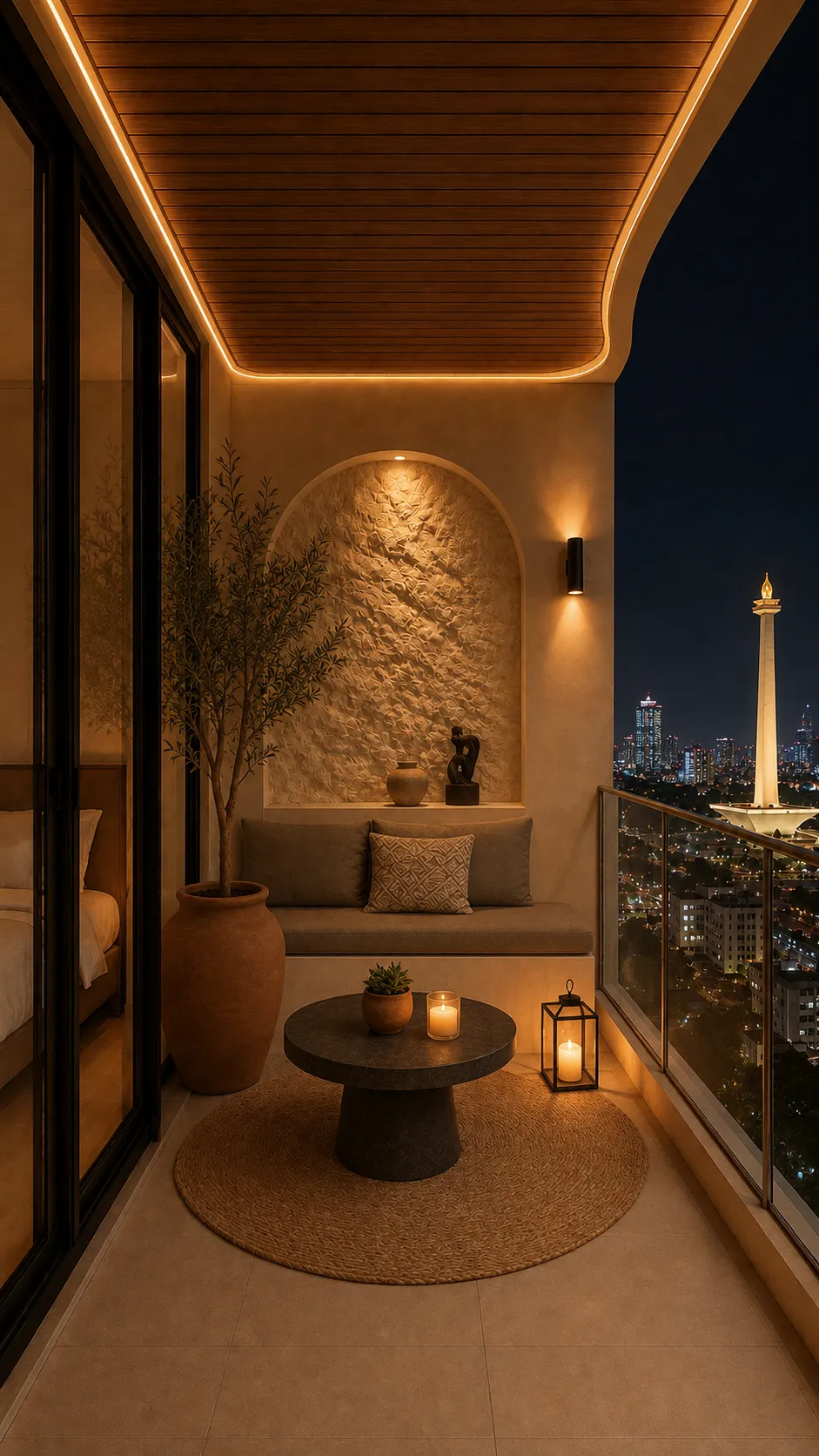
This balcony opens straight off the bedroom, and that explains everything on it: a masonry bench…
 Terrace
Boho Urbano
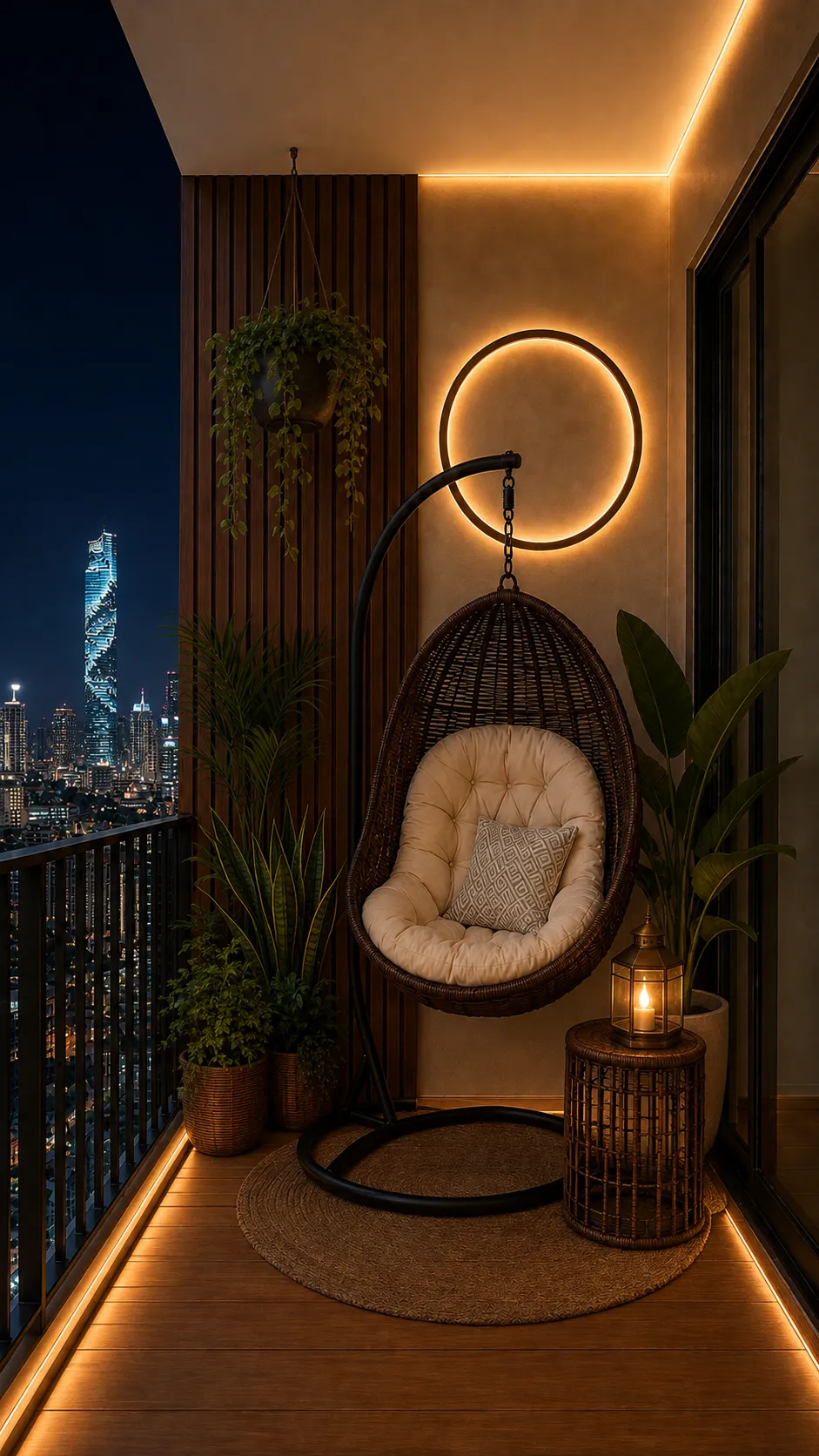
The chair on this balcony doesn't hang from the ceiling: it rests on its own steel stand, and that…
 Tu Casa