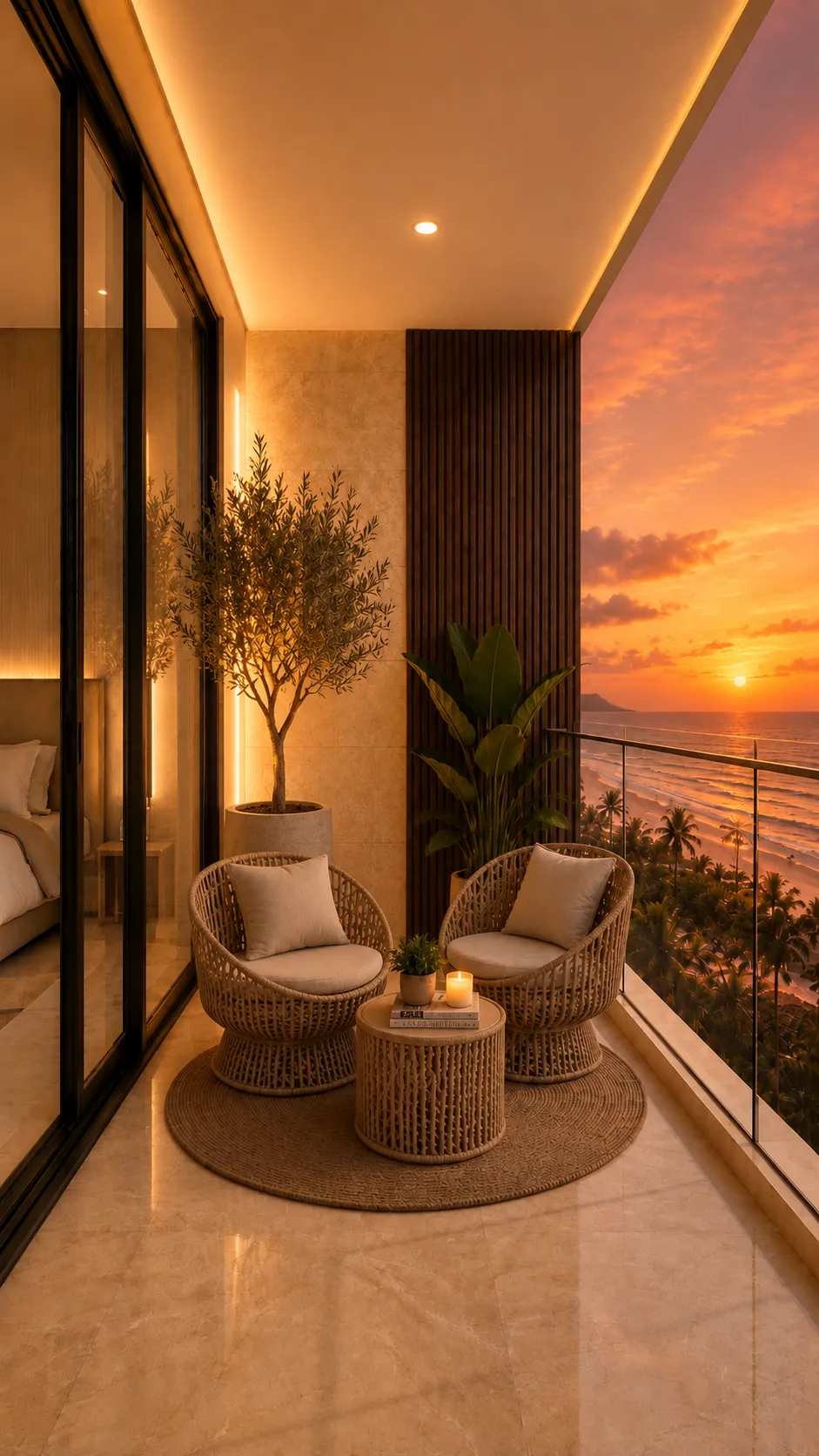
The two things that govern this balcony don't appear in the photo: salt and orientation. It's on the seafront facing west, so the sun comes in head-on all afternoon and the air carries salt all year. That decides the materials — synthetic fibre, stone, glass — and also the hours it gets used, which are these. Within those conditions: two round chairs turned toward each other, an olive in the sheltered corner, and nothing with corners.
Items shown are similar to those in the video, not necessarily identical.
An open-weave tub chair on a cylindrical base with an aluminium frame inside. On the coast the aluminium is what decides it: the same chair with a painted steel core rusts at the welds even while the fibre is still perfect. The open weave also lets air and rainwater through, so it doesn't pool the way a closed seat does.
See similar on Amazon(paid link)A seat and back cushion in solution-dyed outdoor fabric with a zip so the cover comes off. Solution-dyed isn't a detail: on surface-dyed fabric, afternoon sun leaves the exposed face several shades lighter within a season. The removable cover is what lets you wash the salt out without having to dry the whole filling.
See similar on Amazon(paid link)A waterproof, breathable cover for the set when it isn't in use. On the seafront it extends furniture life more than the material it's made of does. It has to breathe and not be sealed plastic: plastic condenses inside, and trapped damp does more harm than rain. Choose one with a drawcord or elastic hem, because at height the wind lifts it.
See similar on Amazon(paid link)A spray protector for screws, hinges and balustrade clamps — the film-forming kind, not the sort that only degreases. In marine air apply once or twice a year on clean dry metal, working into the screw heads, which is always where it starts. Choose a dry-film version rather than an oily one if it will be brushed against by clothing or hands.
See similar on Amazon(paid link)A small olive in a stone or clay planter. It's one of the few species the seafront doesn't bother: it tolerates salt air and direct sun well, which is exactly what kills most balcony plants on a west-facing aspect. What it won't forgive is waterlogging, so the planter needs a drainage hole and a saucer, and free-draining substrate rather than universal compost.
See similar on Amazon(paid link)Heat-modified wood, without chemicals, which copes best with the salt air of a seafront balcony. The treatment makes it stable and unappetising to fungi, and darkens the tone along the way, which is where that deep brown comes from. It’s somewhat more brittle than untreated timber, so pre-drill before screwing and don’t force it; and it holds its colour better with a coat of oil once a year.
See similar on Amazon(paid link)Some links on this page are affiliate links. If you make a purchase through them, we may earn a commission at no extra cost to you.
 Terrace
Boho Chic
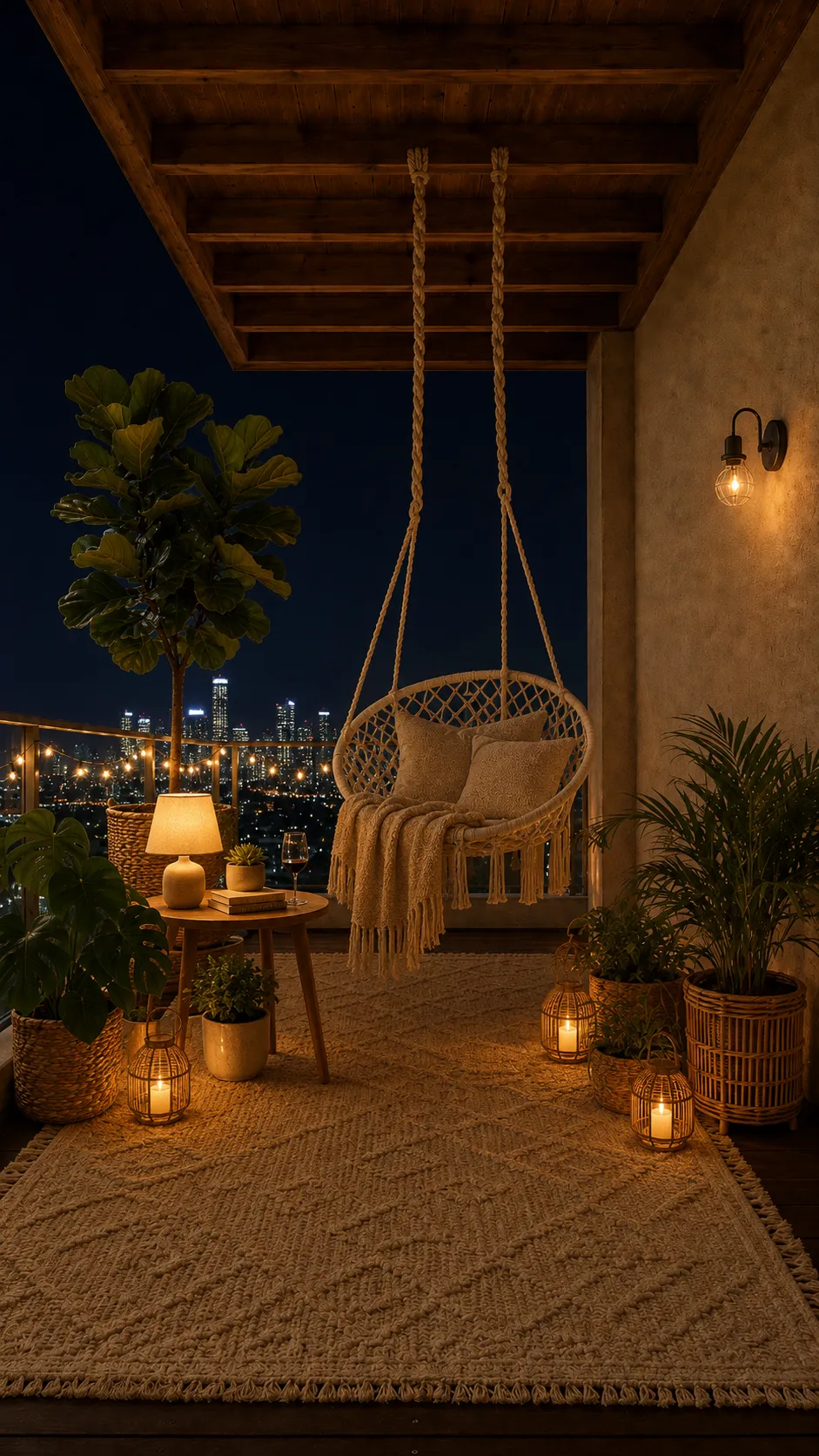
What makes this balcony possible isn't obvious at first: it's the timber beam roof. Because of it…
 Terrace
Mediterráneo Contemporáneo
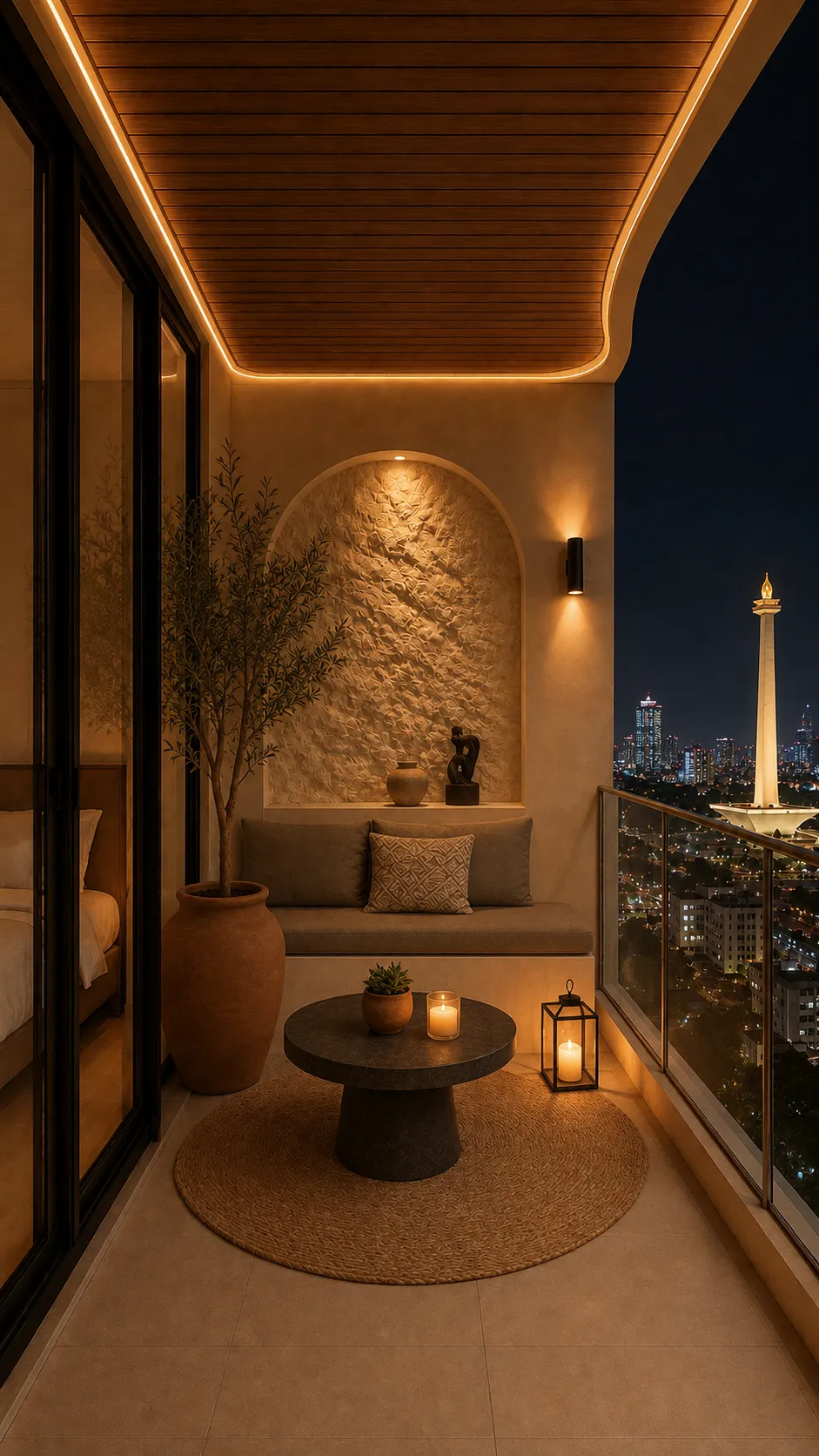
This balcony opens straight off the bedroom, and that explains everything on it: a masonry bench…
 Terrace
Boho Urbano
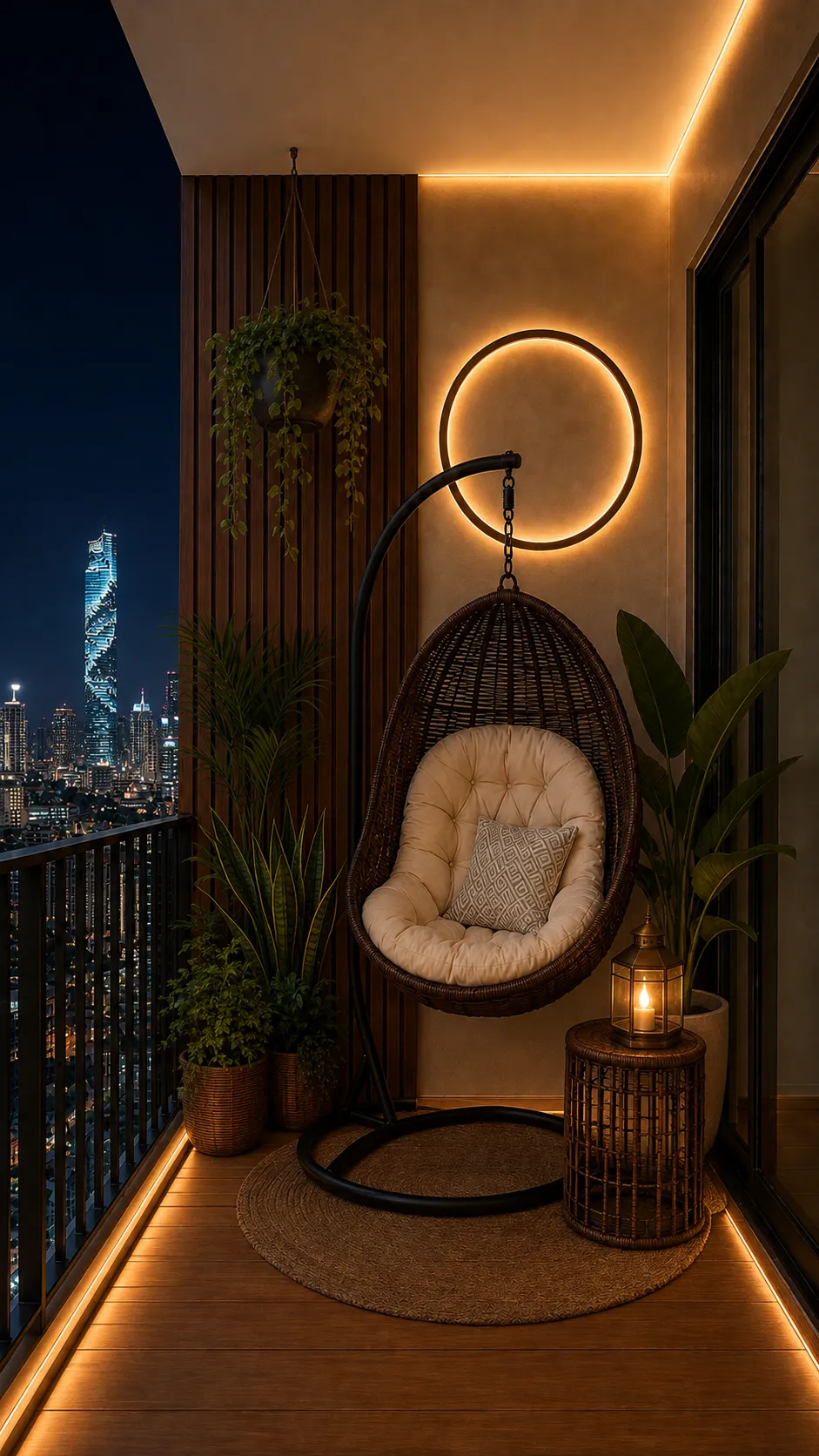
The chair on this balcony doesn't hang from the ceiling: it rests on its own steel stand, and that…
 Tu Casa