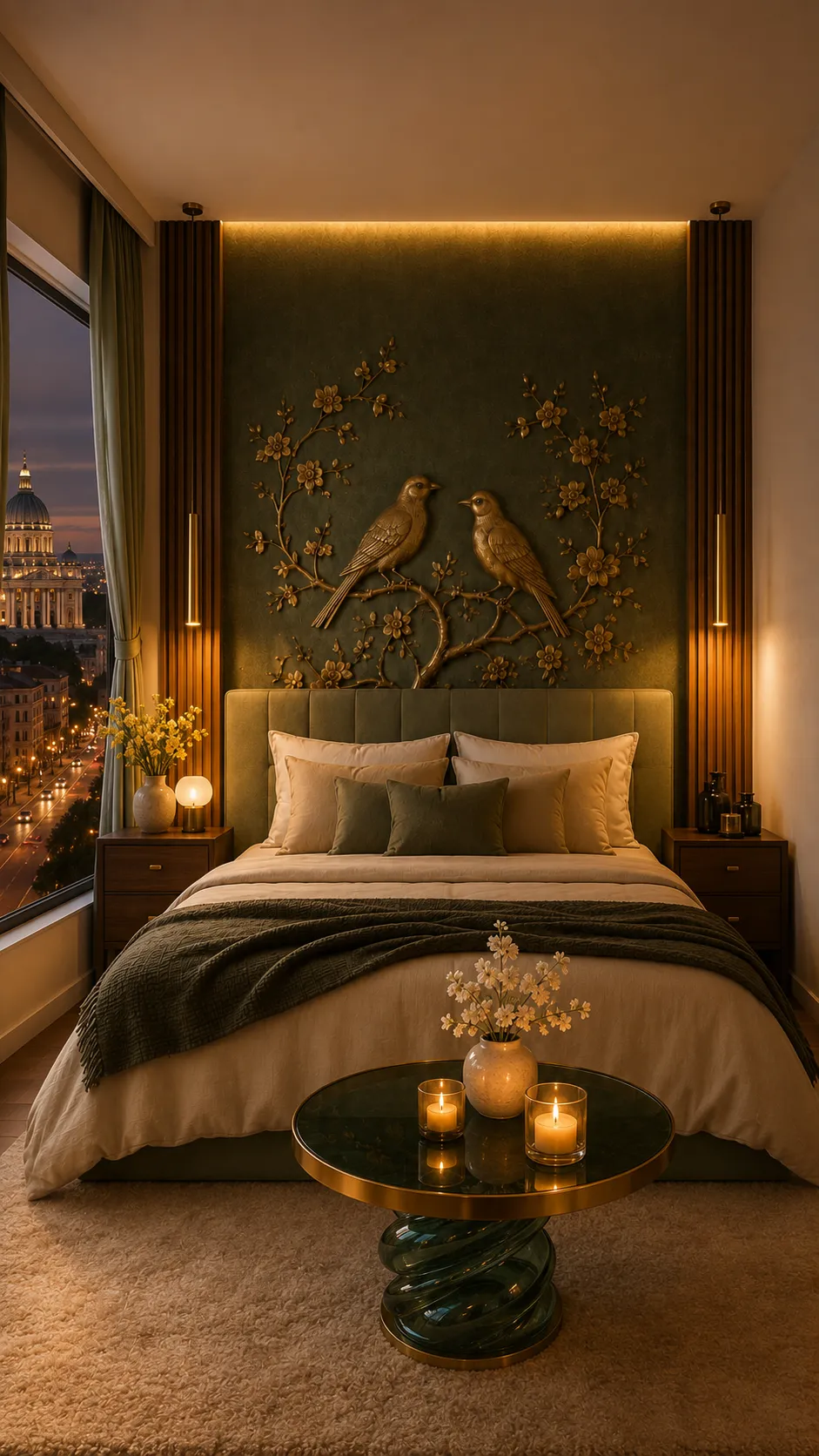
This wall carries three layers: a textured olive green paper, a metal sculpture of two birds on a blossoming branch, and two dark slat strips framing the lot. Normally you'd choose one of the three. That they coexist here comes down to each working at a different scale — a fine pattern, one large piece and vertical lines — and to the light coming down from above so the sculpture throws its own shadow onto the paper instead of cutting out against it.
Items shown are similar to those in the video, not necessarily identical.
A metal piece in a brass finish, with a cut-out outline and genuine relief. What to check before buying is the weight and the hanging system: many come with a single central hook, and a wide piece hung that way goes out of true at the first knock. Measure the available space and subtract margin on all four sides, because a sculpture with no air around it stops reading as an object.
See similar on Amazon(paid link)A single-colour paper with damask-style relief, meant to read as texture rather than pattern. It's the kind of paper that tolerates something hung on it, precisely because from two metres the motif isn't distinguishable. See it under grazing light before deciding: a relief paper changes completely depending on whether light hits it head-on or from above, and on a wall with a lit cove that matters.
See similar on Amazon(paid link)A low table with a green blown glass base and a metal-rimmed top. It's a sculptural piece before it's furniture: it weighs a fair amount for its size and doesn't move with one hand, so decide its position before it arrives. If it goes at the foot of the bed or in a route, the top's edge is what decides it: in glass, a sharp edge at shin height isn't a good idea.
See similar on Amazon(paid link)A small domed lamp on a short base, sized for a nightstand that already has things on it. Being low and closed at the top, the light falls on the nightstand itself and doesn't reach the face of whoever's in bed, which is what you want from a companion light. Choose the touch-switch version: hunting for a cable in the dark on a full nightstand is exactly what you're trying to avoid.
See similar on Amazon(paid link)A set of smoked or amber glass bottles in varying heights, to group on a nightstand or sideboard. They work precisely because they have no function: there's nothing to justify inside them, and grouped in threes at stepped heights they order a surface better than one large object alone. In dark glass, too, the dust that collects inside doesn't show.
See similar on Amazon(paid link)Rounded slats rather than square, giving a soft graded shadow where a sharp edge gives a hard line. It’s the profile that sits best alongside a patterned paper, because it doesn’t introduce a third hard geometry onto the wall. It has one practical drawback: dust settles in the valley between slats and won’t come out with a cloth, you need the vacuum brush.
See similar on Amazon(paid link)Some links on this page are affiliate links. If you make a purchase through them, we may earn a commission at no extra cost to you.
 Bedroom
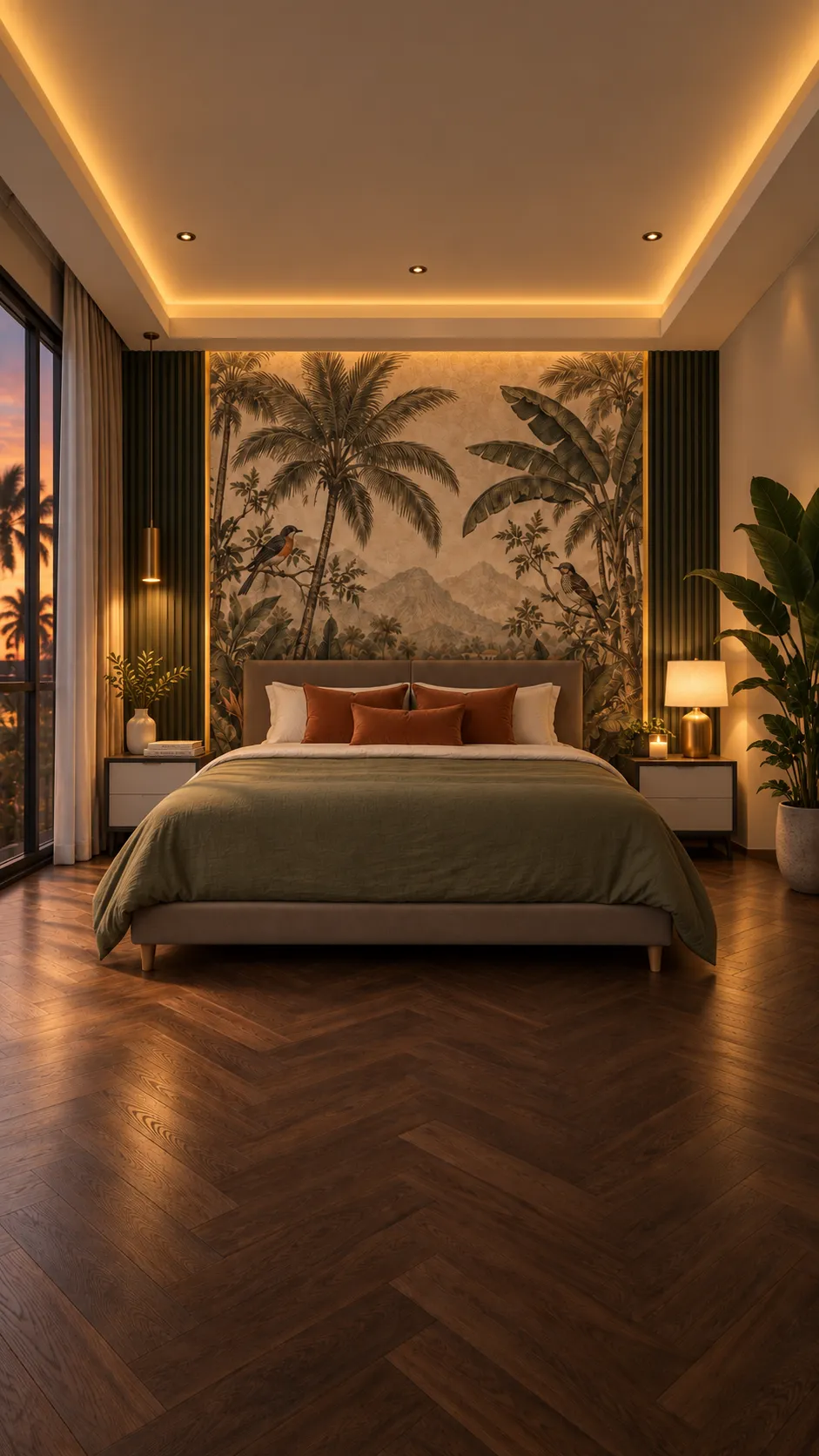
Colonial Tropical
The thing that took most work in this room is the floor and it barely gets looked at: herringbone…
 Bedroom
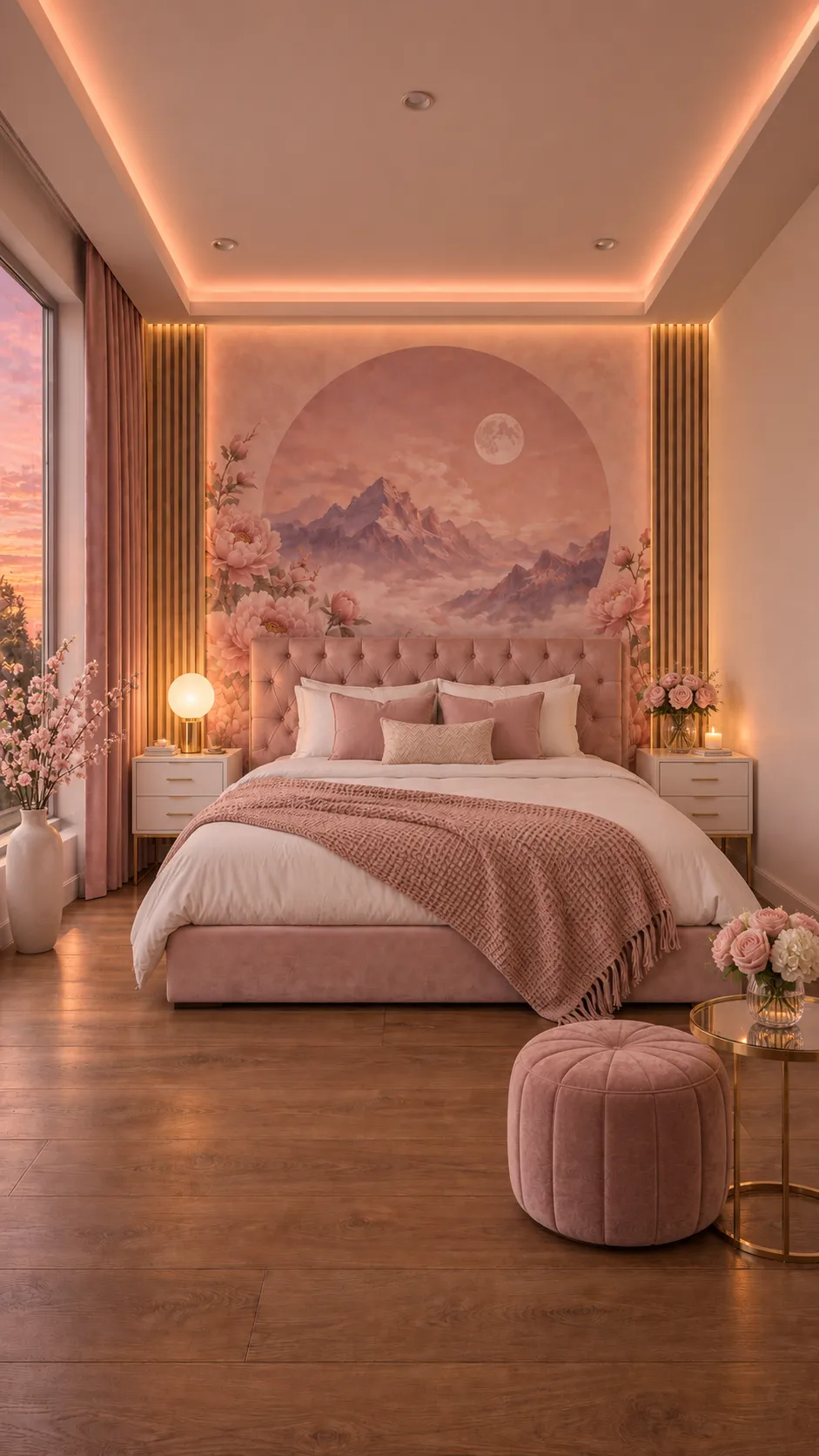
Clásico Rosado
A mural cut as a circle doesn't work like a rectangular one, and the difference isn't shape but…
 Bedroom
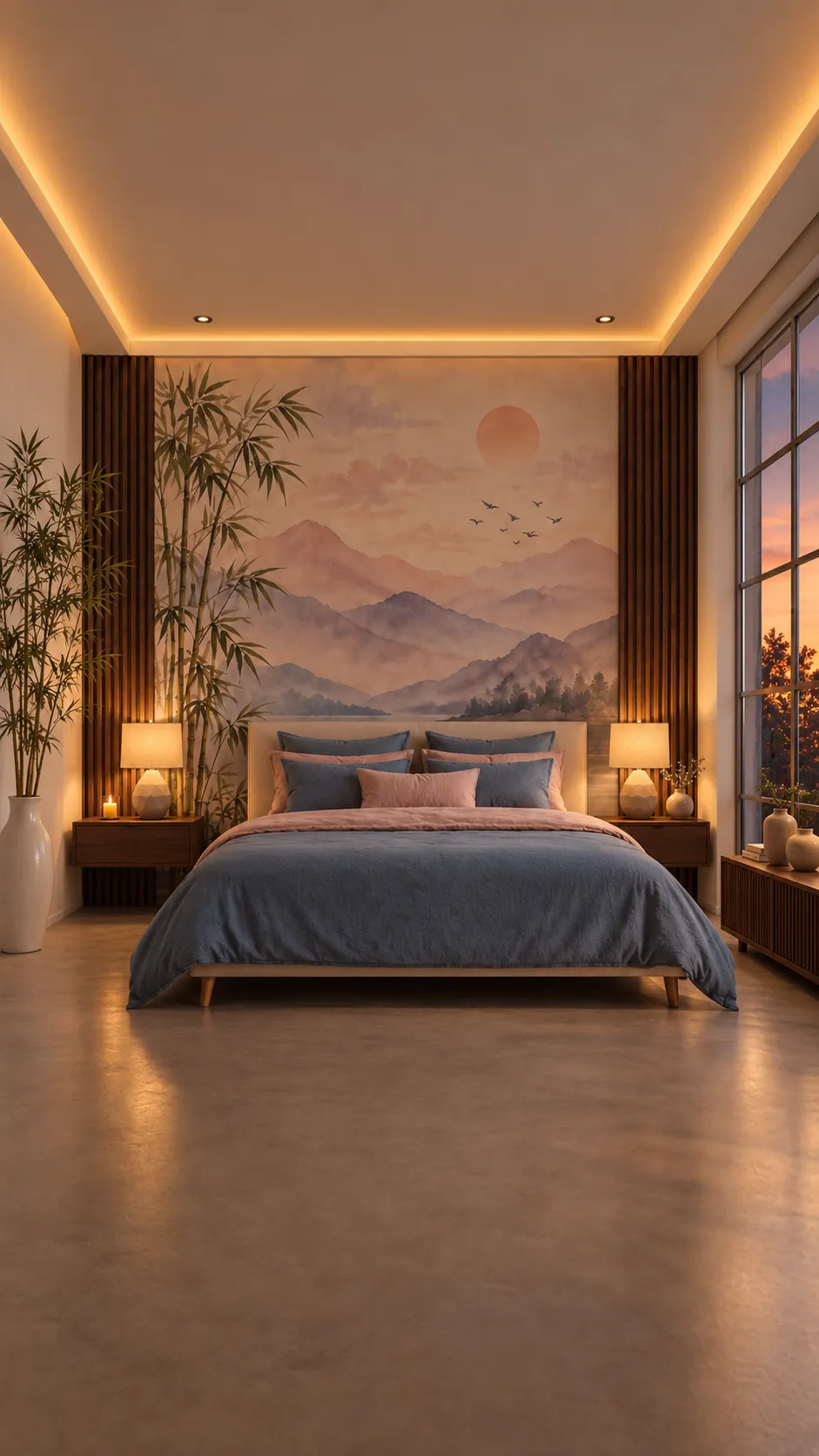
Minimalista Natural
The mural is pink and the bed is blue, and that's the decision holding the room together. The…
 Tu Casa