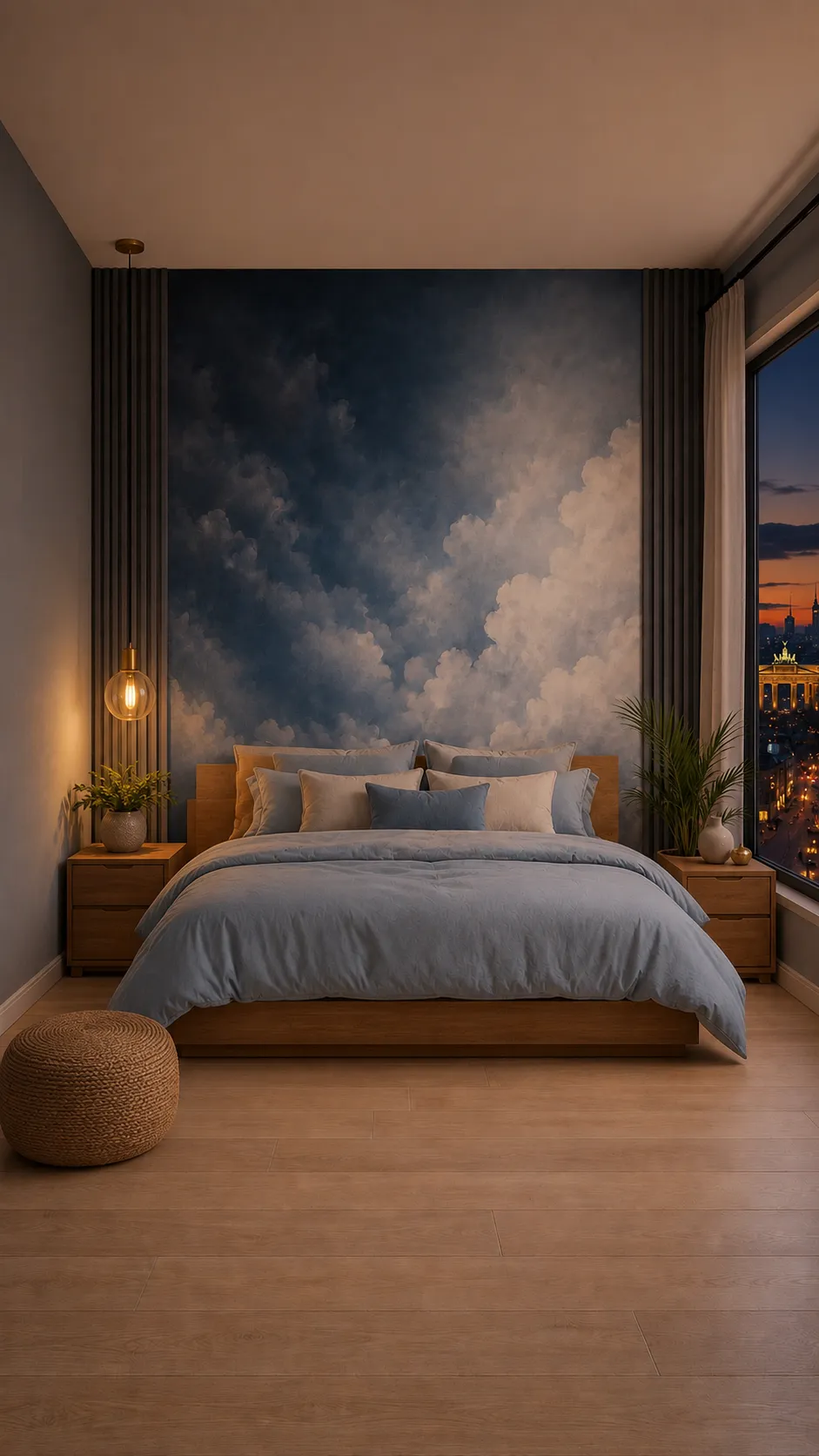
The mural doesn't stop thirty centimetres short of the ceiling, as is usual, but runs all the way to the junction. It's a decision that doesn't always come off, because a ceiling is almost never truly level and any fall gets drawn along the cut line. Here it works precisely because of the motif chosen: clouds have no horizontal to give away that the wall isn't level. The second decision holding the room together is the colour of the wall alongside, which comes from the mural but not from where you'd expect.
Items shown are similar to those in the video, not necessarily identical.
Fine-edge tape for the junction between paper and painted wall, and for the ceiling line. It differs from ordinary painter's tape in two ways: a sealed edge that stops paint creeping underneath and leaving a ragged line, and a low-tack adhesive that lifts without tearing wallpaper. Remove it while the paint is still wet, pulling at an angle rather than straight out.
See similar on Amazon(paid link)A flexible plastic blade for working air out from the centre of the drop towards the edges. On a photographic mural choose the rounded-edge type rather than a rigid one, because the print marks easily and a sharp edge leaves a shiny streak that never comes out. For the finish against the ceiling you also want a narrow metal blade to guide the knife, so the cutter can't wander off the line.
See similar on Amazon(paid link)Cards or tester pots for trying the adjoining wall's tone against the actual mural. Printed cards are fine for ruling out, but to decide you want a small pot and a half-metre board you can move around the room: the same blue-grey shifts depending on whether window light or a warm bulb falls on it. Never paint the sample straight onto the wall, because the colour underneath alters what you see.
See similar on Amazon(paid link)A low-profile frame with an integrated base and a straight headboard, which is what leaves nearly the whole wall visible. Before deciding, work out the total height with the mattress on: under fifty centimetres off the floor it's harder to get up from, and if anyone has a bad back or there's an older person in the house, that difference tells every day. Check too whether it takes a slatted base or calls for a specific one.
See similar on Amazon(paid link)An upright palm with fine fronds, one of the few that copes well indoors in indirect light, which is what you get beside a curtained window. It grows slowly and doesn't need frequent repotting, but it won't forgive waterlogging: water when the compost is dry a couple of fingers down and always empty the saucer. Brown tips are usually dry air from heating rather than lack of water.
See similar on Amazon(paid link)An angle piece resolving where the panel meets a corner or the painted wall beside it. It’s the trim you notice most when it’s missing: without it the board’s edge is exposed, which is almost never the colour of the slat, and that pale line runs the full height of the wall. Usually it’s ordered in the panel’s finish, but if the adjoining wall is painted, lacquering it the wall colour works too.
See similar on Amazon(paid link)Some links on this page are affiliate links. If you make a purchase through them, we may earn a commission at no extra cost to you.
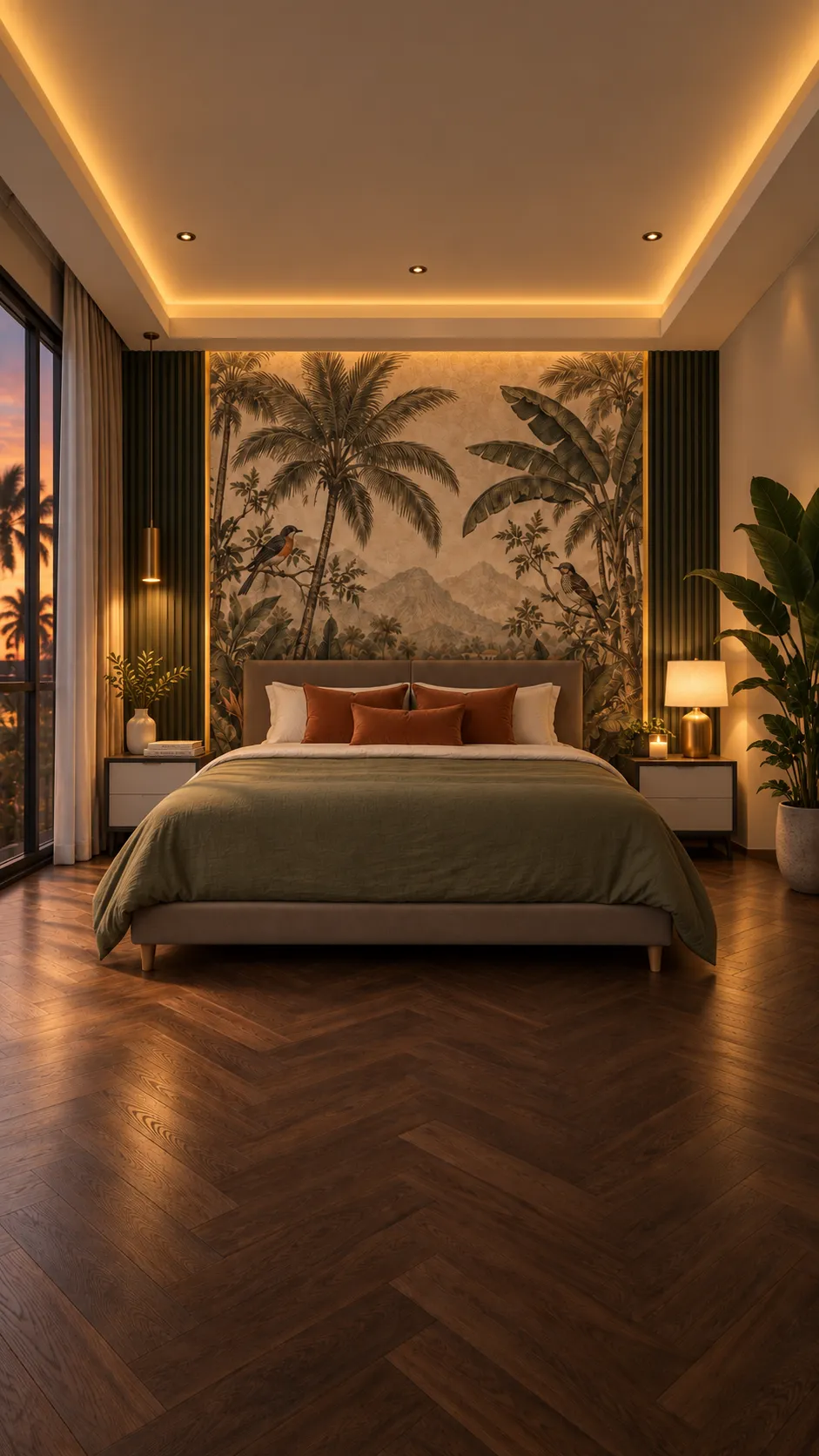 Bedroom
Colonial Tropical
The thing that took most work in this room is the floor and it barely gets looked at: herringbone…
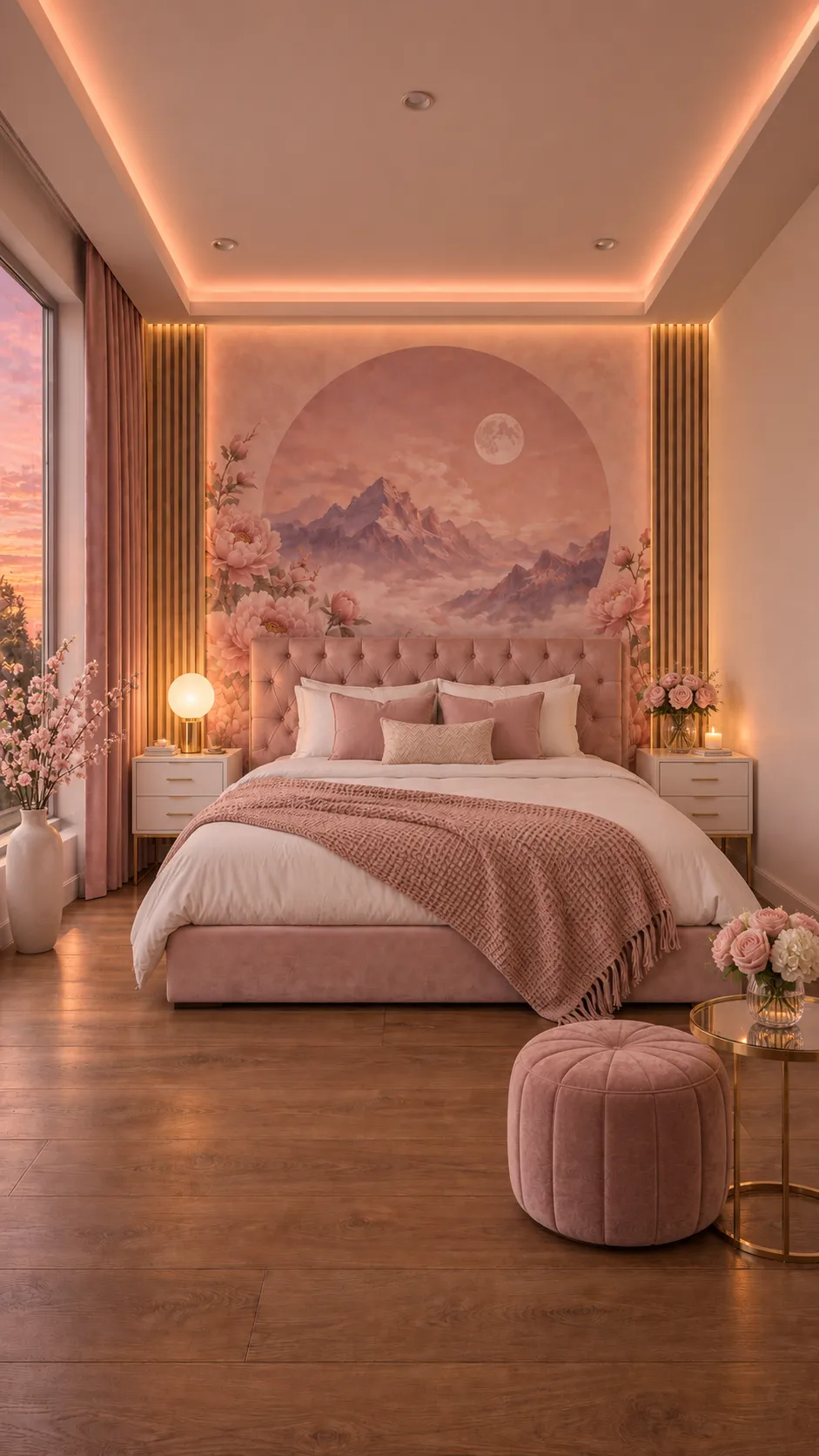 Bedroom
Clásico Rosado
A mural cut as a circle doesn't work like a rectangular one, and the difference isn't shape but…
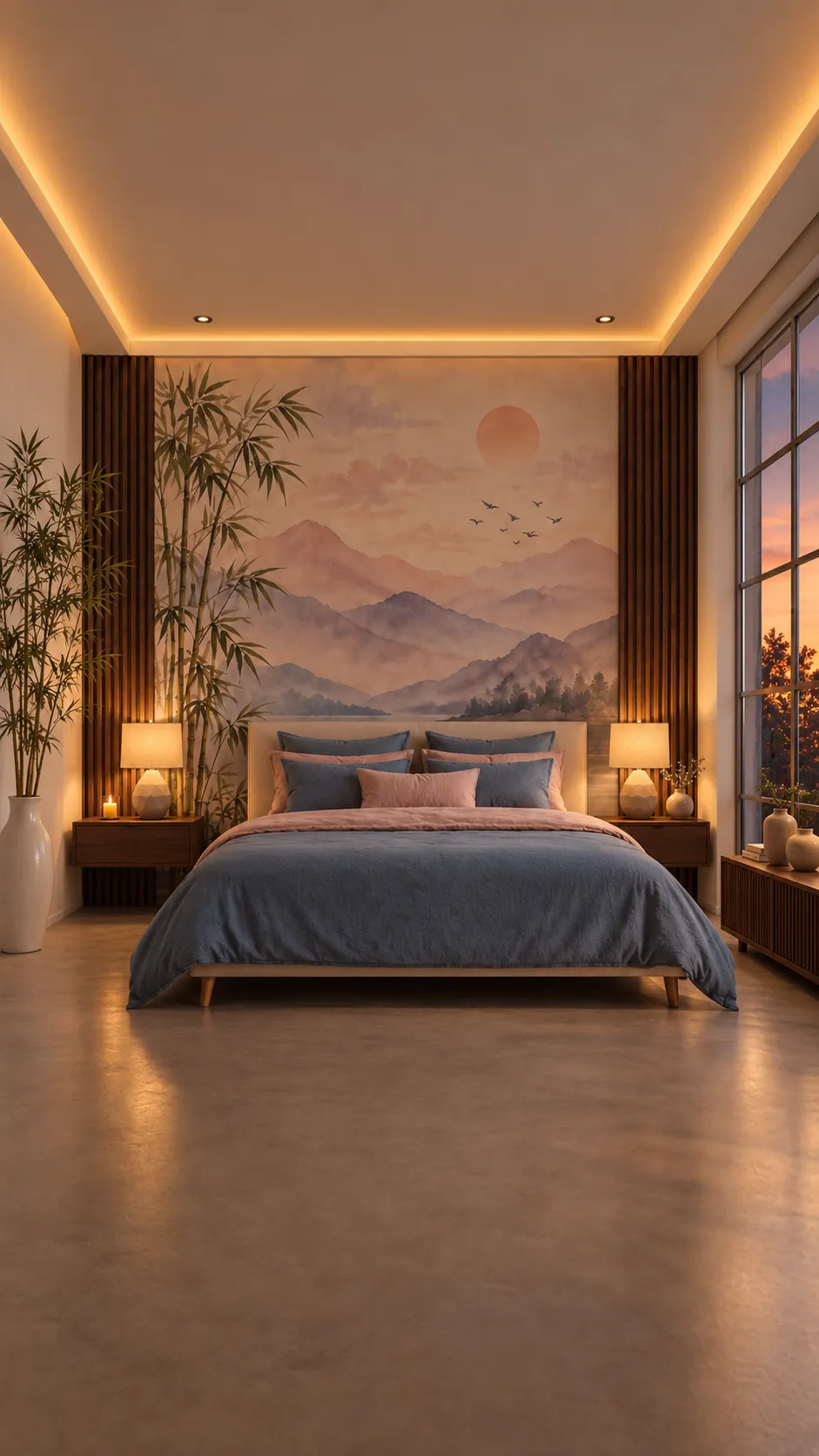 Bedroom
Minimalista Natural
The mural is pink and the bed is blue, and that's the decision holding the room together. The…
 Tu Casa