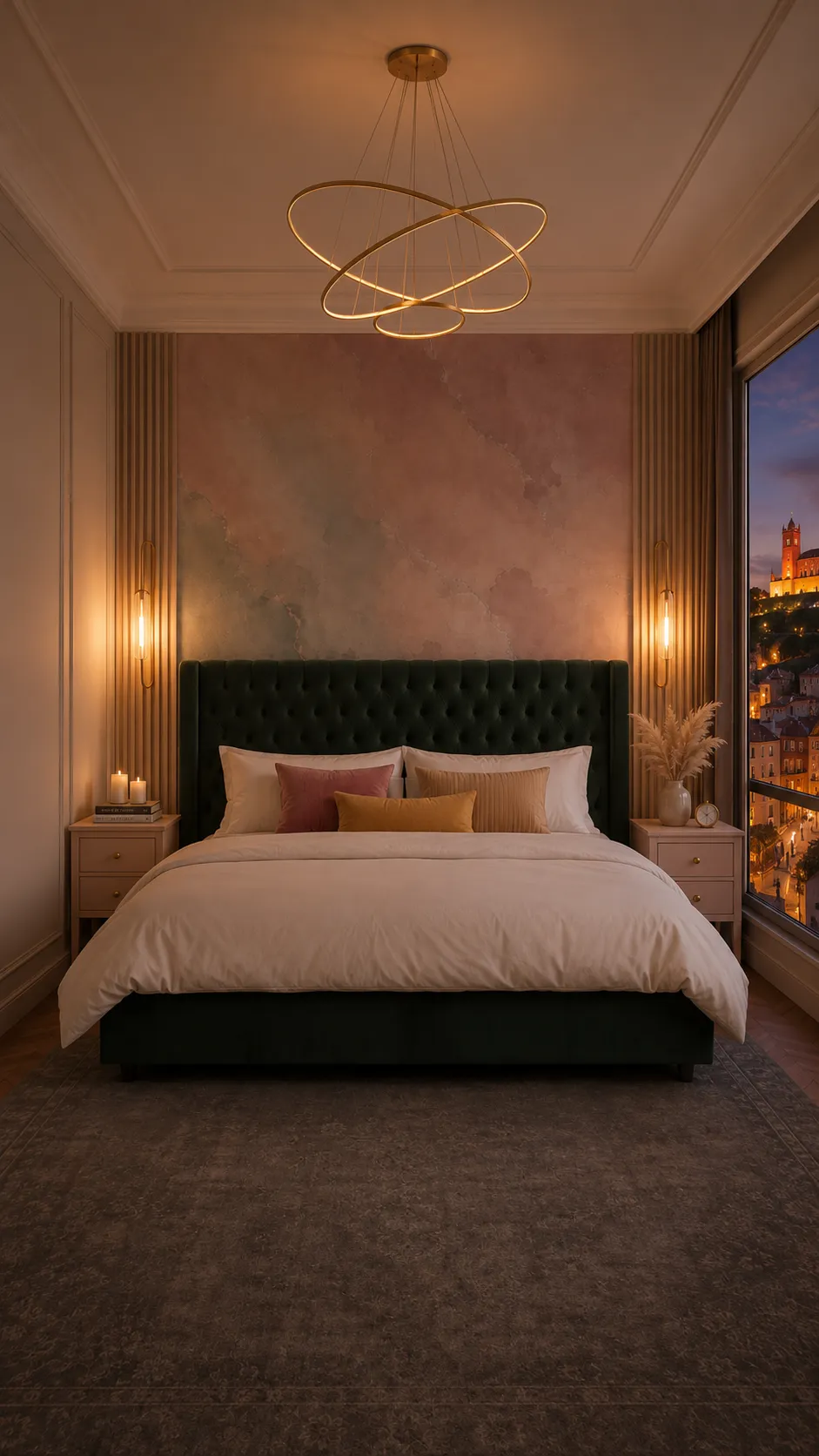
The room has a classic envelope — cornice, a recessed ceiling panel, panel mouldings on the walls — and all of it is painted the same tone as the wall, including the vertical fluting flanking the headboard. That decision is what allows everything else: the architecture supplies texture but no colour, so the room's only two voices end up being the abstract terracotta mural and the green velvet bed. Above, a ring light that also lights the moulded ceiling.
Items shown are similar to those in the video, not necessarily identical.
Several slim-profile rings with integrated LED, hung on cables at different heights and angles. With integrated LED there's no bulb to change, but there's also no replacing it: check the stated lifespan and whether the driver is accessible, because that's the part that fails first. Choose a dimmable model, since a continuous ring of light at full output is too direct for a bedroom.
See similar on Amazon(paid link)An elongated fitting with a visible filament bulb inside a brass profile. Its verticality decides where it goes: aligned with a fluting groove or a narrow panel it integrates, and on a wide flat wall it looks adrift. Use a long filament bulb at very low output, because in an open tube the filament is visible from the bed.
See similar on Amazon(paid link)Polystyrene or polyurethane profile for forming panel frames on the wall and a cornice where it meets the ceiling. Synthetic is what makes sense today: light, cut with a hand mitre box, and it doesn't take up damp the way plaster does. What matters is setting out the panels before gluing anything, because a frame off-centre relative to the bed shows from the doorway and there's no disguising it afterwards.
See similar on Amazon(paid link)An MDF panel with vertical half-round profiling, mounted on the wall and painted the same colour as it. That's what separates it from a wood slat panel: here neither material nor colour is added, only relief. Prime the MDF before painting and use a short-nap roller: with long nap the paint pools in the bottom of each groove and the relief loses definition.
See similar on Amazon(paid link)Short boards laid in a herringbone pattern, in timber or in laminate printed with the pattern. It's the floor that best accompanies a moulded envelope, because it shares the idea of a small repeated unit. Allow for more waste than with straight boards, around ten per cent extra, and note that the herringbone's direction is decided before starting: running toward the far wall lengthens the room, on the diagonal it widens it.
See similar on Amazon(paid link)Some links on this page are affiliate links. If you make a purchase through them, we may earn a commission at no extra cost to you.
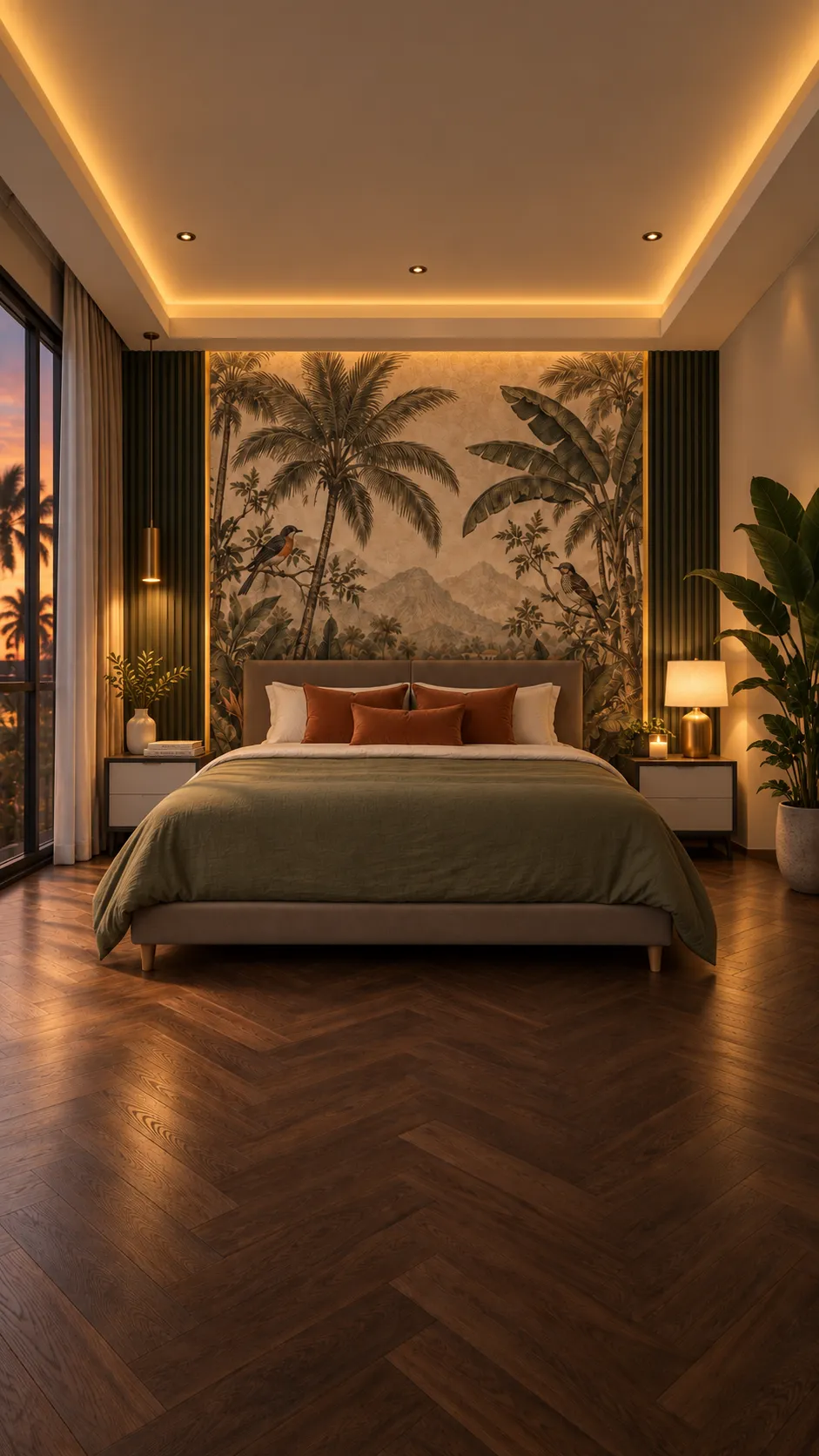 Bedroom
Colonial Tropical
The thing that took most work in this room is the floor and it barely gets looked at: herringbone…
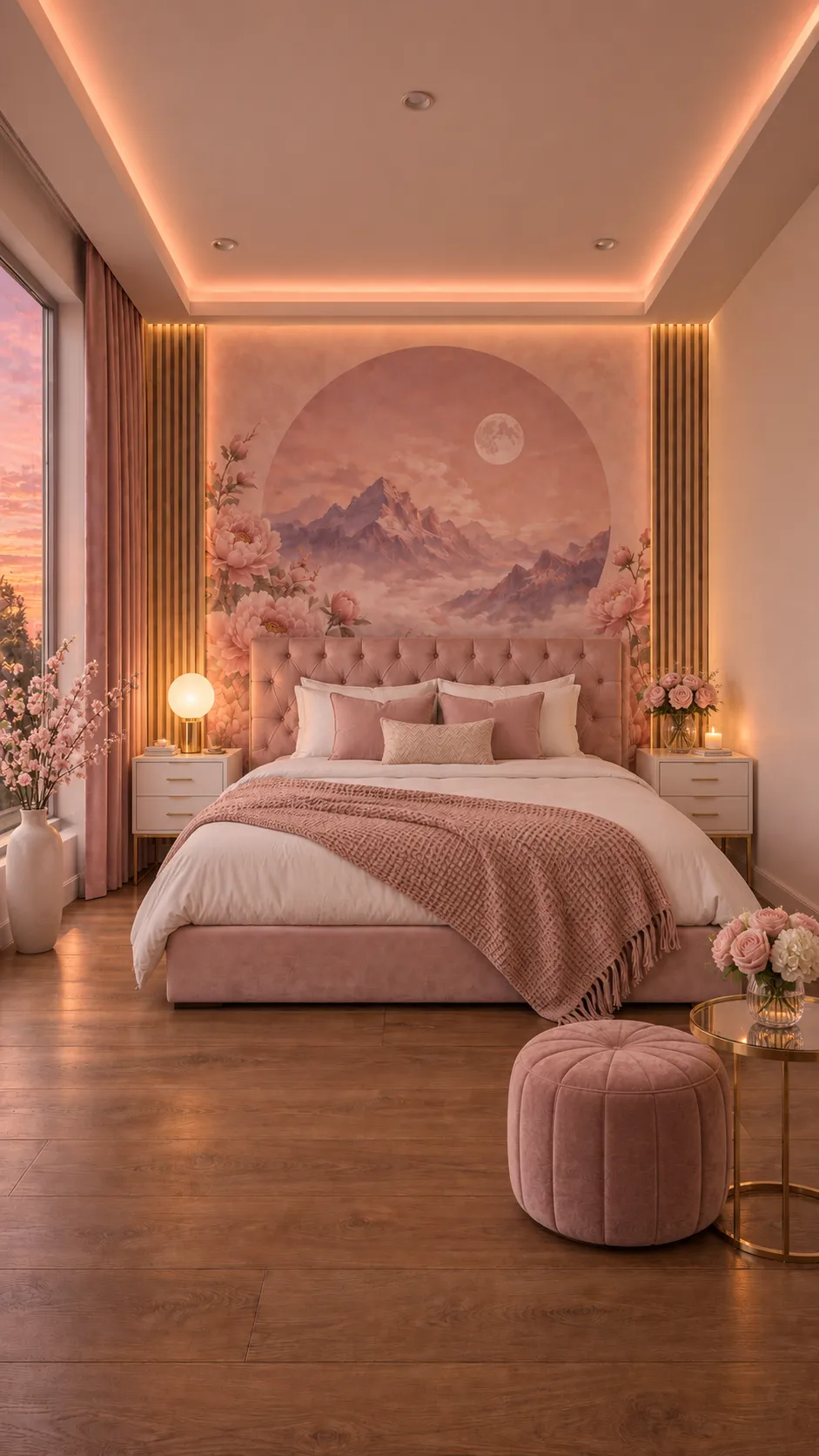 Bedroom
Clásico Rosado
A mural cut as a circle doesn't work like a rectangular one, and the difference isn't shape but…
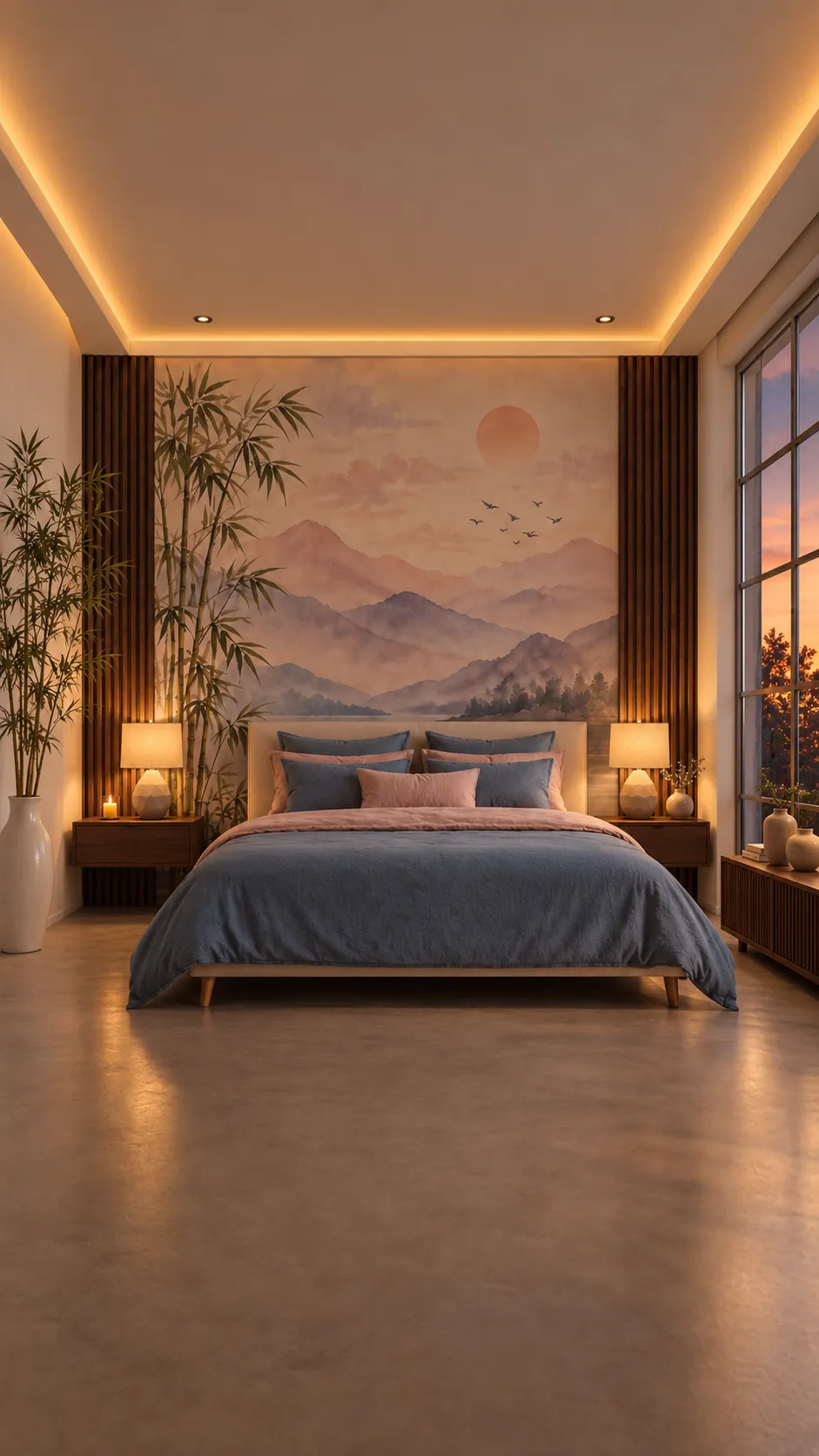 Bedroom
Minimalista Natural
The mural is pink and the bed is blue, and that's the decision holding the room together. The…
 Tu Casa