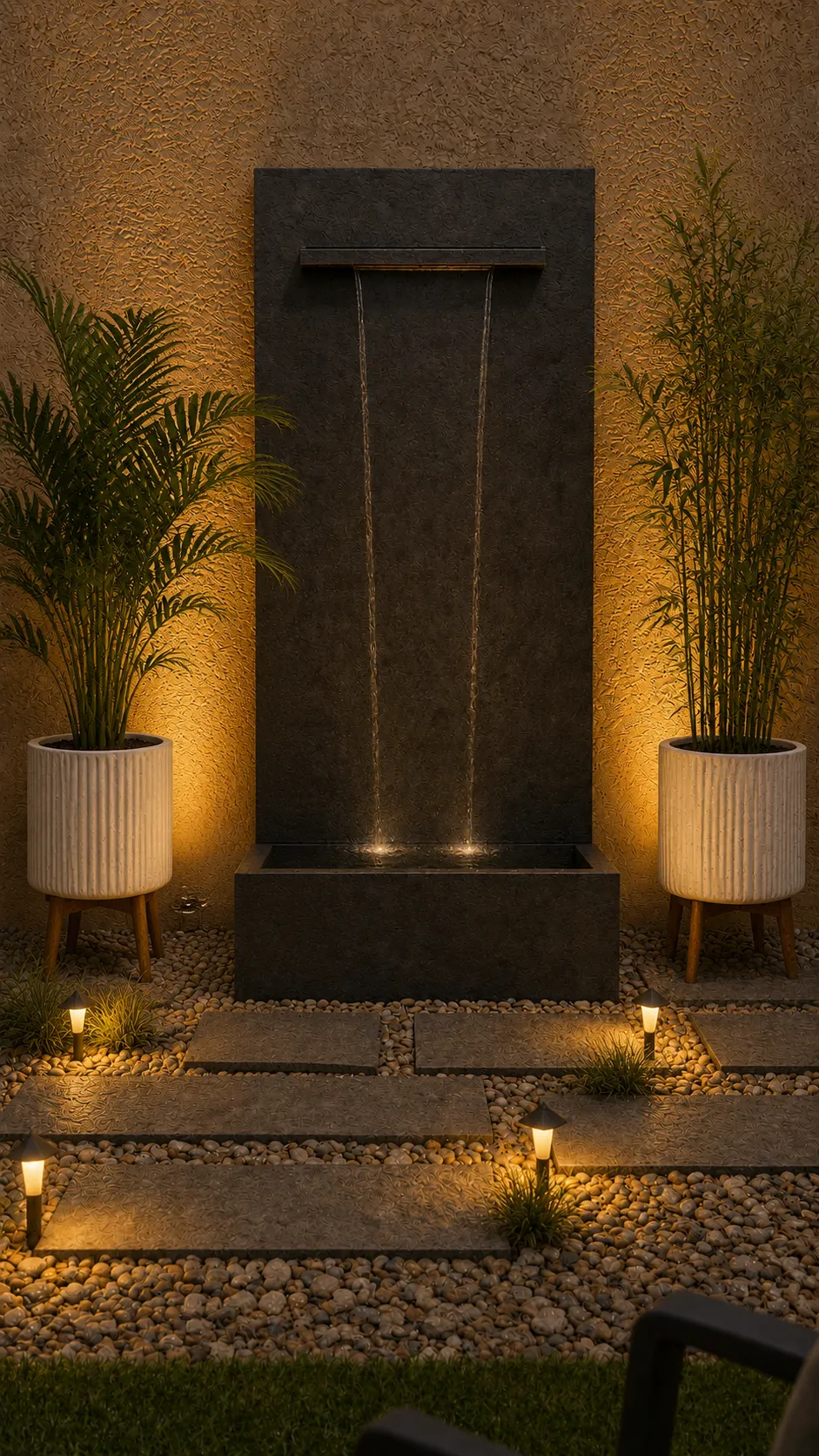
This fountain isn't built into the wall: it's a freestanding piece resting in front of it, with its own basin, pump and weir bar. The difference matters more than it looks, because it lets you install it without touching a wall that's often shared with a neighbour, and take it with you if you move. The water falls in two very fine threads — so fine that you only see them because there's a submerged spot directly beneath each one. By day, what you see is a dark slab.
Items shown are similar to those in the video, not necessarily identical.
A complete piece of vertical slab and lower basin, with the pump housed inside and a closed circuit. When buying, check the weight and how it arrives: cast stone versions exceed two hundred kilos and come on a pallet, so sort out access to the final position first. And make sure the basin is integrated rather than just the slab, because a basin bought separately almost never matches in width.
See similar on Amazon(paid link)A fluted cylindrical pot mounted on a three- or four-legged stand. The legs solve permanent contact with damp gravel and let you sweep underneath, but they raise the centre of gravity considerably: before planting, put four fingers of gravel in the bottom as ballast. And check the stand comes apart, because a tall filled piece can't be shifted in one go.
See similar on Amazon(paid link)A rough-finish render, the kind applied with a float and worked with a roller or sponge to leave relief. The relief is what justifies the ground uplights here: over a smooth render, grazing light has nothing to reveal and the wall reads flat. Do a half-metre sample and look at it at night with a torch held flat against the wall before doing the whole face.
See similar on Amazon(paid link)A low grass clump, the kind planted loose between slabs to break the geometry. They do well in gravel because they tolerate fast drainage and the heat the stone gives back, and they're cut to the ground once a year and regrow. Plant them into a soil pocket beneath the gravel rather than straight into the pebble, and scatter individual clumps instead of a continuous line.
See similar on Amazon(paid link)A path light fifteen to twenty-five centimetres tall with a cap that hides the bulb and throws light down. The height is what separates it from a normal bollard: at this scale it lights the route without appearing in front of whatever you're meant to look at, so it's the one to use ahead of a feature. Choose a spiked model with burial-rated cable rather than a bolt-down base, because in gravel they need repositioning each season.
See similar on Amazon(paid link)Some links on this page are affiliate links. If you make a purchase through them, we may earn a commission at no extra cost to you.
 Garden
Oasis Tropical
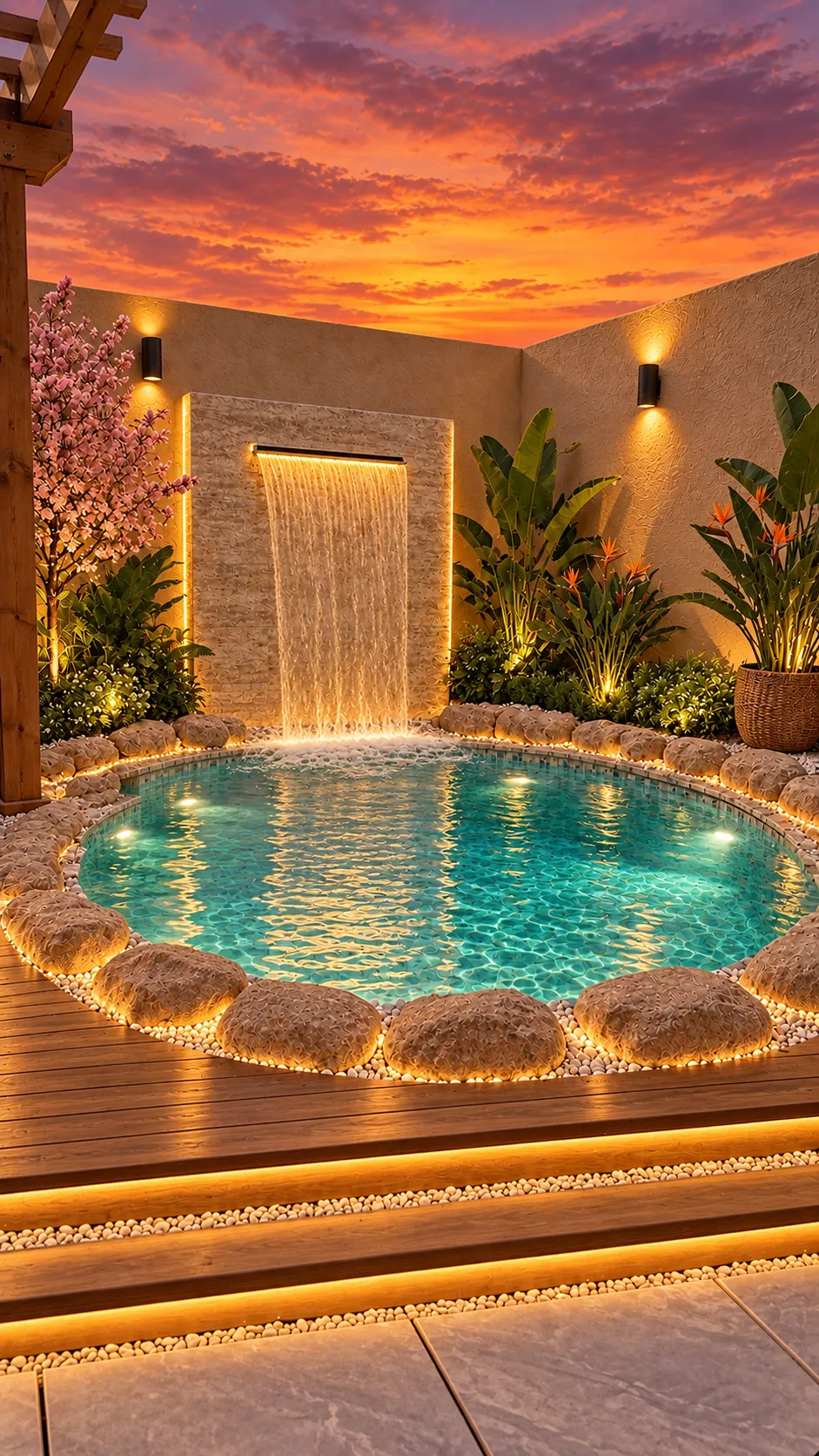
The ring of boulders around the pool is what gives it the air of a natural bathing pool, and also…
 Garden
Contemporáneo
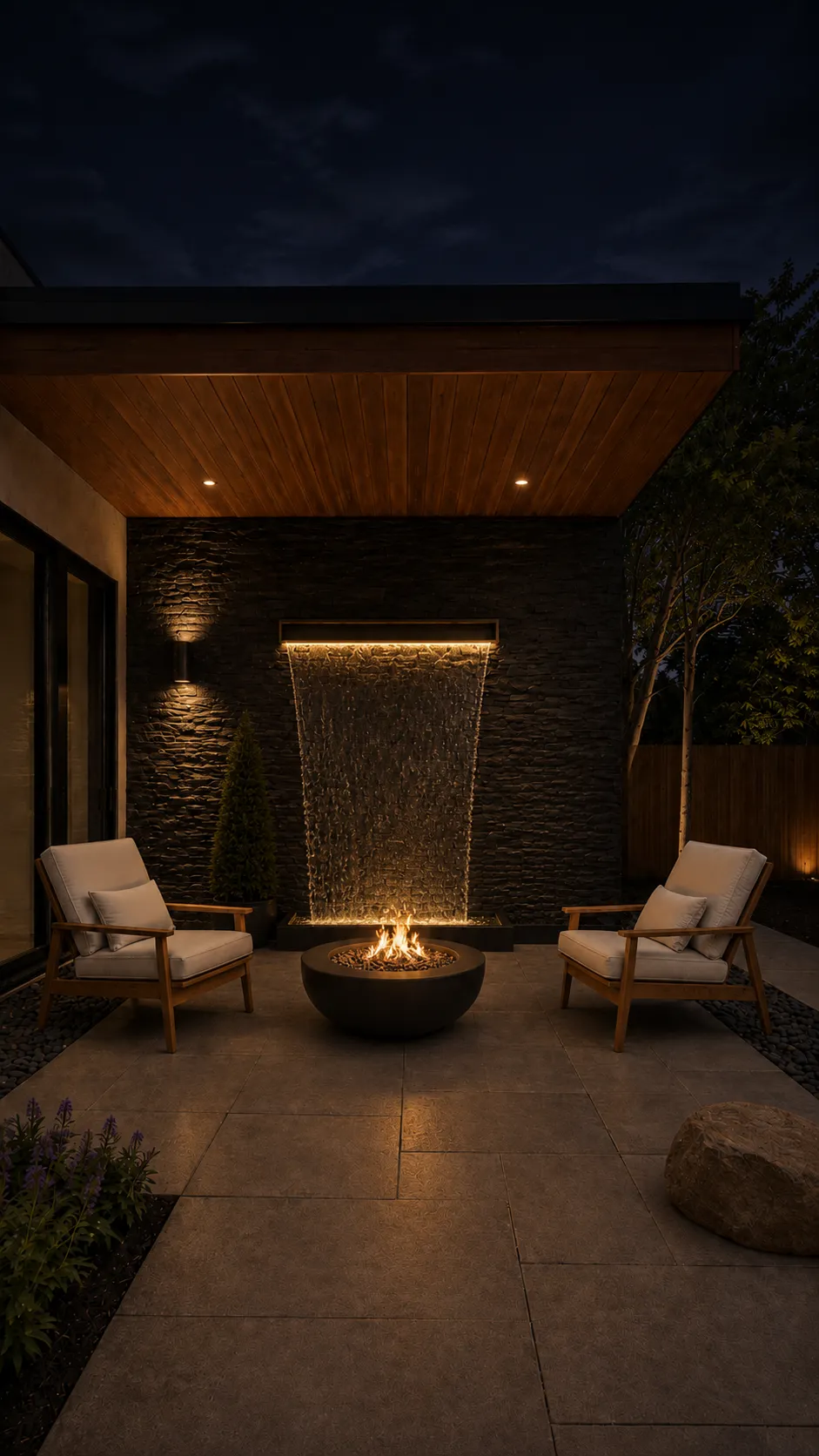
A courtyard built to be used after dark, with water and fire set facing each other on the same…
 Garden
Zen Contemporáneo
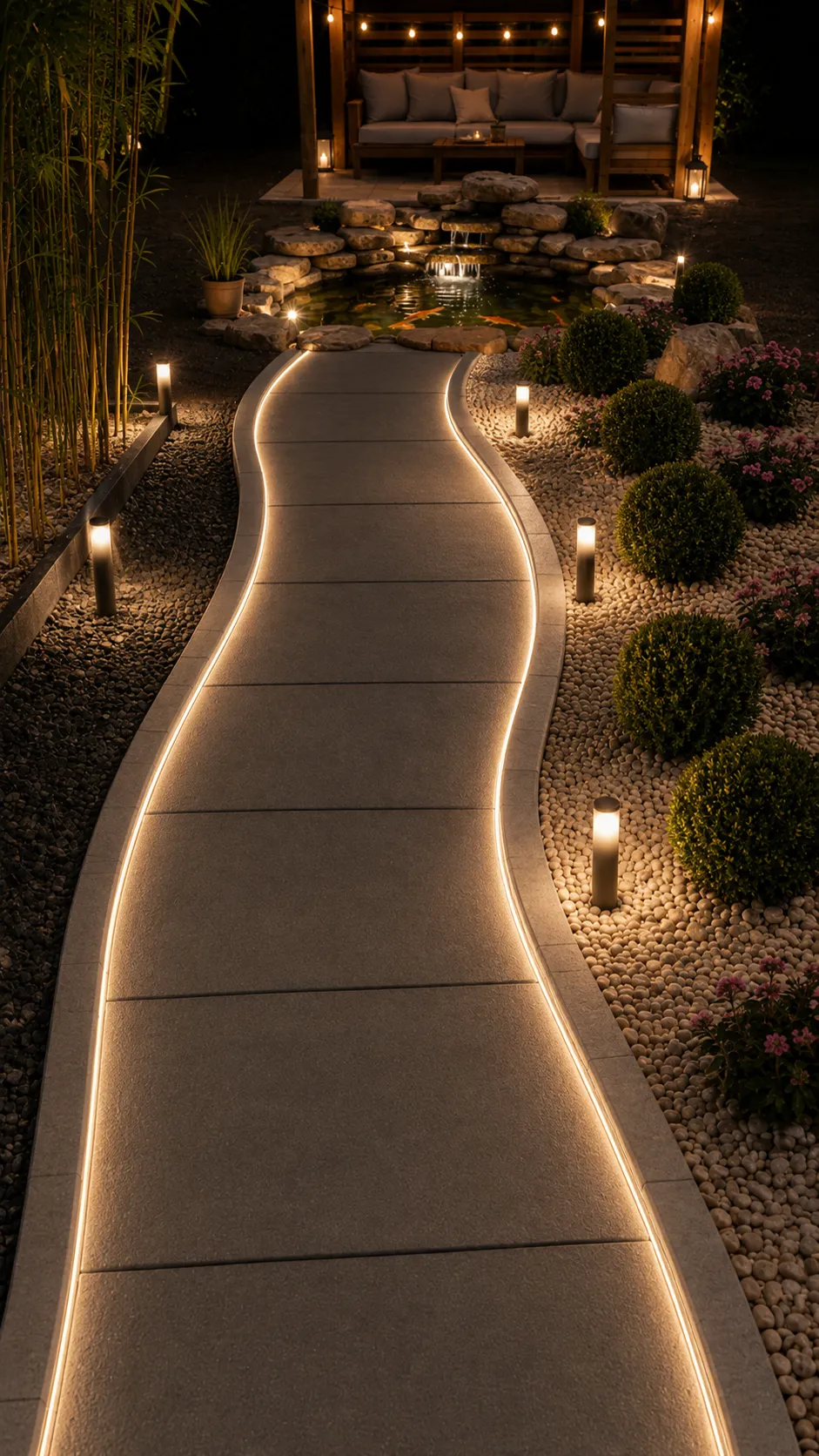
The path isn't lit by lamps aimed at it: it carries a continuous LED strip housed in both its…
 Tu Casa