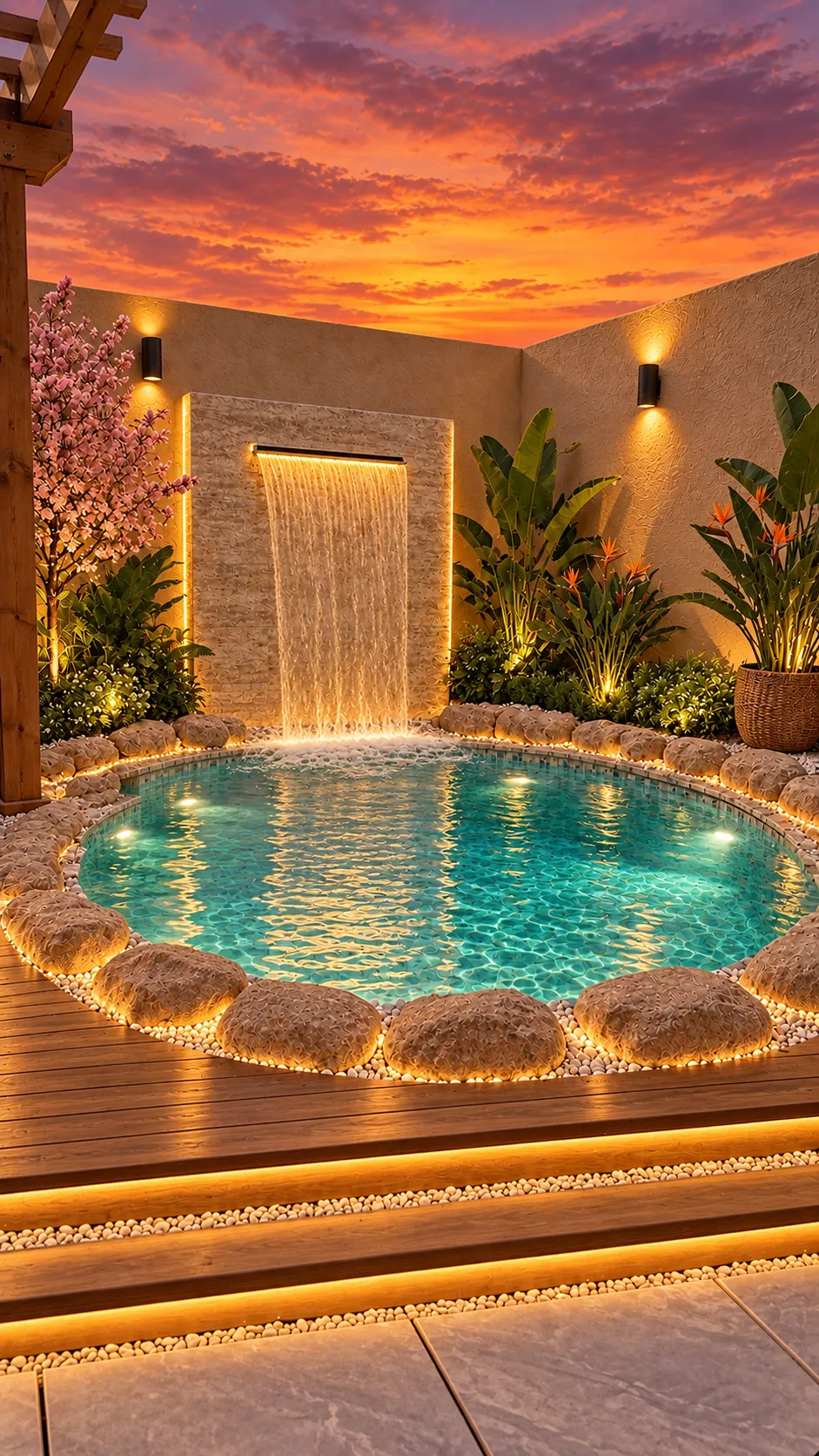
The ring of boulders around the pool is what gives it the air of a natural bathing pool, and also the one thing to look at carefully before copying it. A rounded stone isn't a coping: wet it's slippery, it gives nowhere to place a foot and, above all, it offers no flat edge to grip when getting out of the water. It works as a decorative finish around most of the perimeter as long as one stretch is resolved another way.
Items shown are similar to those in the video, not necessarily identical.
A coping unit with a rounded nose and a non-slip top face, the piece that resolves the stretch where you get in and out of the water. Check two figures: the wet slip-resistance class and the overhang of the nose, because an edge projecting a couple of centimetres gives the hand far better grip than a flush one. In pale stone it heats up considerably less in the sun than a dark one, which you notice barefoot.
See similar on Amazon(paid link)An edge-anchored ladder, essential in a pool whose perimeter is finished in rounded stone and offers no flat edge at all. The figure that matters is the stainless grade: in a chlorinated pool AISI 304 pits over the years and 316 holds up considerably better, and the price difference is recovered the first time you avoid replacing it. The anchors go into firm coping, never into a loose boulder.
See similar on Amazon(paid link)A column with a tank that heats the water by sun, needing no electrical work and connected to a plain garden hose. Beside a pool ringed with pebble it serves a specific purpose beyond the obvious: it's where you get the small stones off your feet before going in. Set it over a base with drainage or over the gravel itself, and drain the tank in winter where it freezes, because that's the first thing to burst.
See similar on Amazon(paid link)A narrow channel with a grating set between the pool edge and whatever comes behind, whether gravel or decking. It solves two things at once: it catches the water carried out of the pool before it soaks the timber, and it holds back small stone before it reaches the water. The grating wants to lift out without tools, because the channel needs clearing of leaves every few weeks and if it's awkward to open it doesn't get done.
See similar on Amazon(paid link)The medium-sized variety with orange flowers, different from the large-leaved non-flowering one used indoors. Outdoors it takes full sun and wants little water once established, but it won't stand frost: below zero it loses its leaves and inland it needs protecting. It's slow to flower, three or four years from seed, so to see blooms soon buy it as a mature clump.
See similar on Amazon(paid link)Some links on this page are affiliate links. If you make a purchase through them, we may earn a commission at no extra cost to you.
 Garden
Contemporáneo
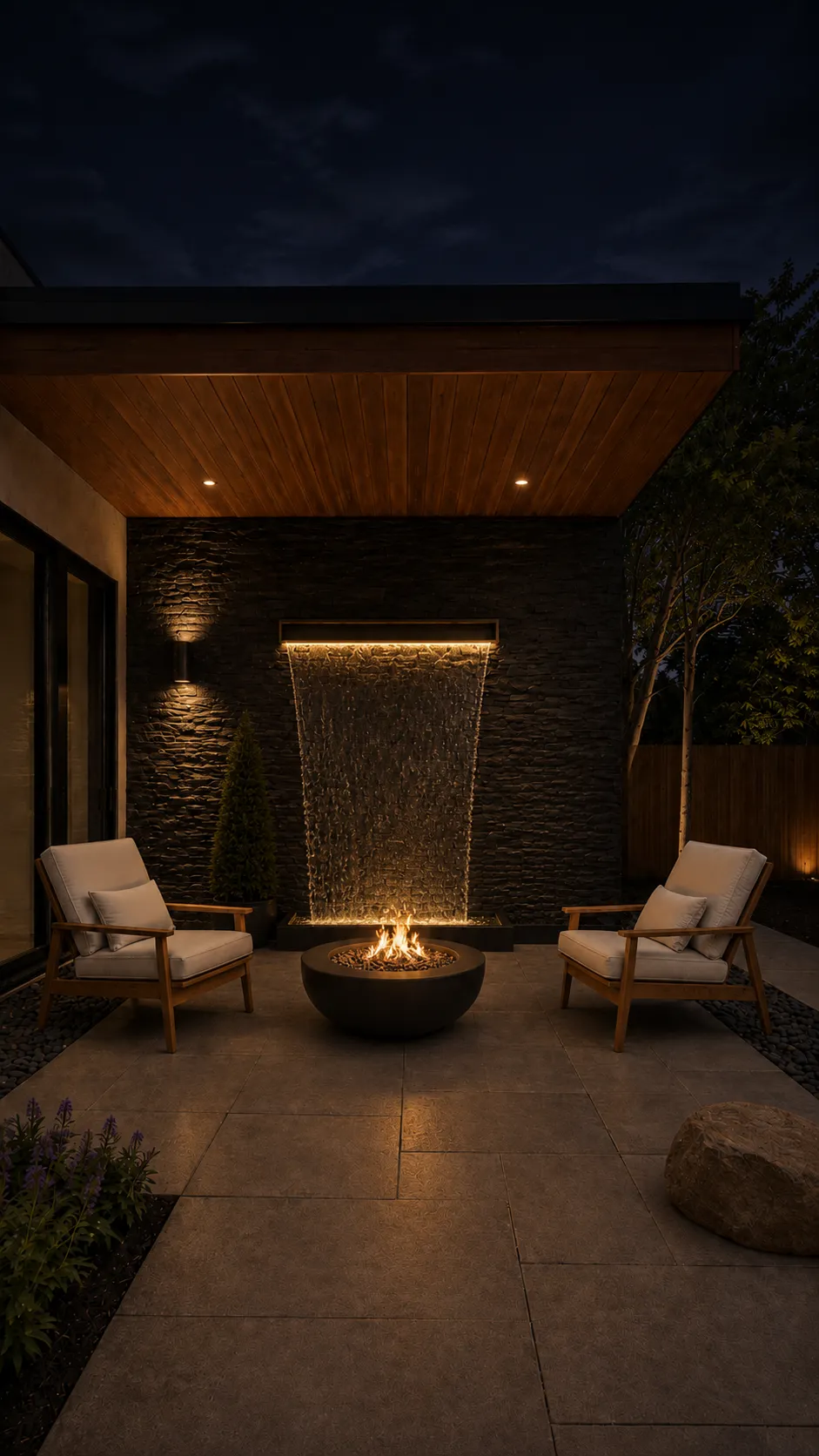
A courtyard built to be used after dark, with water and fire set facing each other on the same…
 Garden
Zen Contemporáneo
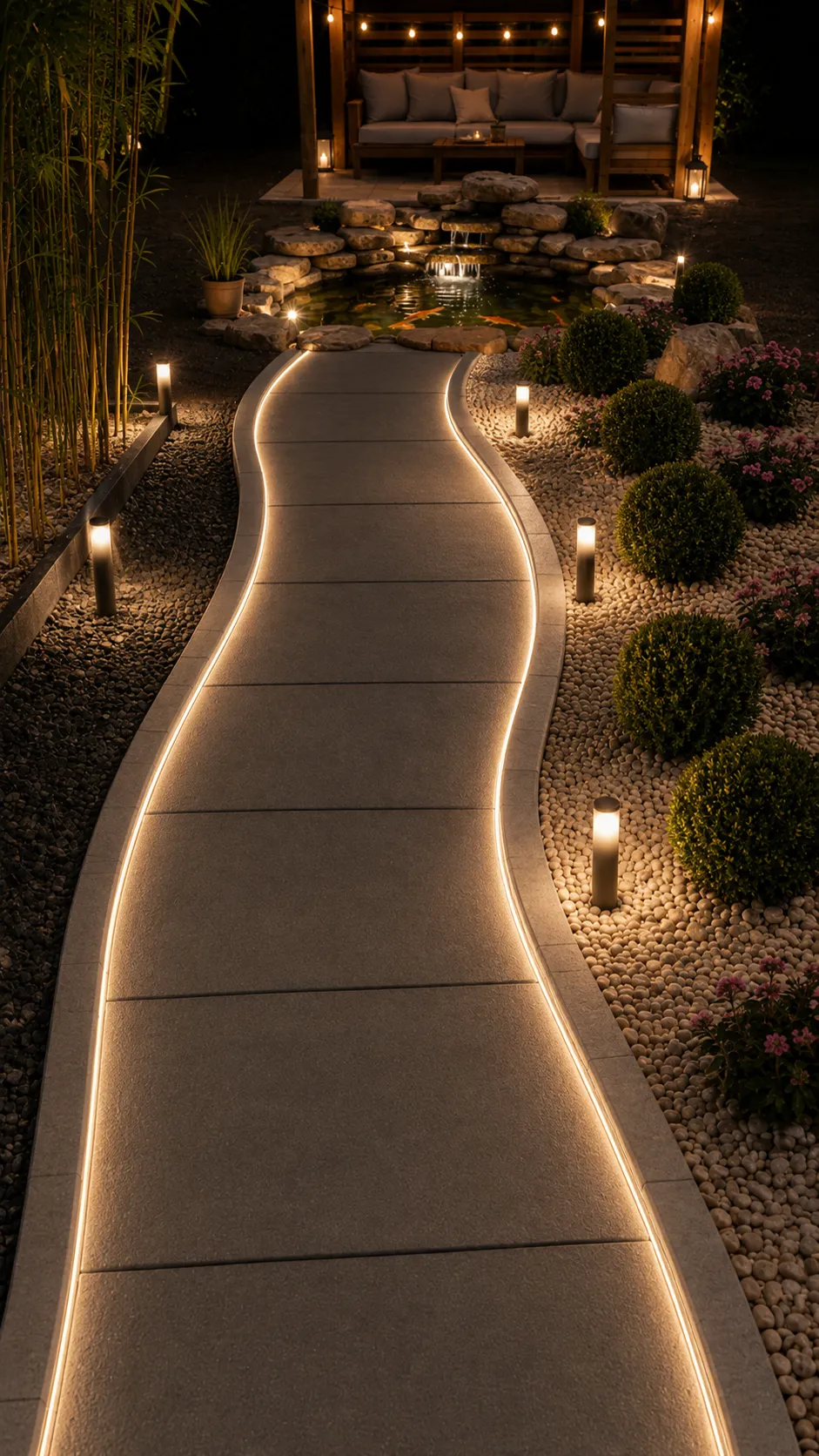
The path isn't lit by lamps aimed at it: it carries a continuous LED strip housed in both its…
 Garden
Resort Contemporáneo
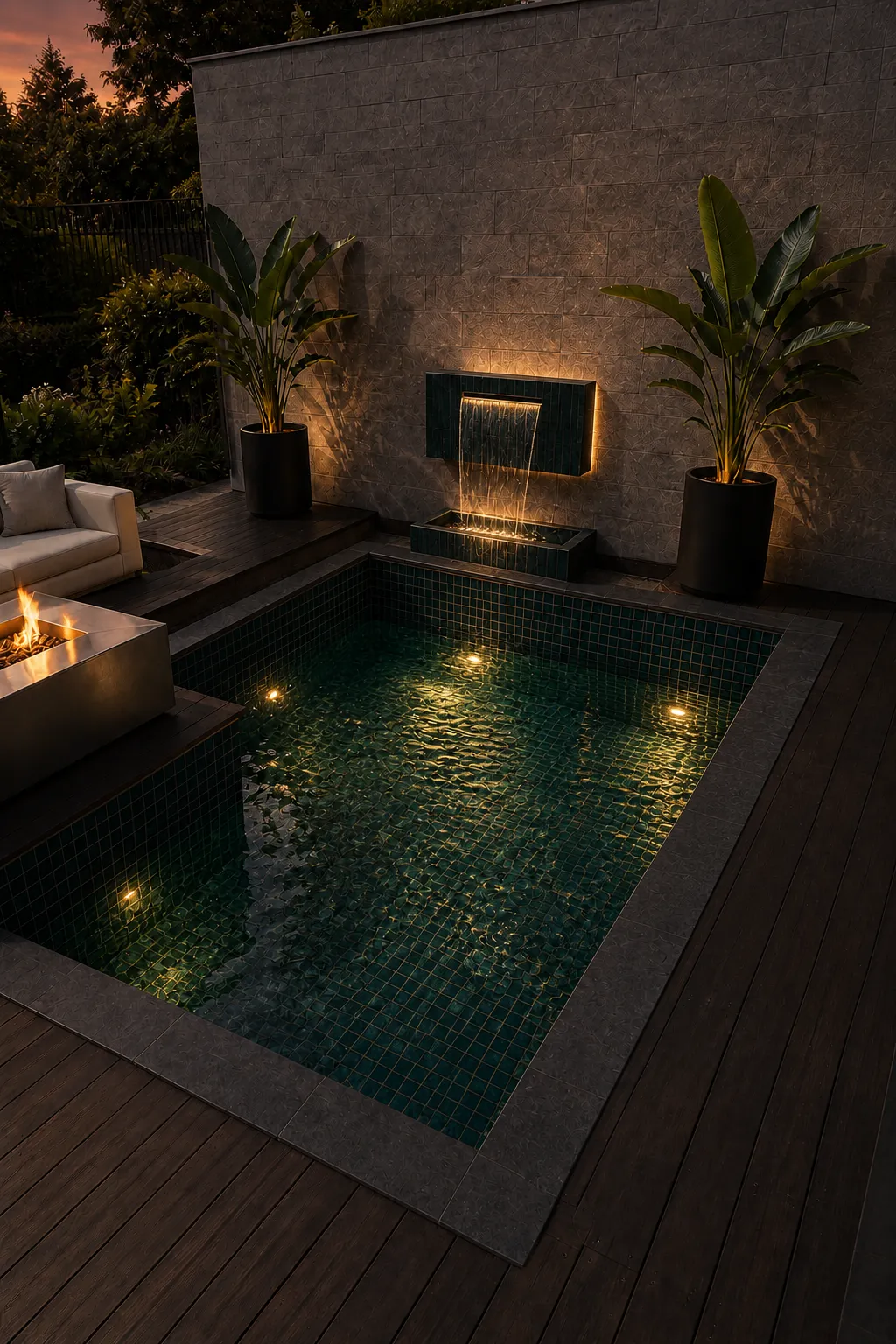
The pool takes up only a few metres, but at dusk it's the only thing you look at. The reason is…
 Tu Casa