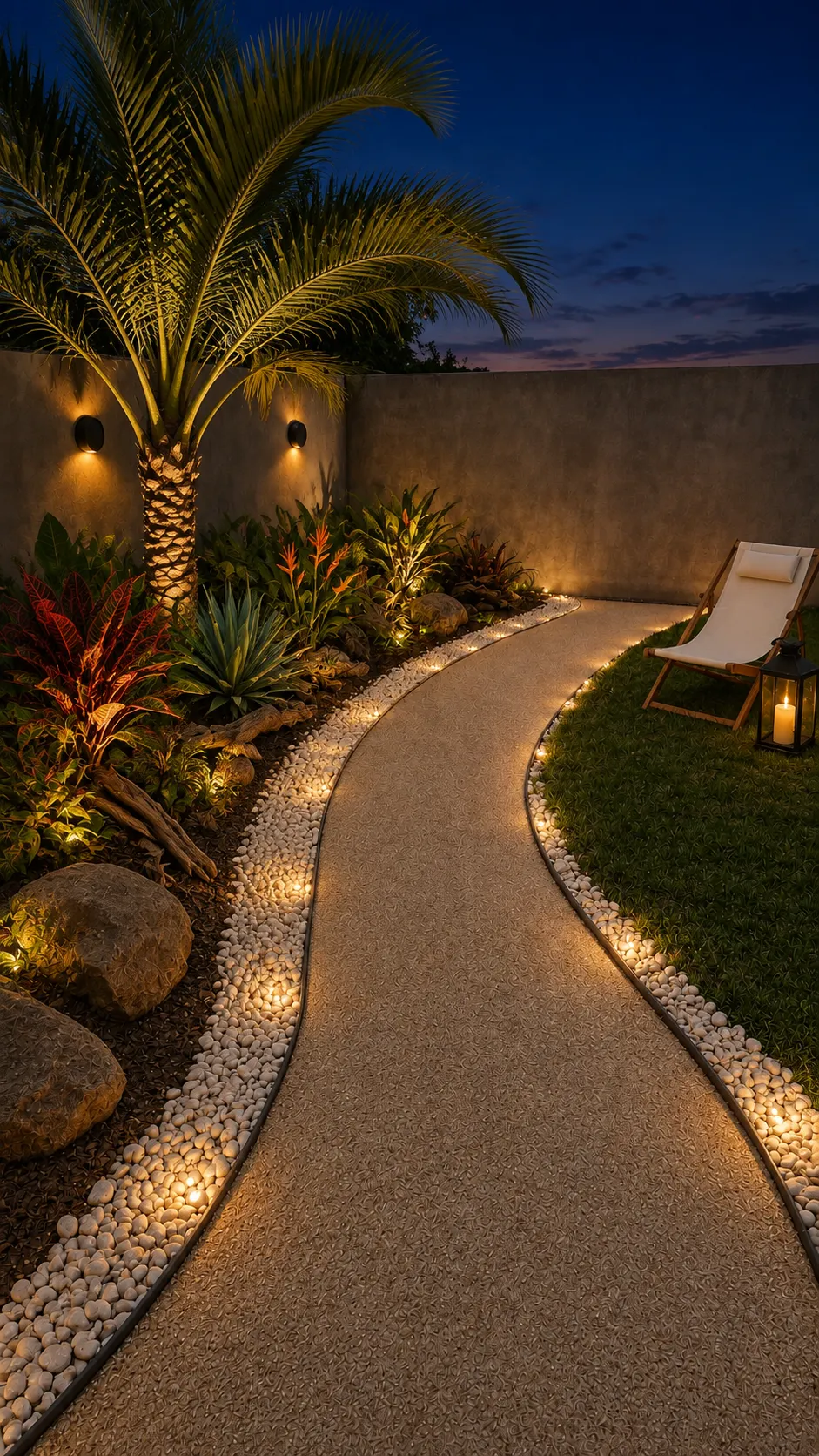
This path isn't made of pieces: it's a continuous exposed-aggregate surface, jointless, sweeping through the garden in one long curve. Either side runs a band of white river pebble separated by a dark edging profile, and the light doesn't run as a line along the edge but as individual points buried among the stones. Seen at night they read as glints between the pebbles rather than as fittings, which is exactly the difference from a path outlined with LED strip.
Items shown are similar to those in the video, not necessarily identical.
An in-ground fitting with a walkover ring, buried in the bed a metre from the trunk. Two figures can't be skipped: the IP rating, which has to be 67 because it sits at ground level and floods when you irrigate, and the load rating if anyone will step on it. Choose a narrow adjustable beam: a wide one lights more ground than tree and wastes half the output.
See similar on Amazon(paid link)A set of small spike-mounted fittings on low-voltage cable, pushed in among the gravel and moved whenever needed. It's the easiest installation in the garden to revise: no trench to dig or channel to cut, and if the bed changes over time the points are repositioned in an afternoon. Buy the kit with the transformer included and spare cable, so you don't have to make joints outdoors.
See similar on Amazon(paid link)A two-part resin that binds aggregate into a continuous permeable surface. It's how you get a jointless path over an existing slab without lifting anything. Respect the ratio and the application temperature the maker specifies: below a certain point it doesn't cure properly and the aggregate comes loose in the first winter. And wash and dry the stone before mixing, because dust stops the resin gripping.
See similar on Amazon(paid link)A classic scissor-frame deck chair with a canvas seat and headrest. The advantage over fixed furniture is that it folds and goes away, so the lawn is clear when it isn't in use and the canvas doesn't spend the winter outdoors, which is what ruins it. Choose teak or treated acacia and check replacement canvas is available: the fabric fades before the frame does and is usually sold separately.
See similar on Amazon(paid link)A compact-rosette agave, bringing a geometric shape among soft-leaved planting. It's one of the few species that across the peninsula takes direct sun, drought and, depending on the variety, light frost. Two practical warnings: the leaf tips genuinely spike, so keep it away from a path used daily, and over time it throws offsets around the base that want removing unless you want a clump.
See similar on Amazon(paid link)Some links on this page are affiliate links. If you make a purchase through them, we may earn a commission at no extra cost to you.
 Garden
Oasis Tropical
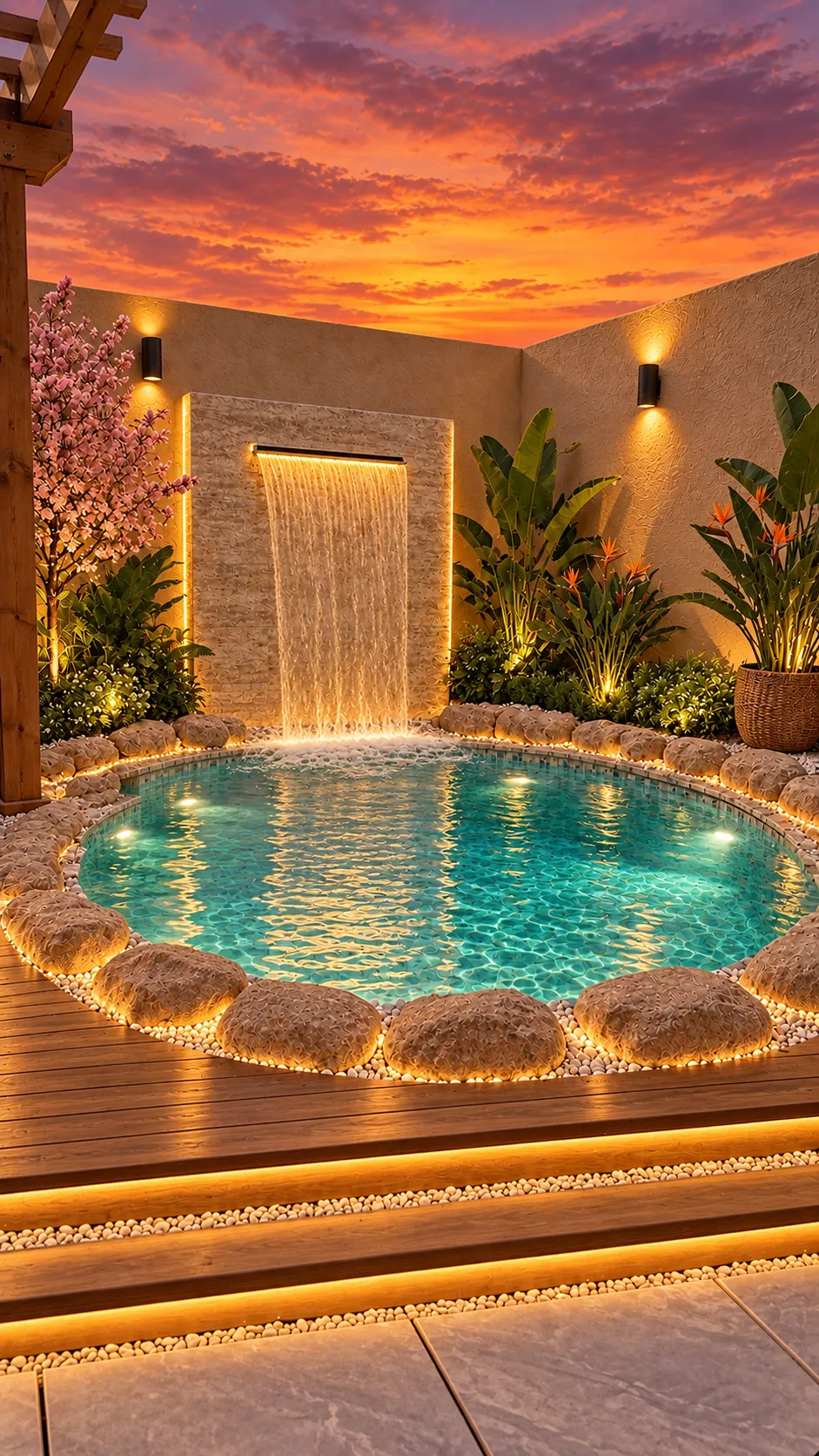
The ring of boulders around the pool is what gives it the air of a natural bathing pool, and also…
 Garden
Contemporáneo
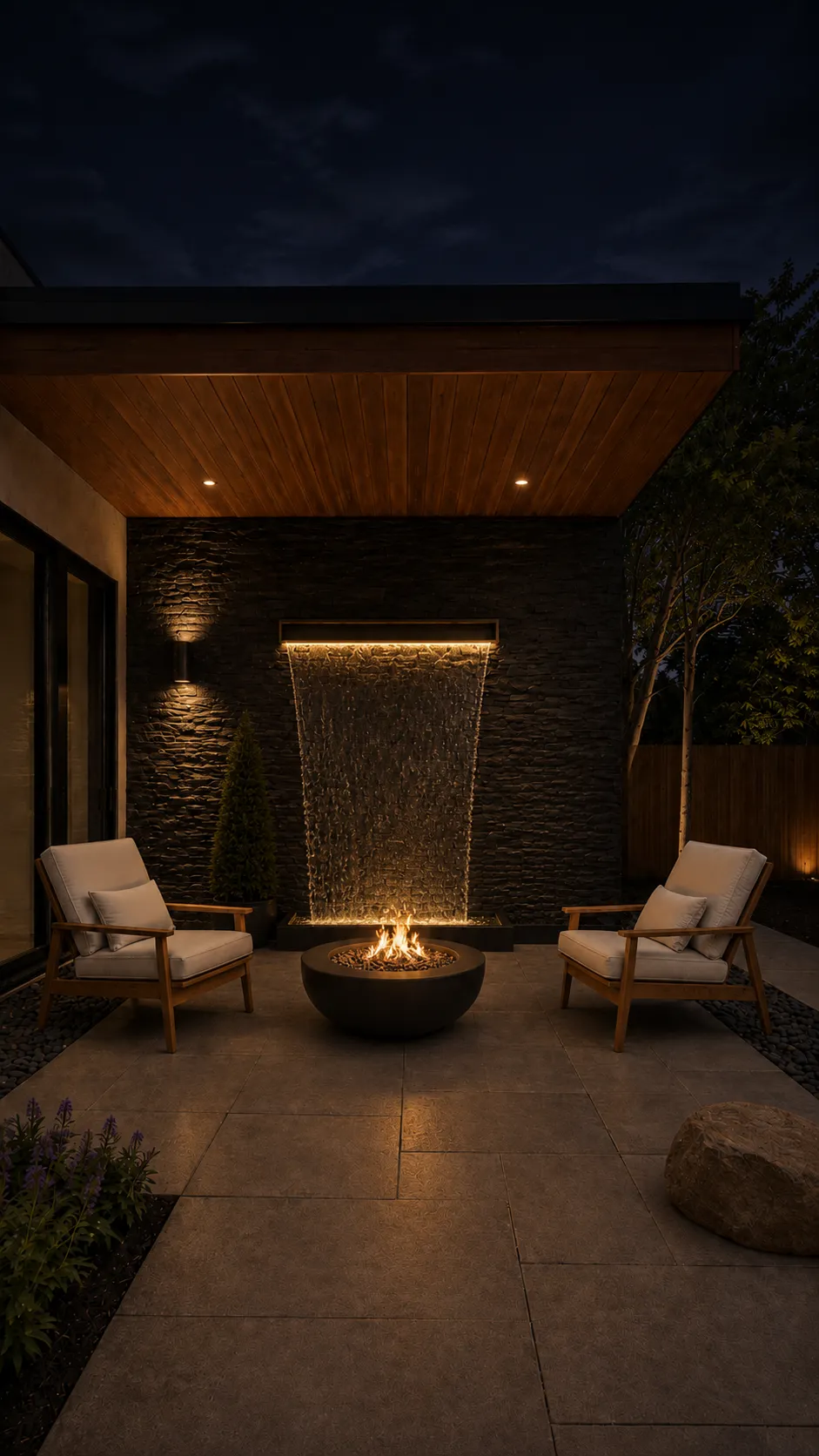
A courtyard built to be used after dark, with water and fire set facing each other on the same…
 Garden
Zen Contemporáneo
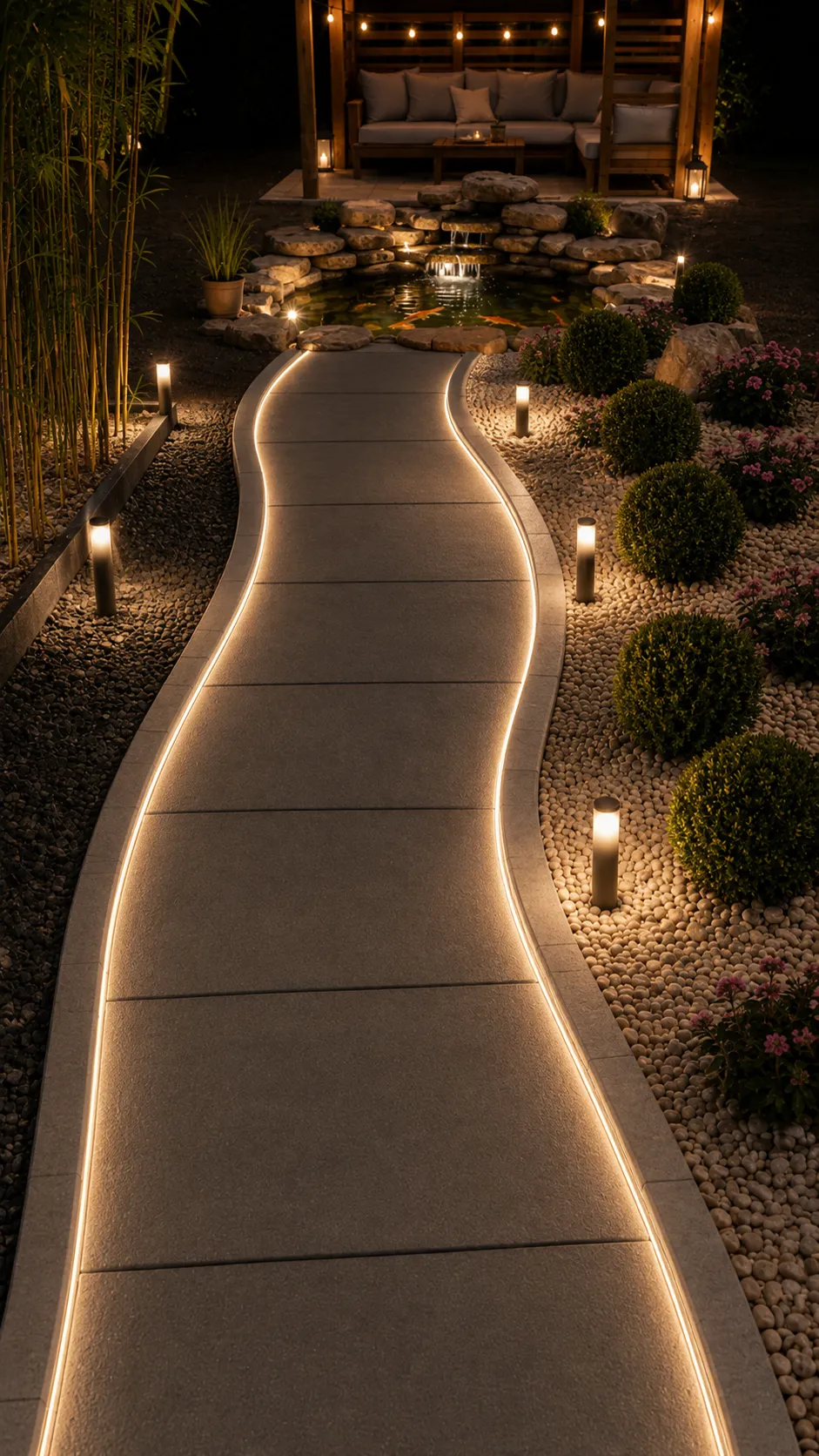
The path isn't lit by lamps aimed at it: it carries a continuous LED strip housed in both its…
 Tu Casa