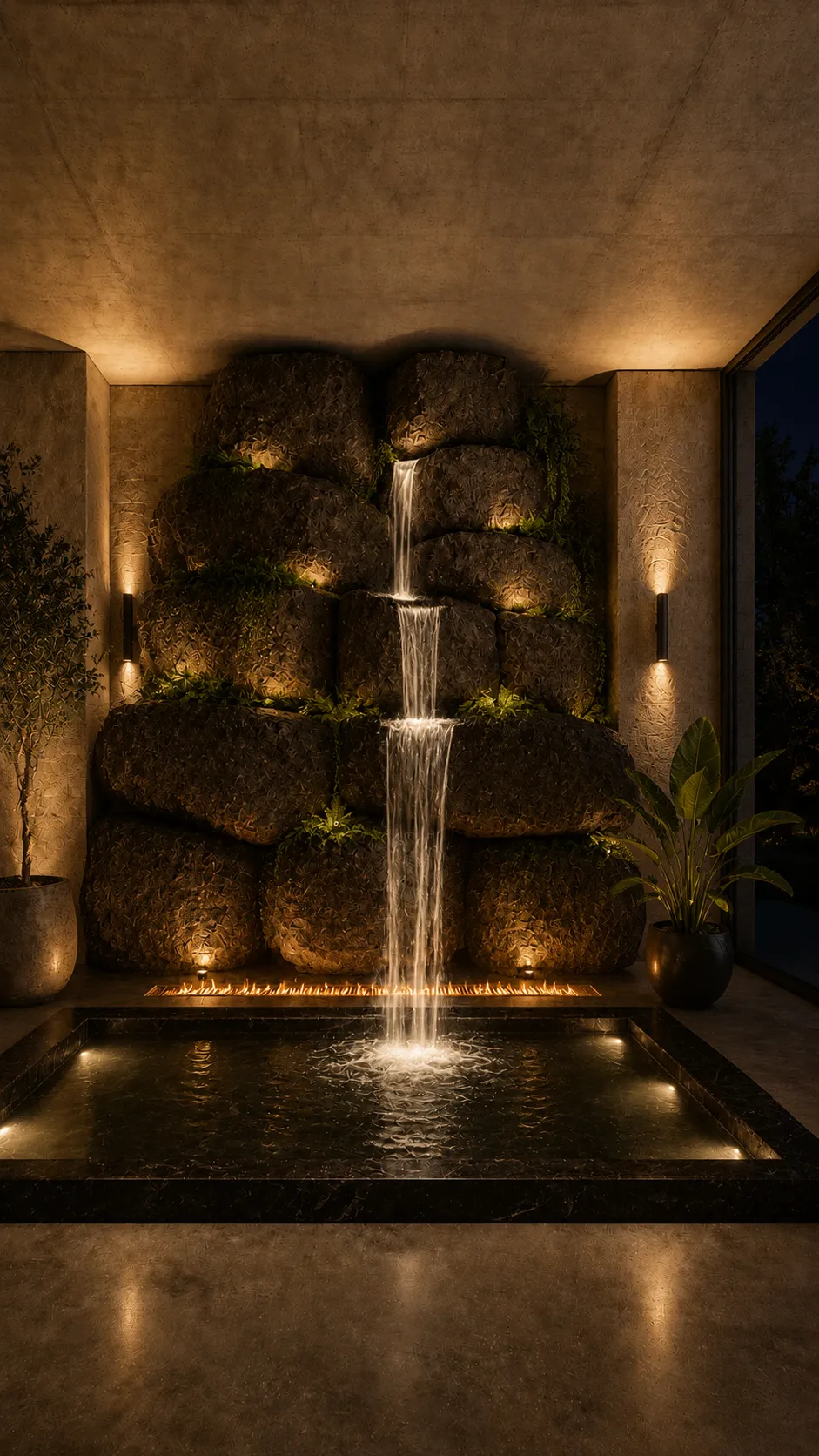
What stands out here isn't that there's fire and water, but that they sit in the same plane: the cascade comes down the middle of the boulder wall and the burner runs in a line right at its foot, so you take both in at a glance. It's also the hardest part of the whole thing to build and to keep running. Around it, a rectangular reflecting pool, plants growing in the joints between blocks, and a board-formed concrete ceiling deliberately left plain.
Items shown are similar to those in the video, not necessarily identical.
An elongated stainless trough with a gas ramp, for building into a masonry bench or the foot of a wall. Choose between manual and electronic ignition with a flame sensor: near water the electronic version isn't a luxury but what stops gas escaping if a splash puts out a section. Use 316 stainless if it sits beside a permanent body of water.
See similar on Amazon(paid link)Volcanic aggregate covering the ramp and spreading the flame along the whole line. Beside a waterfall choose lava rock over decorative glass: stone drains and any water that lands passes through, while glass holds droplets above the burner and causes blowouts. Wash and dry it thoroughly before laying, because damp dust makes the flame burn unevenly.
See similar on Amazon(paid link)A mixed lot of sedum, sempervivum and saxifraga in small pots — the species that live in a joint with two handfuls of soil. They go in as the wall is built rather than afterwards, with the root set into the substrate pocket before the block above is seated. Group them rather than putting one in every joint: in a line they read as a construction detail rather than as planting.
See similar on Amazon(paid link)A surface collector drawing in the top layer of water and trapping leaves and dust before they sink. In a reflecting pool it's the part that decides the maintenance: a leaf that reaches the bottom has to be fished out by hand, while one taken off the surface comes out in a basket. Choose a floating unit if the pool is already built, or a wall-mounted one if it's still under construction.
See similar on Amazon(paid link)A long-handled brush or hand vacuum for lifting sediment off the bottom. Under a waterfall far more accumulates than you'd expect, because the stream carries dust and debris off the stone above and it all settles at the landing point. Choose soft bristles if the bottom is polished stone, because stiff bristles leave visible marks on dark finishes.
See similar on Amazon(paid link)Some links on this page are affiliate links. If you make a purchase through them, we may earn a commission at no extra cost to you.
 Garden
Oasis Tropical
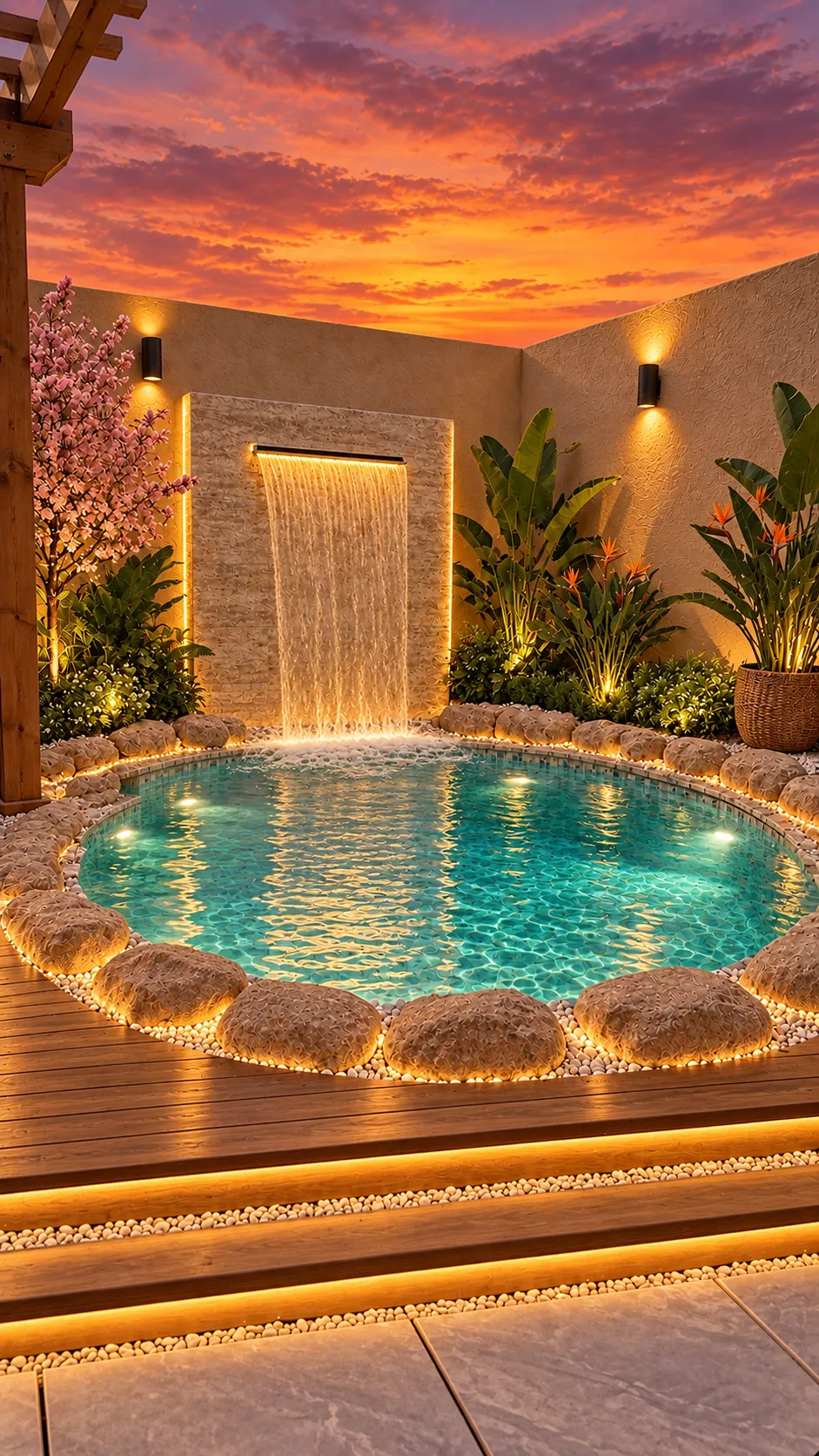
The ring of boulders around the pool is what gives it the air of a natural bathing pool, and also…
 Garden
Contemporáneo
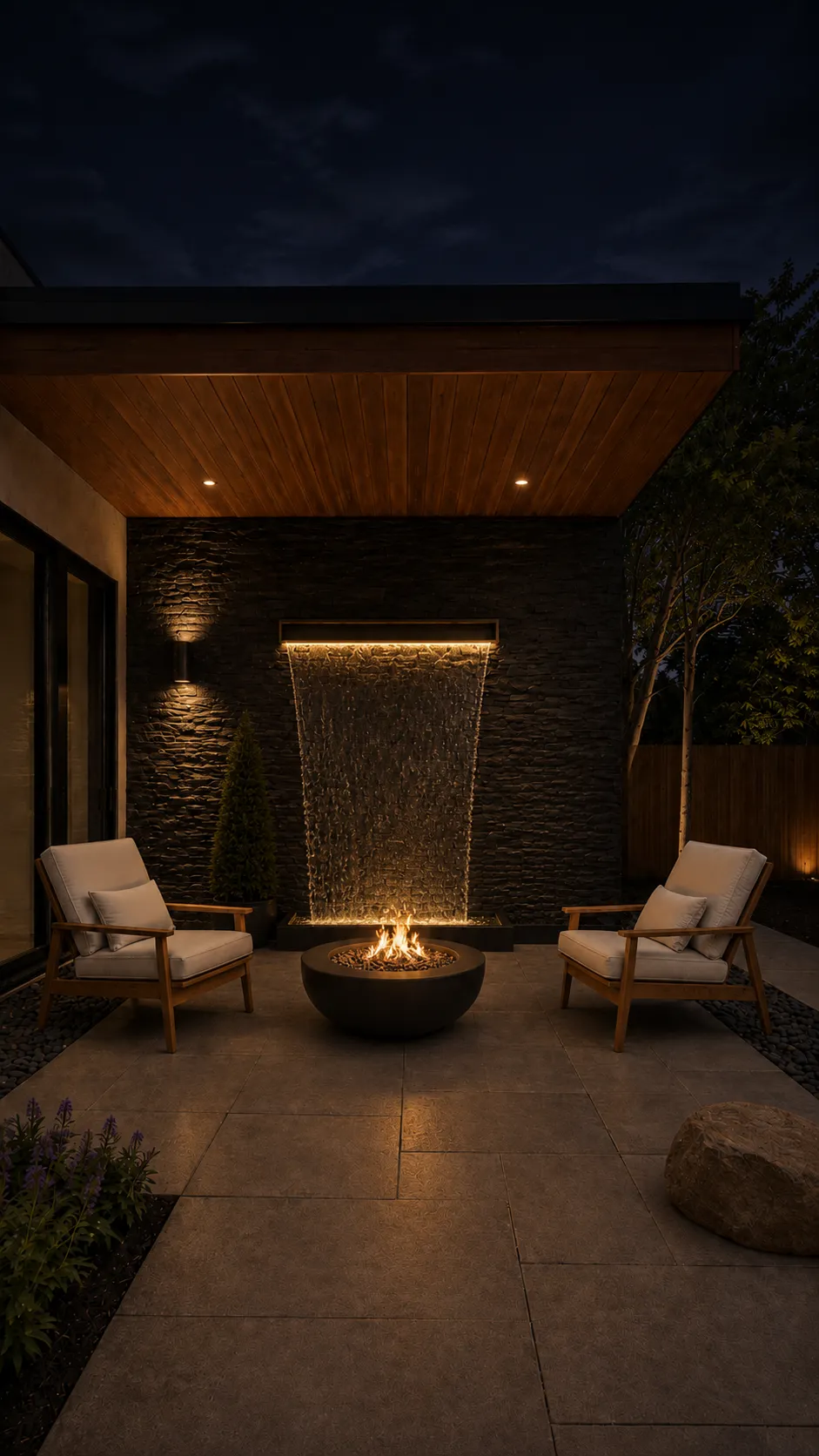
A courtyard built to be used after dark, with water and fire set facing each other on the same…
 Garden
Zen Contemporáneo
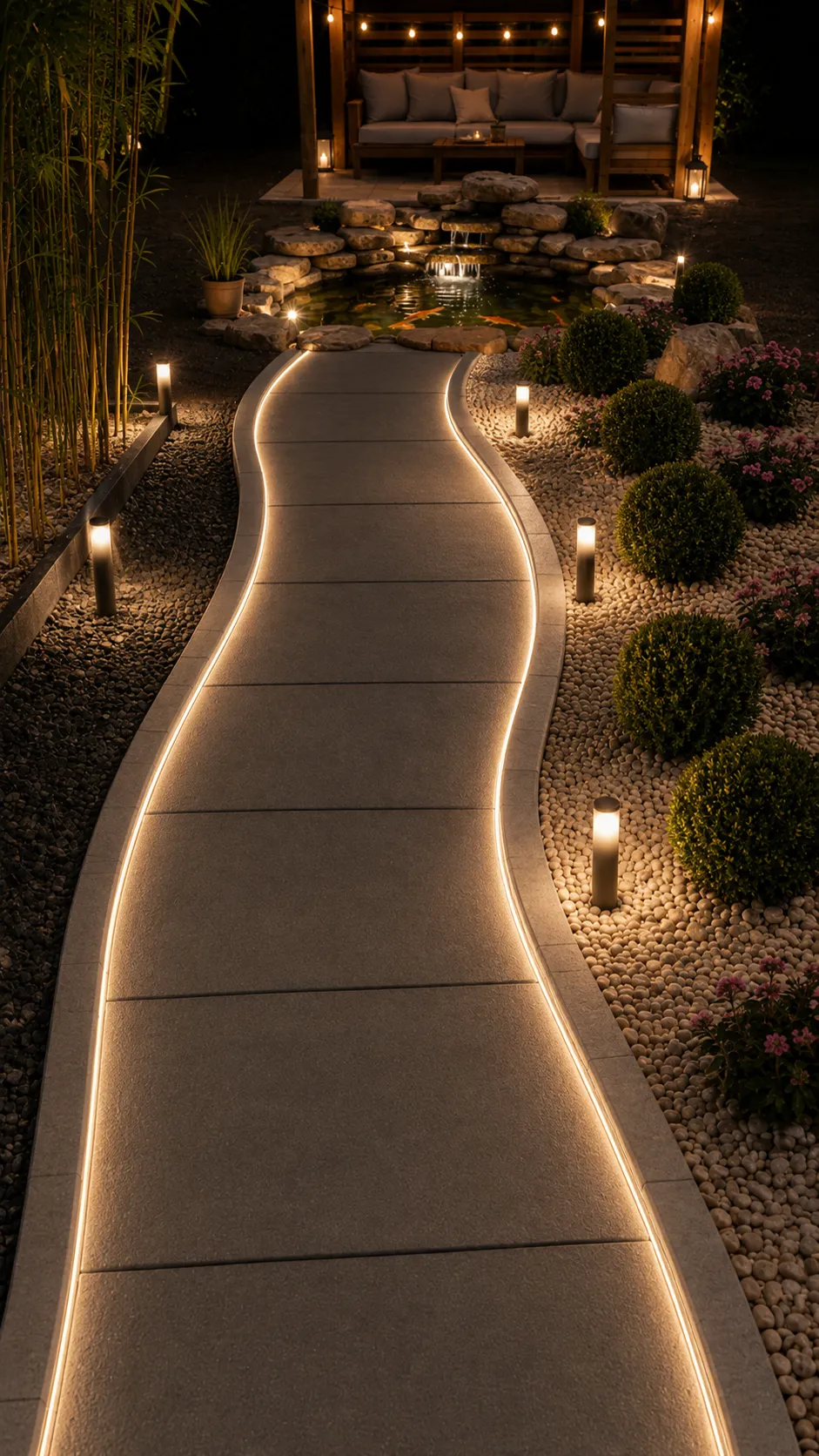
The path isn't lit by lamps aimed at it: it carries a continuous LED strip housed in both its…
 Tu Casa