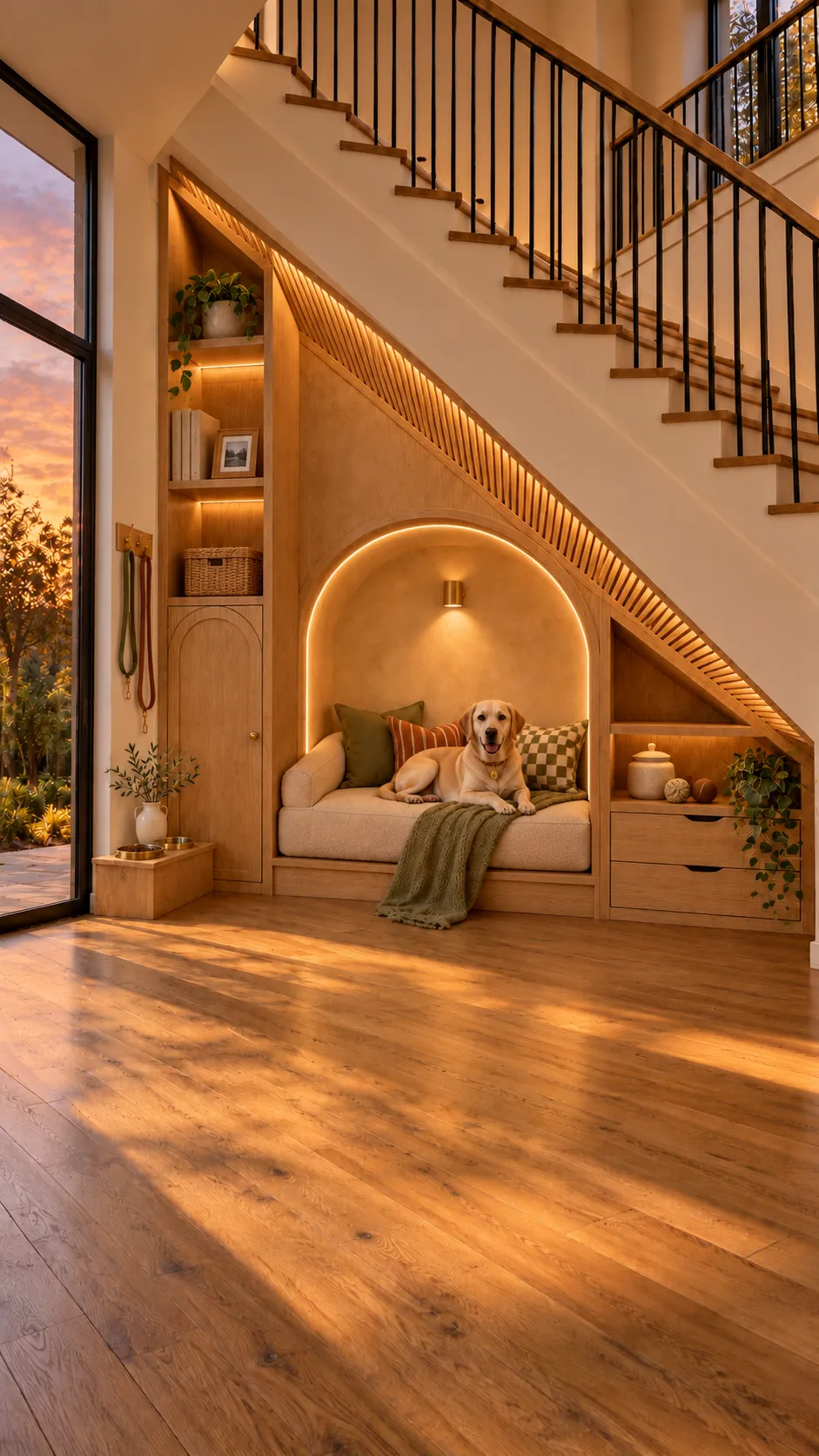
The dog's bed sits inside an arch cut into the staircase front, not against it. That difference changes everything: a mattress on the floor beside a wall ends up shoved, trodden on and full of hair visible from the whole floor; a recess with its own back gathers the animal in, takes it out of the walkway and keeps the mess inside a frame. What has to be right are the opening's dimensions.
Items shown are similar to those in the video, not necessarily identical.
A rectangular mattress with a removable cover, the format that fits an alcove with straight sides. Measure the recess and subtract fifteen centimetres a side: the mattress should never reach the edges, because the animal turns on entering. Look for a cover zipped on three sides and a non-slip base, which stops the mattress being shoved out of the recess every night.
See similar on Amazon(paid link)A rail with hooks for leads, harnesses and the treat bag, fitted between the door and the animal's corner. Put it at 140 or 150 centimetres: lower and long straps touch the floor and the dog itself can reach. Buy more hooks than you think you need, because the raincoat and the paw towel end up there too.
See similar on Amazon(paid link)A washable varnish for treating the bottom half-metre of timber cladding in an animal's path. Two coats are enough, with a very light sanding between. Test it on an offcut first: on untreated natural timber it darkens the tone a shade, and better to discover that off the wall than on the plane already fitted.
See similar on Amazon(paid link)A strip that bends in the horizontal plane, the only one that follows an arch's profile without twisting. An ordinary strip curves up and down but not sideways, so on a curved outline it twists on itself and the LEDs stop pointing the same way. Check the model's minimum radius against your alcove's curve.
See similar on Amazon(paid link)A slat panel for cladding the staircase front, cut diagonally to follow the pitch above the recess. Order a metre more than the measurement gives: a diagonal cut wastes material and the end wall always calls for a few loose pieces. With a dog about, order the panel factory-varnished rather than raw.
See similar on Amazon(paid link)Some links on this page are affiliate links. If you make a purchase through them, we may earn a commission at no extra cost to you.
 Staircase
Mediterráneo Sereno
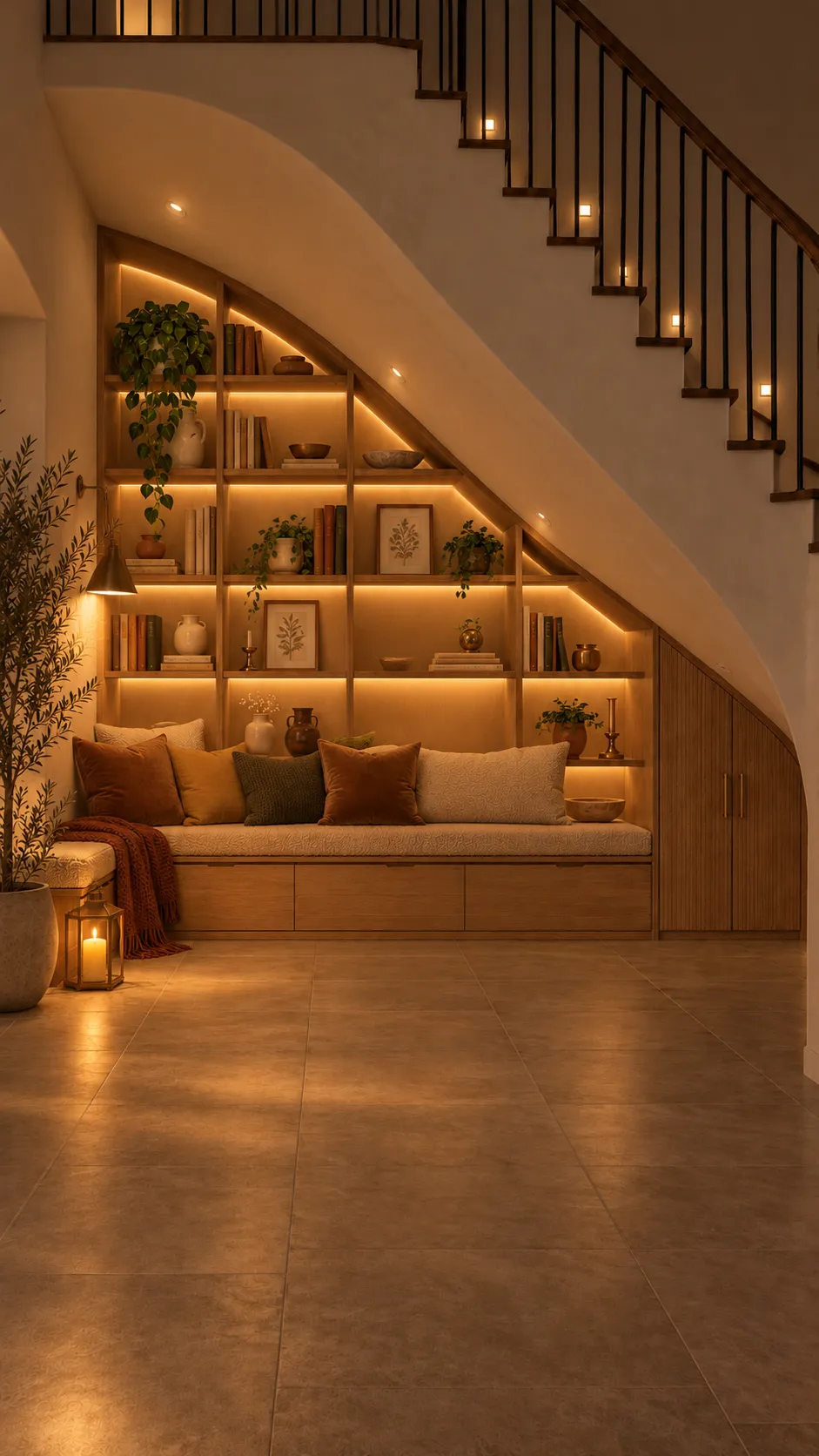
Under a curved staircase the ceiling does not come down in a straight line but describes an arc…
 Staircase
Lujo Cálido
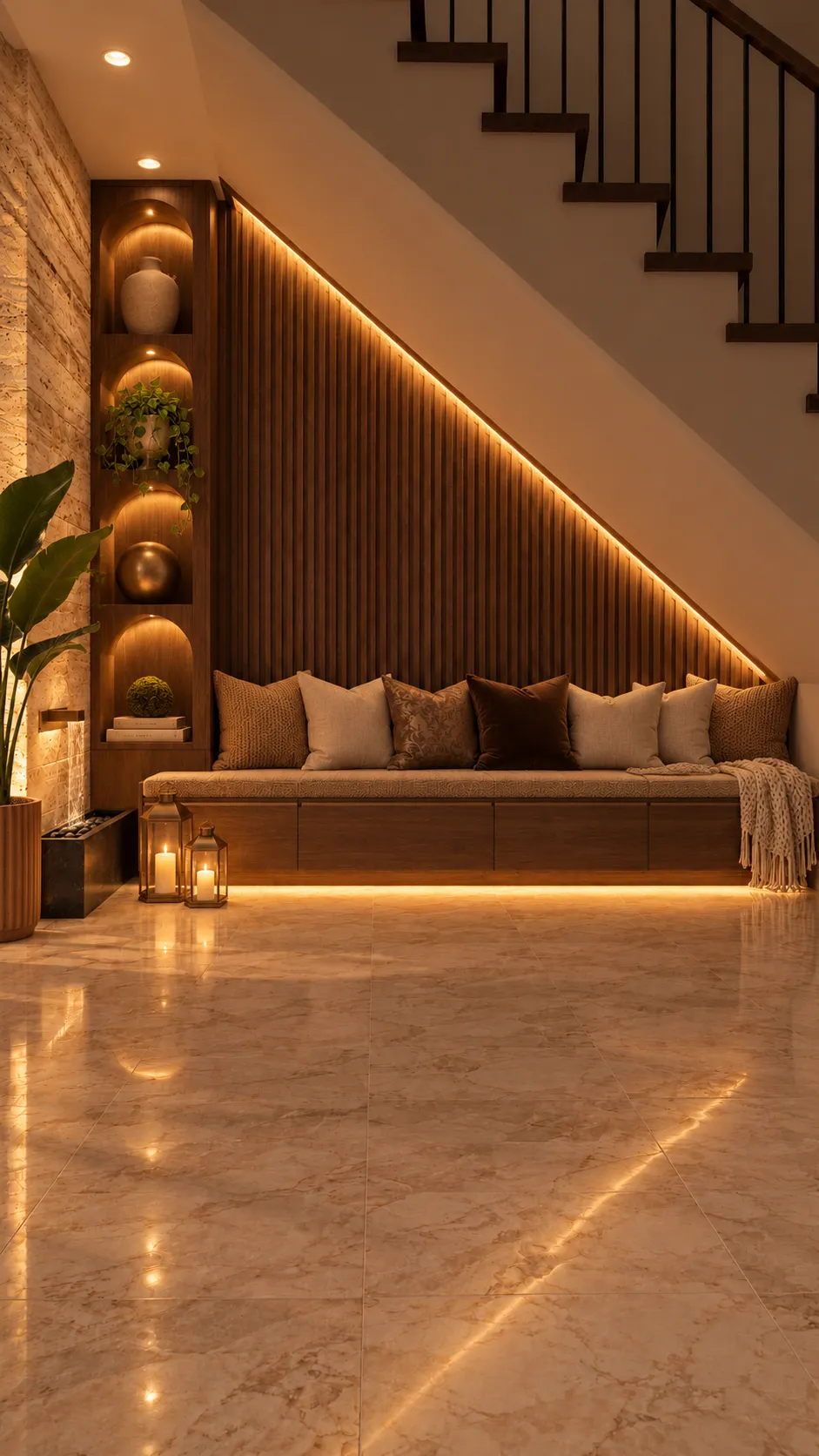
The slatted plane fills the whole triangle the staircase leaves, and along the top edge, right…
 Staircase
Mediterráneo Suave
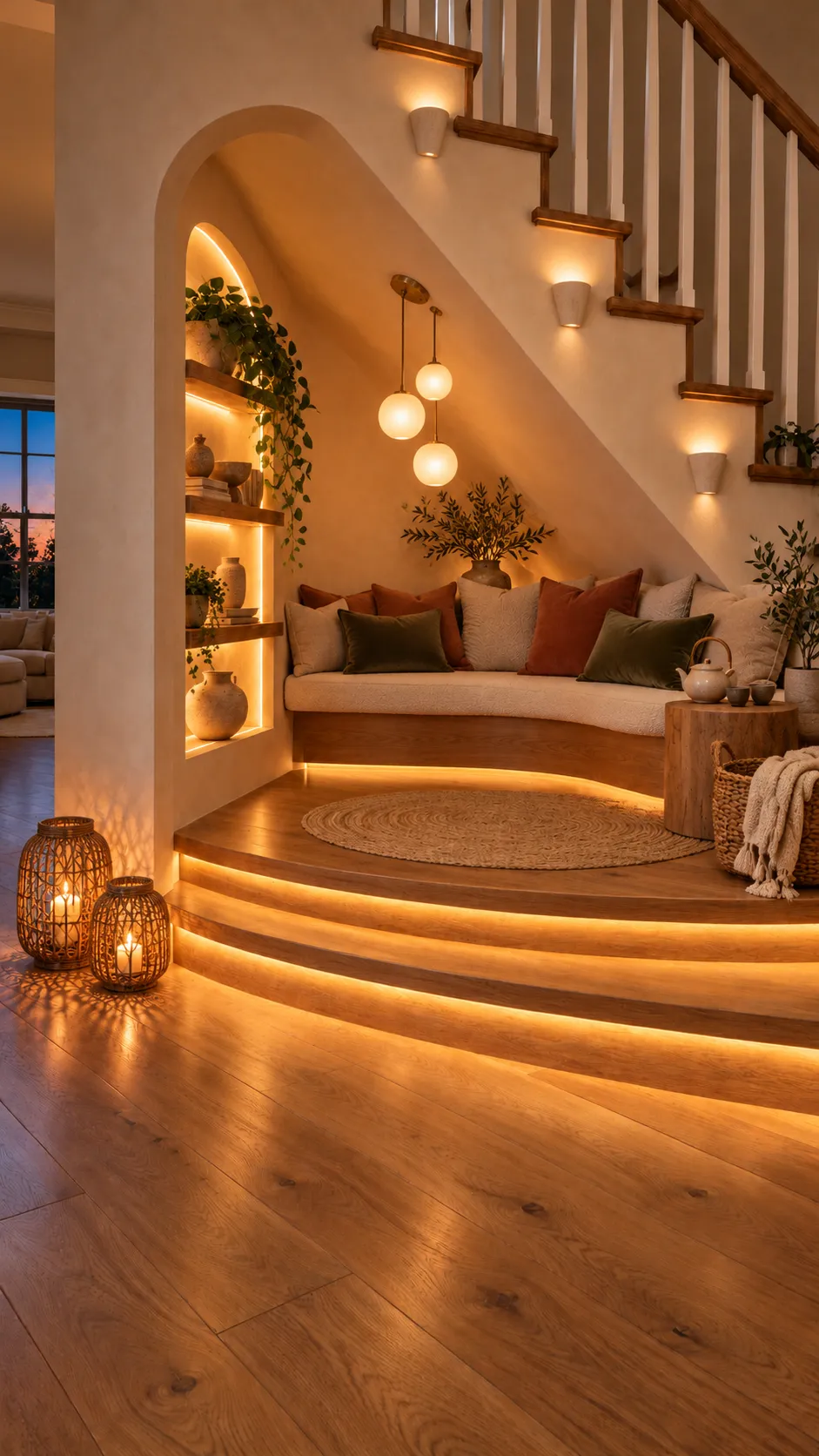
The corner sits two steps above the living room, and those two steps are the most dangerous thing…
 Tu Casa