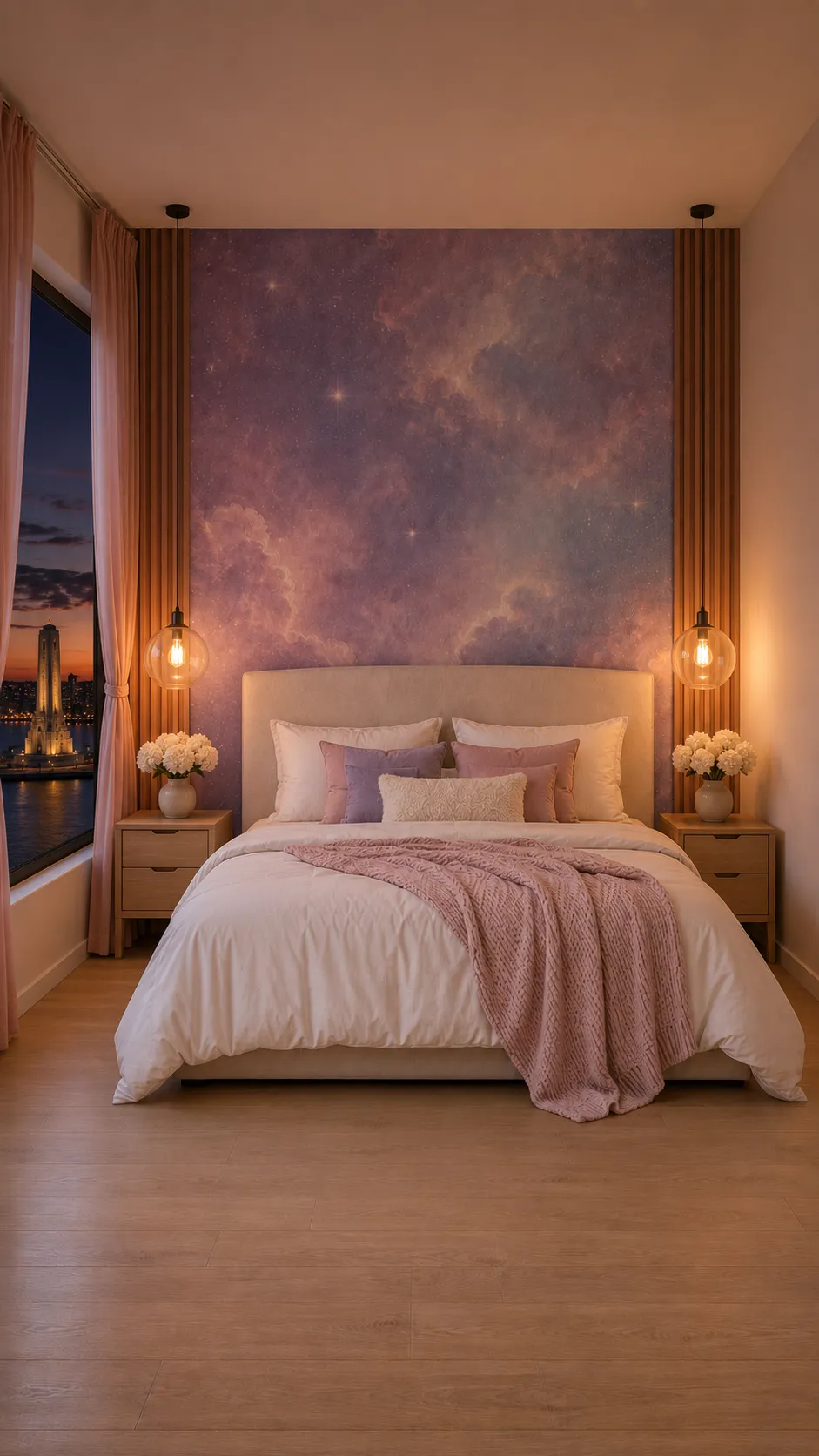
The two clear globes hanging either side of the bed are the first thing you look at, and it's worth saying what they are: ambient light. A filament bulb inside clear glass spreads light equally in every direction, so little of it reaches the pillow and a fair amount reaches your eyes. They're there so the filament can be seen, not for reading, and the room works because it accepts that instead of fighting it.
Items shown are similar to those in the video, not necessarily identical.
A deep-sky mural with coloured clouds and star points, ordered to the size of the wall. Having neither horizon nor recognisable motif, it takes any crop and it doesn't matter how much the headboard covers, which is the advantage over a landscape. Ask for a matt finish: satin paper throws back the reflection of the lamps right in the dark part of the image and you see the highlights from the bed.
See similar on Amazon(paid link)A wall or inline control for turning down lamps you're going to look straight at. What to check is compatibility: not all LEDs are dimmable and those that are want a dimmer made for LED, because with an old incandescent one they flicker or buzz at half power. Look at the minimum load too, which with two low-wattage bulbs falls short on many models.
See similar on Amazon(paid link)Bands or cords for gathering a curtain to one side and leaving the glass clear. In a room with a night view they're what decides how much window you see, and they want fitting below the halfway point of the opening: set at mid height they split the drop into two equal triangles and it looks stiff. If the curtain matches the wall colour, a fabric tieback disappears and a metal one becomes a detail.
See similar on Amazon(paid link)A bunch of natural-feel flowers for the nightstands, where fresh cut flowers last a short time and need the water changing every other day. What separates a good one from a bad one is the stem: smooth plastic stems give themselves away at a metre, while wrapped stems with wire inside can be bent so each bloom falls in a different direction, which is what stops a bunch looking arranged.
See similar on Amazon(paid link)An elongated cushion that sits in front of the whole pile and is the one actually used when you sit up in bed. Thirty by fifty is the usual size, and the filling wants to be feather or loose siliconised fibre rather than block foam: a foam cushion doesn't give at the small of the back, which is precisely what it's there for.
See similar on Amazon(paid link)A lightweight panel meant for mounting with high-bond double-sided tape, the way out in a rented flat or on a partition you’d rather not drill. The condition is weight: it works with light panels in narrow bands, not with a whole wall of solid timber. And expect it to take some paint with it on removal, so choose this over drilling only if there really is no alternative.
See similar on Amazon(paid link)Some links on this page are affiliate links. If you make a purchase through them, we may earn a commission at no extra cost to you.
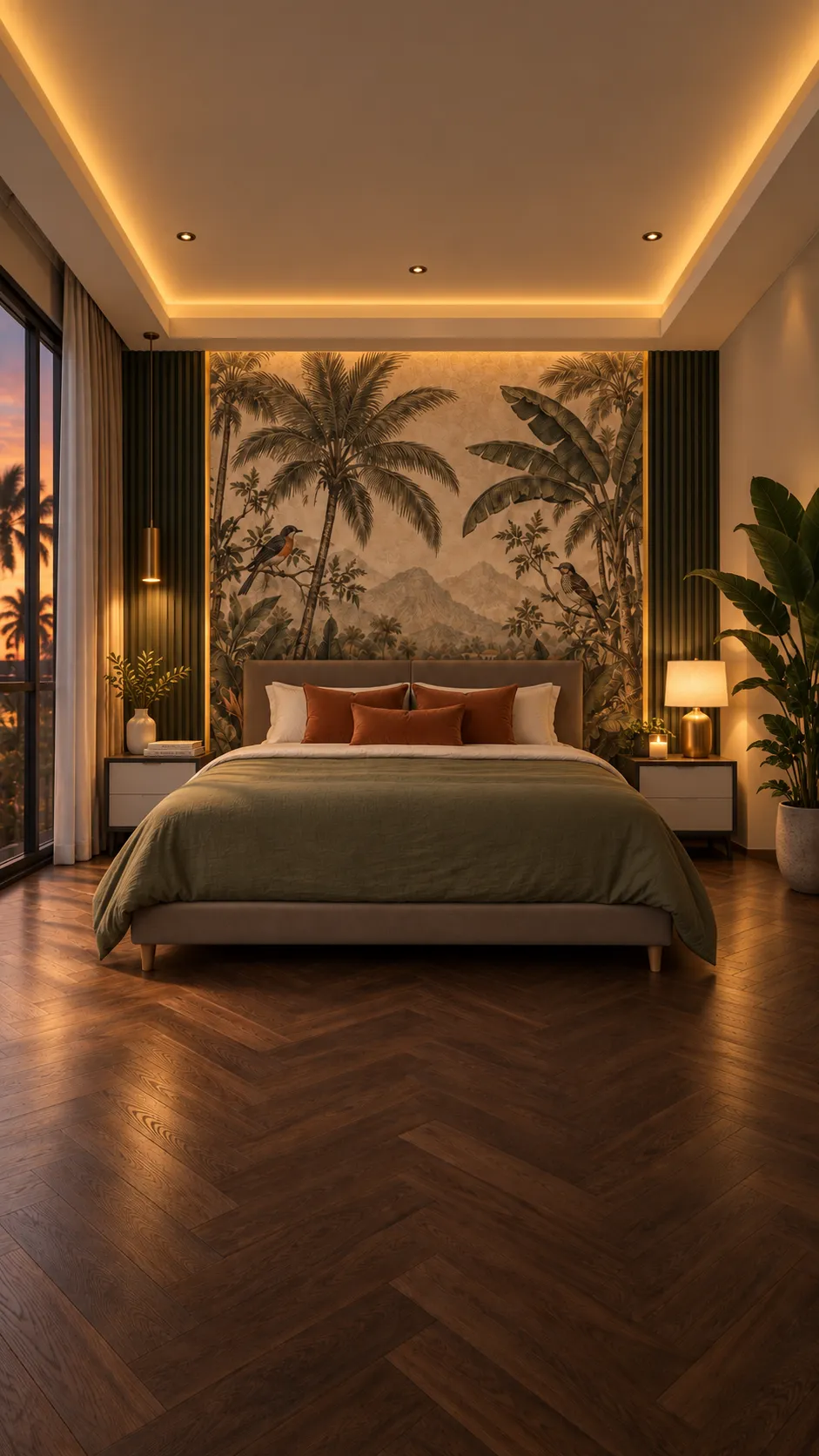 Bedroom
Colonial Tropical
The thing that took most work in this room is the floor and it barely gets looked at: herringbone…
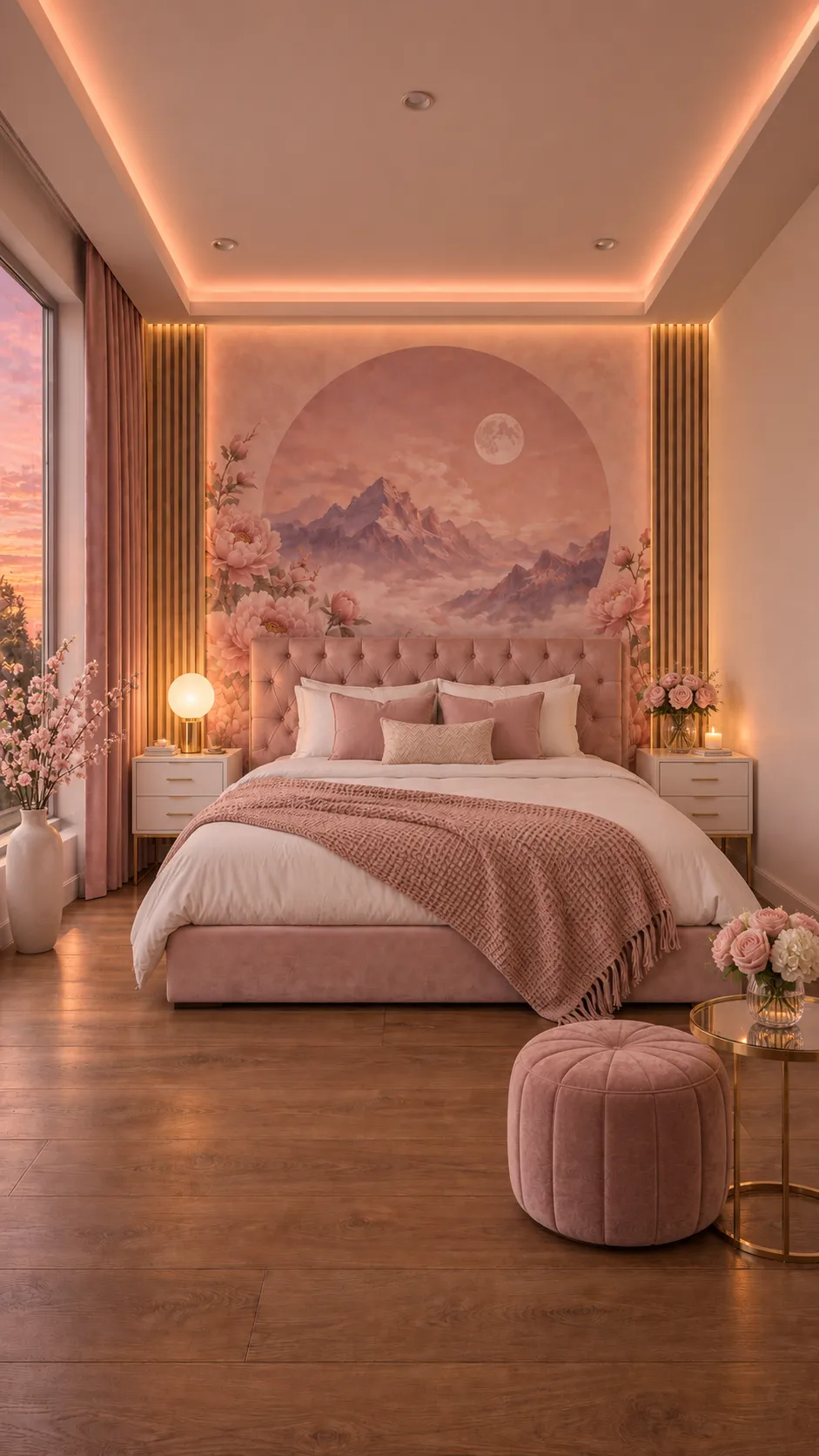 Bedroom
Clásico Rosado
A mural cut as a circle doesn't work like a rectangular one, and the difference isn't shape but…
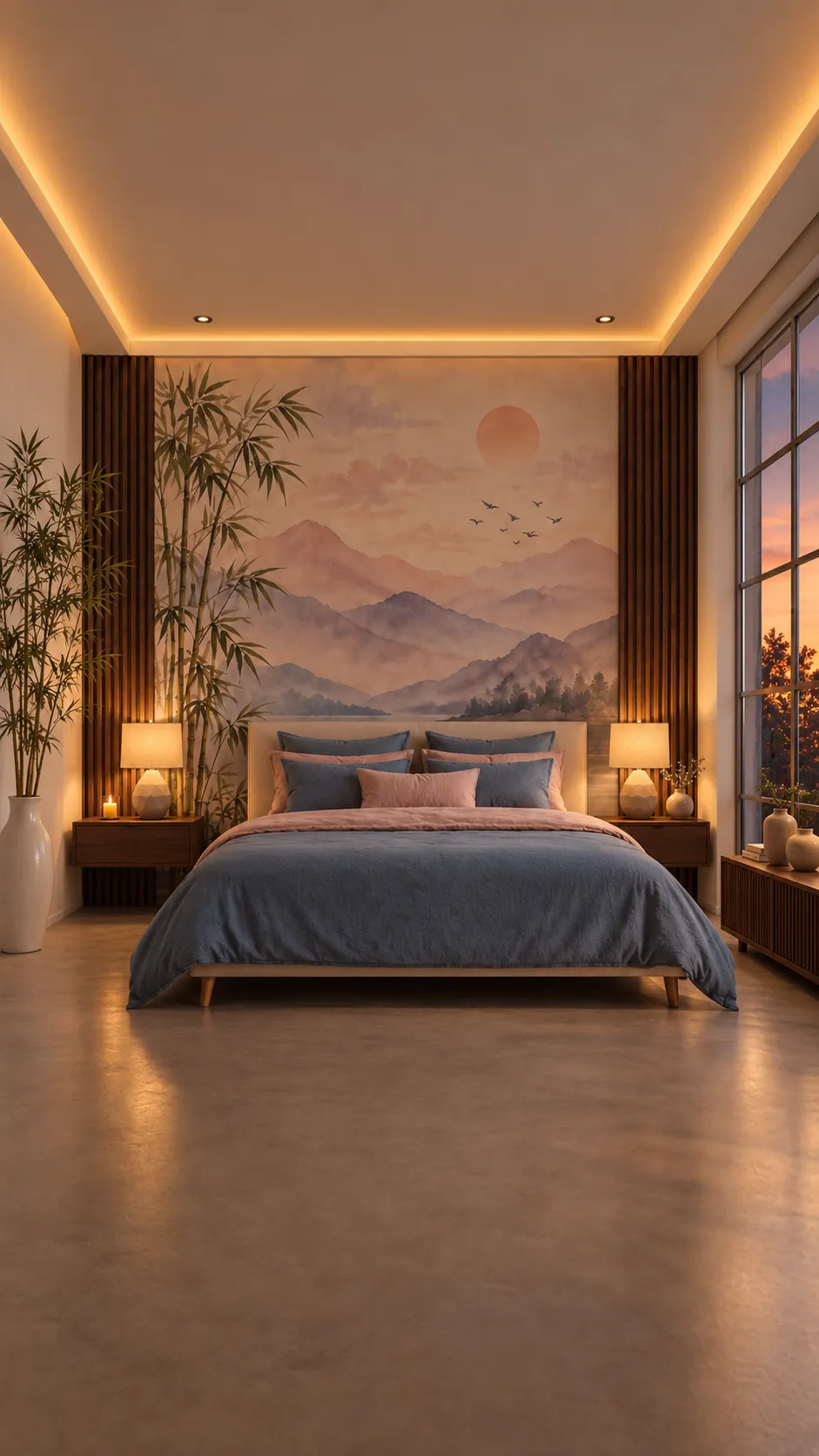 Bedroom
Minimalista Natural
The mural is pink and the bed is blue, and that's the decision holding the room together. The…
 Tu Casa