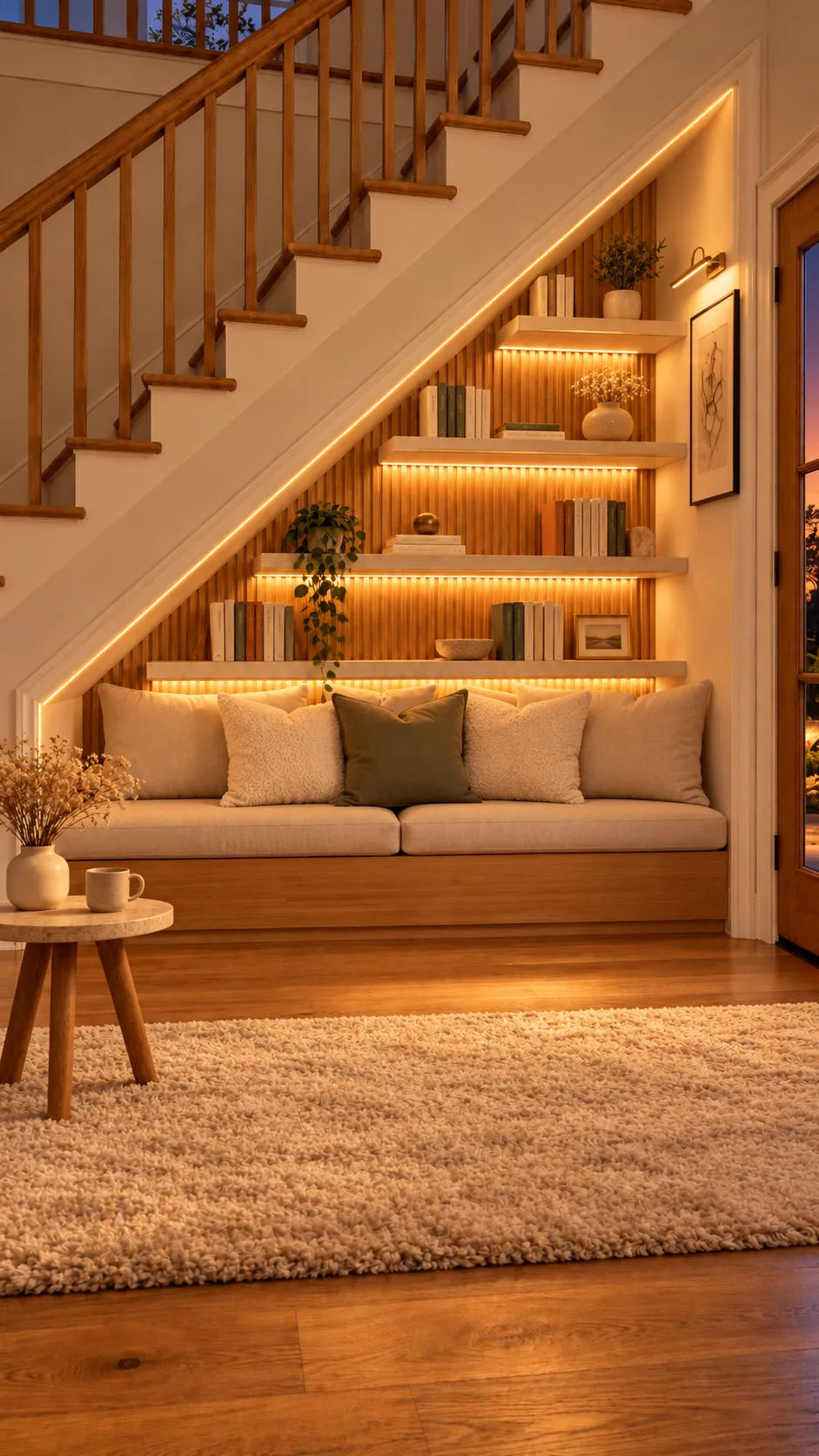
There isn't a sofa and some shelves placed under the stairs here: there's a single piece filling the whole void, with seat, storage and four shelves built at once against the same fine-slat backing. That decision has an obvious cost and two advantages that are less so: not a single dead corner is left and, above all, the seat depth can be adjusted to the centimetre, which is what almost never works out with a bought sofa.
Items shown are similar to those in the video, not necessarily identical.
A panel with very narrow slats and a fine groove, meant for use as a backing behind shelves rather than as the lead cladding. The fine texture is what absorbs the shadows of brackets and joints, so what you see is the shelves and not how they're fixed. Check the panel's total depth, because added to the shelf thickness it determines how far the assembly projects from the wall.
See similar on Amazon(paid link)An aluminium profile designed to sit in a routed groove, so the diffuser face finishes flush with the timber. Against a surface profile it has one concrete visual advantage: from the seat you don't see a doubled edge but a line of light within the shelf itself. The groove has to be routed to the profile's exact size, so it's a workshop decision rather than a later fitting one.
See similar on Amazon(paid link)Pads cut to the bench's exact size, with removable covers and a zip on the back edge. In a bespoke unit it's the piece that gets dirtiest and the only one you can renew without touching the joinery, so order a spare cover from the start. Split them into two or three modules rather than one long piece: a two-metre pad won't fit in any washing machine.
See similar on Amazon(paid link)A low table with a round top and three legs, the one that stands firm on a floor that isn't perfectly level. With four legs any unevenness makes it rock; with three, all three always bear. It's the loose piece worth having in a corner where everything else is fixed, because it moves aside one-handed when you need space in front of the sofa.
See similar on Amazon(paid link)A short-armed fitting mounted above a frame and angled towards the print. What needs adjusting is the angle: too perpendicular and it throws the glass's reflection straight at whoever is sitting opposite, which is why many lit pictures can't be seen. If the print has ordinary glazing, angle the beam well down or switch to anti-reflective glass.
See similar on Amazon(paid link)Some links on this page are affiliate links. If you make a purchase through them, we may earn a commission at no extra cost to you.
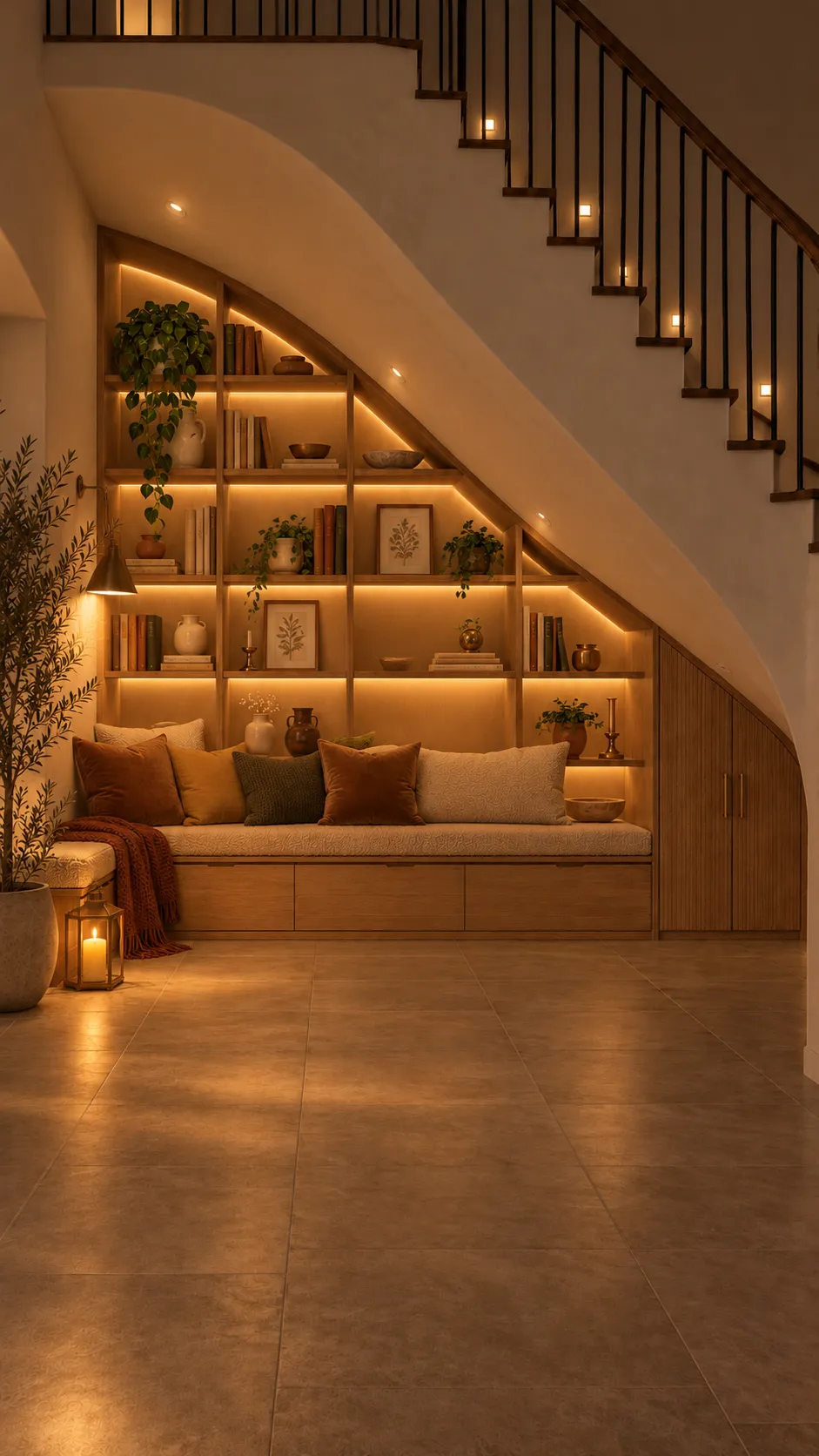 Staircase
Mediterráneo Sereno
Under a curved staircase the ceiling does not come down in a straight line but describes an arc…
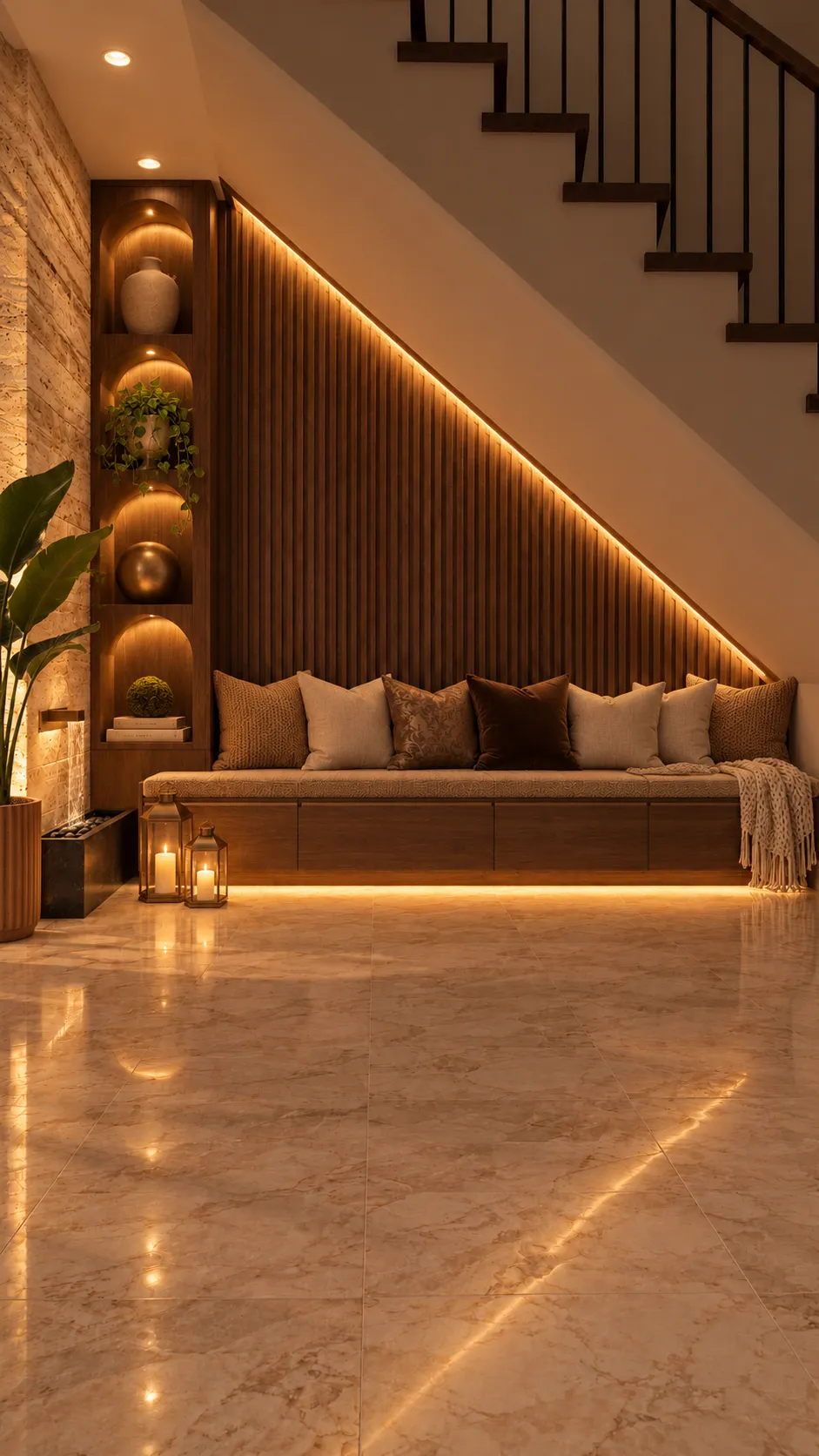 Staircase
Lujo Cálido
The slatted plane fills the whole triangle the staircase leaves, and along the top edge, right…
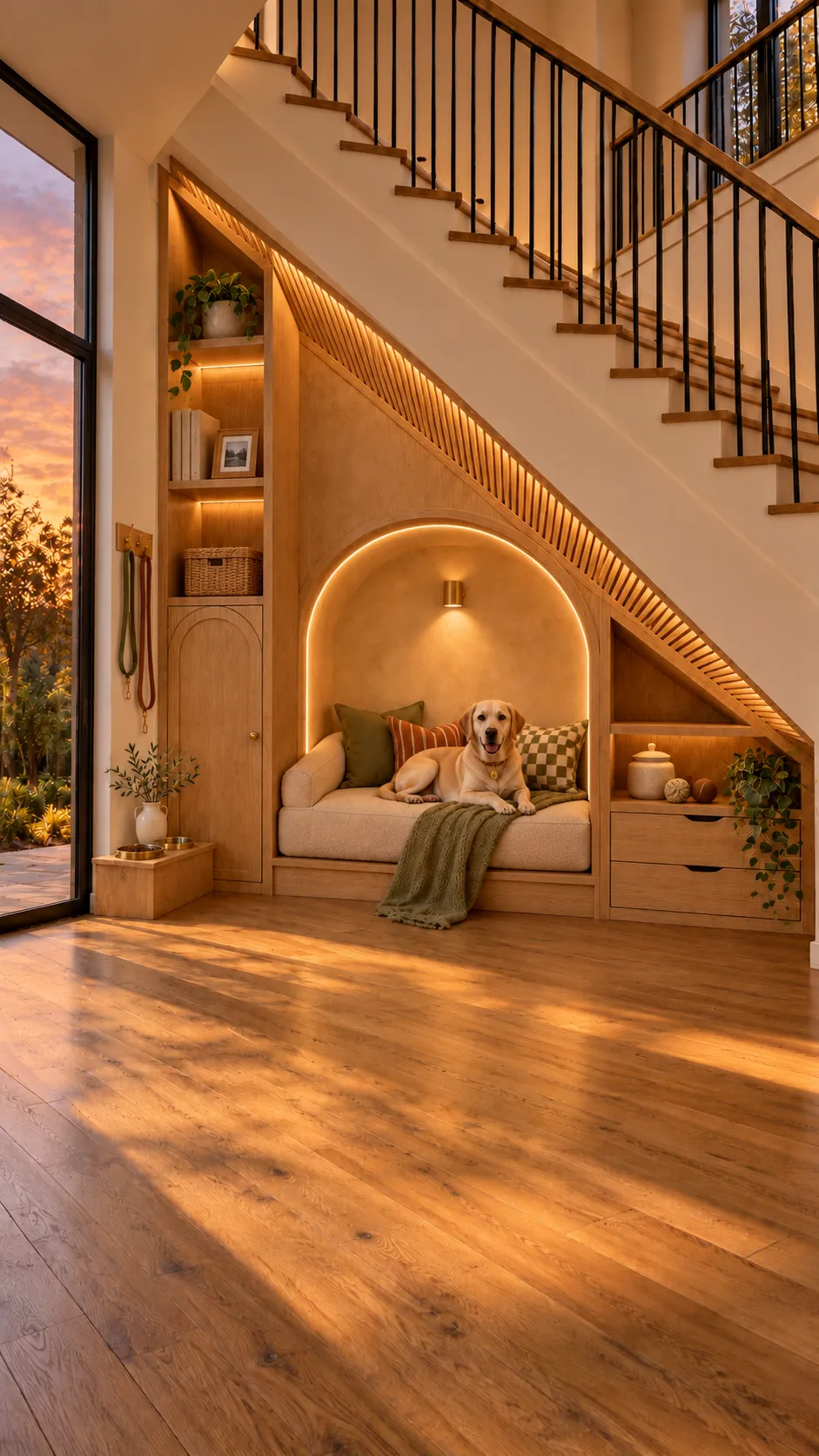 Staircase
Natural Familiar
The dog's bed sits inside an arch cut into the staircase front, not against it. That difference…
 Tu Casa