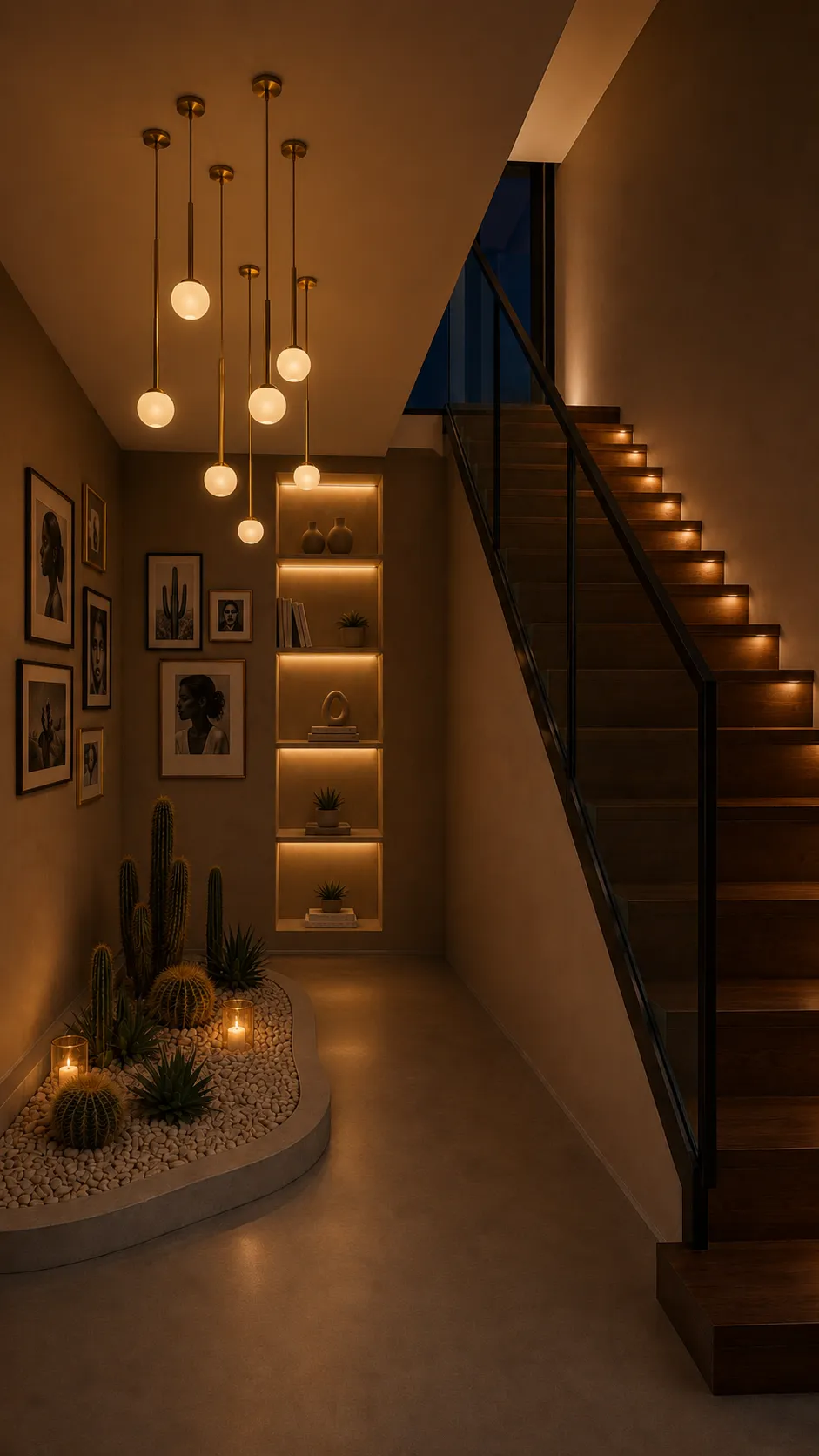
At the foot of the stairs there's no cabinet and no pot: there's an actual planting bed, built into the floor with a curved concrete kerb, filled with gravel and planted with cacti and succulents. Above it, on the same wall, a composition of around ten framed pictures, and beside that a column of five individually lit niches. All three occupy different heights and never overlap, which is what lets a narrow hallway hold so much.
Items shown are similar to those in the video, not necessarily identical.
A mixed lot of cacti and succulents in small pots, to plant straight into the bed. Mix shapes rather than just species: one tall column, a couple of spherical pieces and several low succulents give the stepping that makes a small bed read as a landscape. Wear thick gloves and use tongs for the spiny ones — opuntia's fine spines lodge in skin and can't be seen.
See similar on Amazon(paid link)A mineral mix with sand and perlite, fast draining. In universal compost a cactus rots at the neck even if you water sparingly, because the soil holds water around the base for days. In a large bed it works out cheaper to buy standard substrate and amend it with silica sand and volcanic grit at about a third, rather than many small bags of ready mix.
See similar on Amazon(paid link)A full spectrum LED with a timer, to supply the light a hallway can't. Choose the white version rather than the classic pink-violet one: the plants grow just as well and the hall isn't tinted purple every evening. Ten to twelve hours on a timer is enough, and there are adjustable track versions that disappear among the existing downlights.
See similar on Amazon(paid link)A pack of frames in black or dark wood, in several sizes and all with white mounts. The mount is what holds the composition together: buying a complete pack guarantees the same margin throughout, which is exactly where a wall assembled from frames bought at different times falls apart. Check they come with hangers for both orientations.
See similar on Amazon(paid link)A warm LED strip with an aluminium profile and diffuser, housed in the front edge of each niche and aimed at the back. The profile isn't optional here: stuck to a bare edge, the strip reads as dots from below and the niche loses its even wash. Use one section per niche, all on the same circuit so they come on together.
See similar on Amazon(paid link)Some links on this page are affiliate links. If you make a purchase through them, we may earn a commission at no extra cost to you.
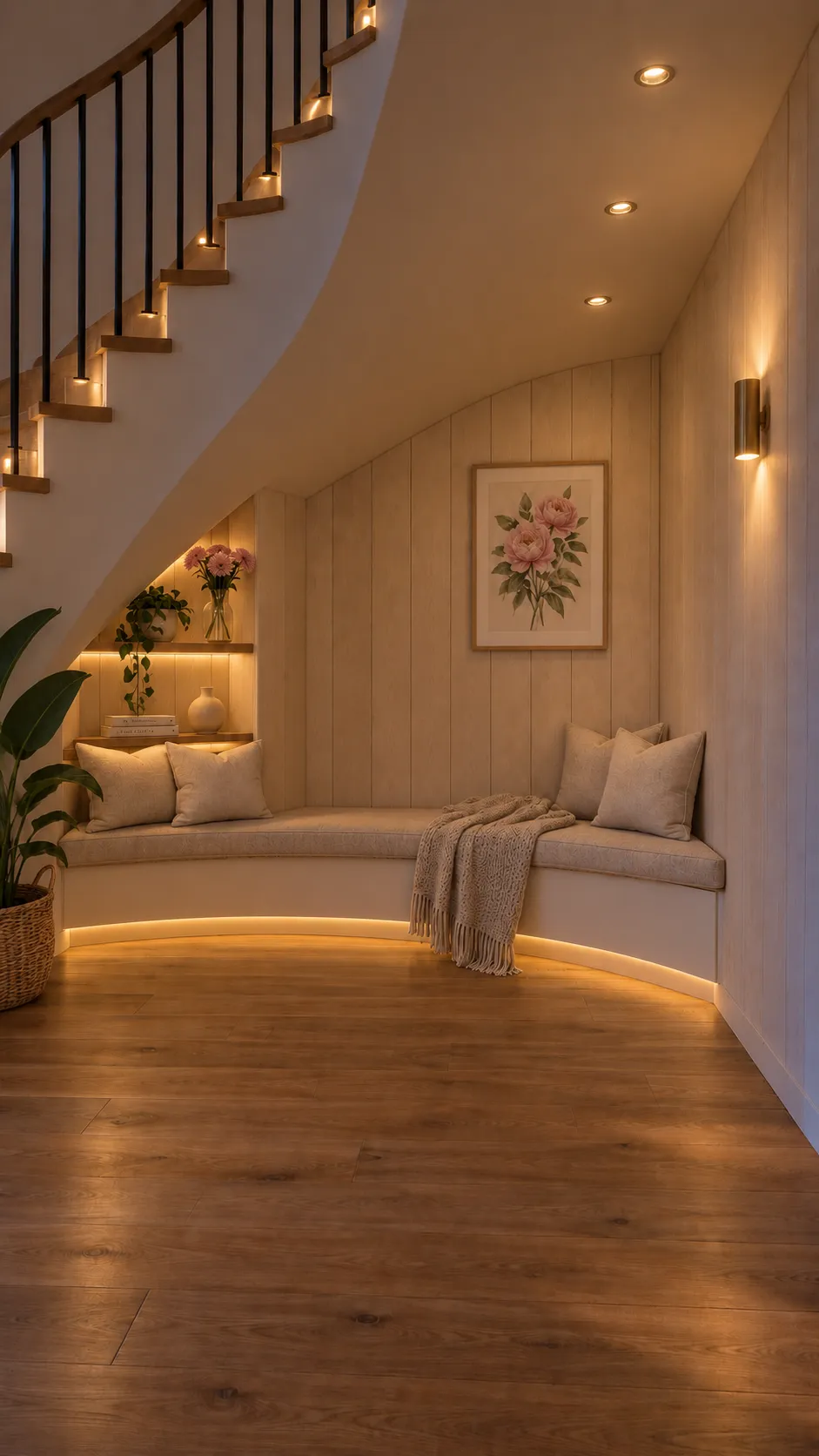 Staircase
Nórdico Suave
The void under a straight stair is a triangular prism and it's resolved with measurements; under a…
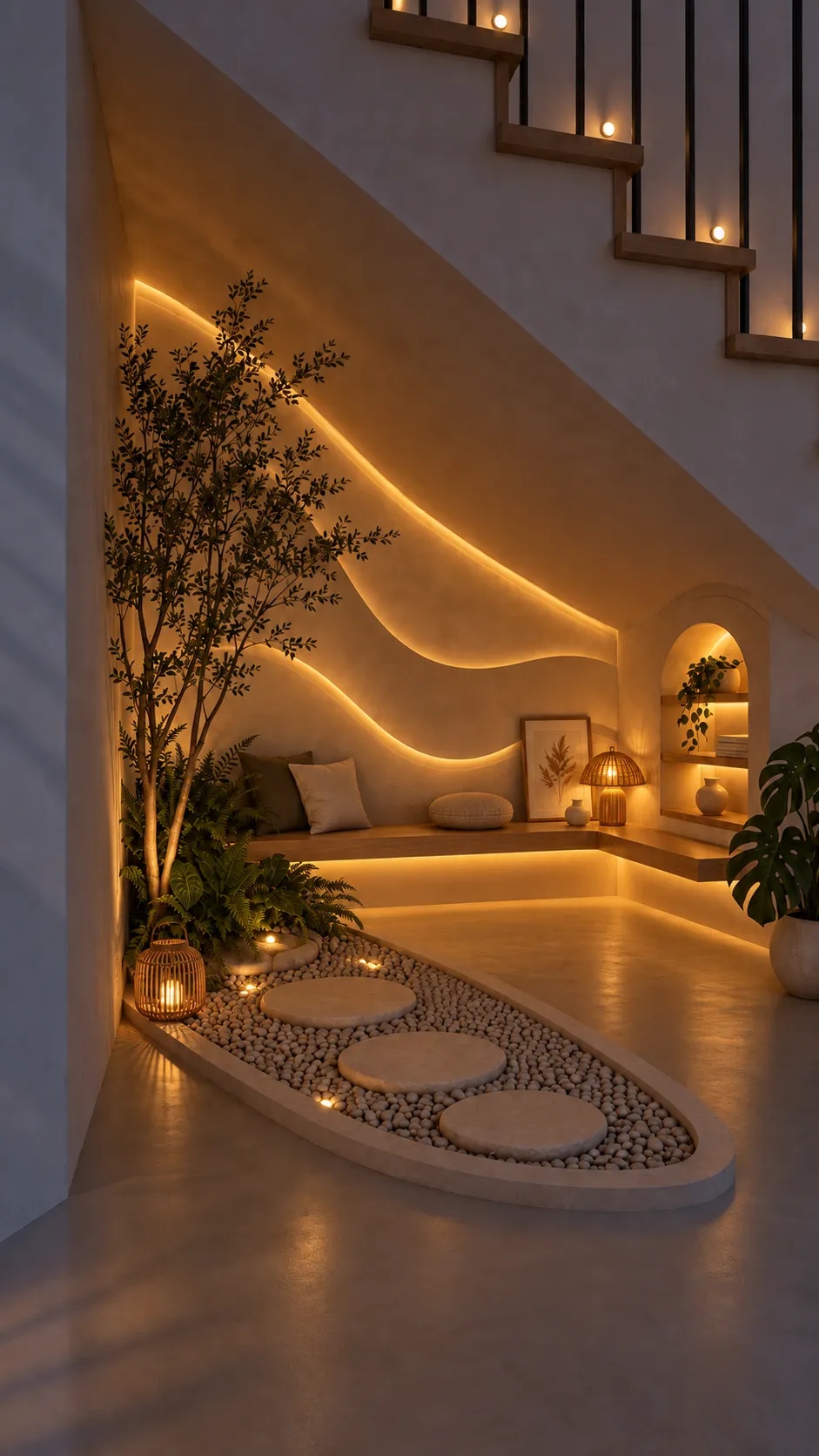 Staircase
Orgánico Sereno
Bringing gravel indoors sounds like an indulgence until you see it resolved as it is here: an…
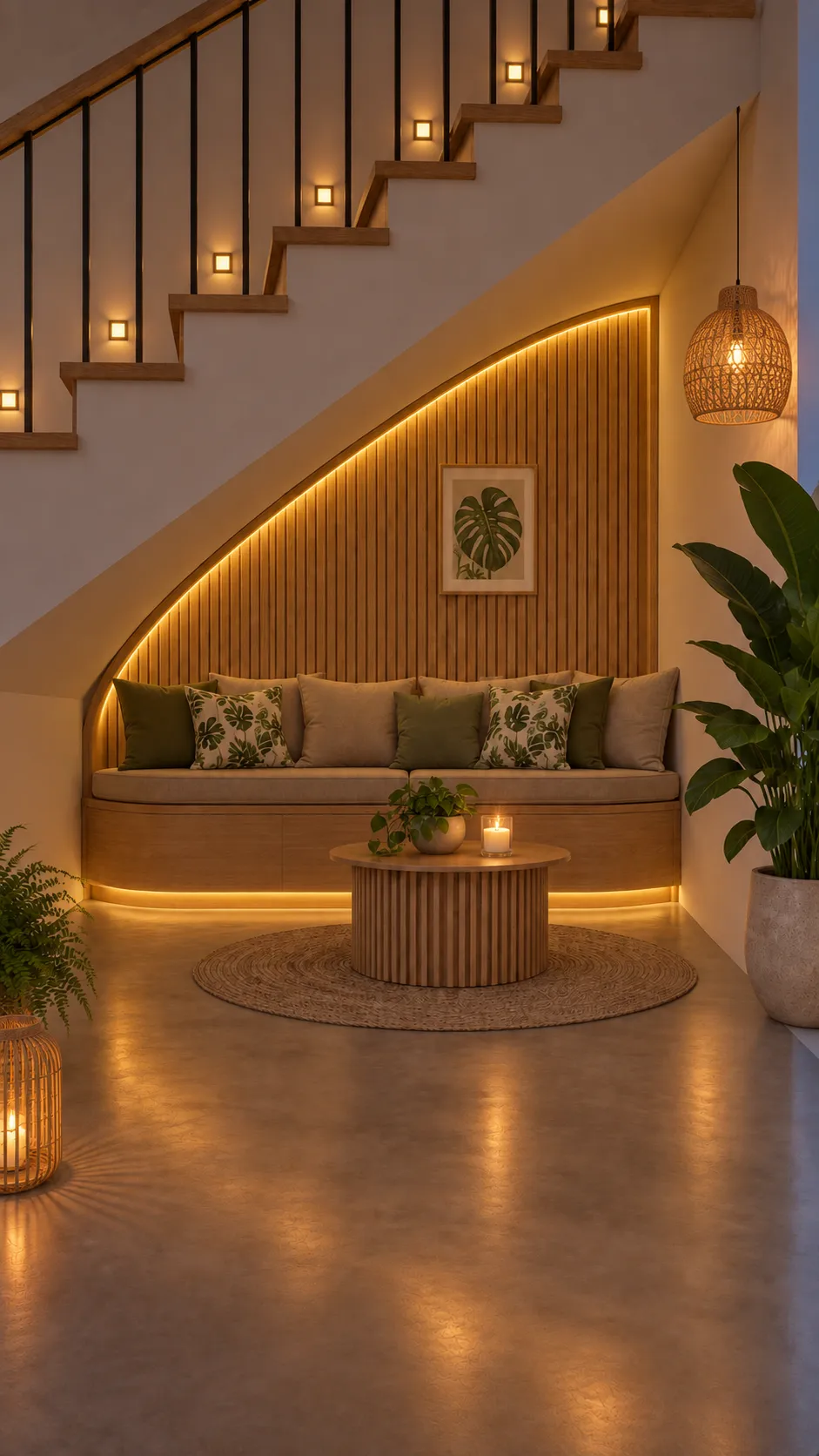 Staircase
Boho Chic
The space under the stairs stops being a leftover triangle and becomes the cosiest corner in the…
 Tu Casa