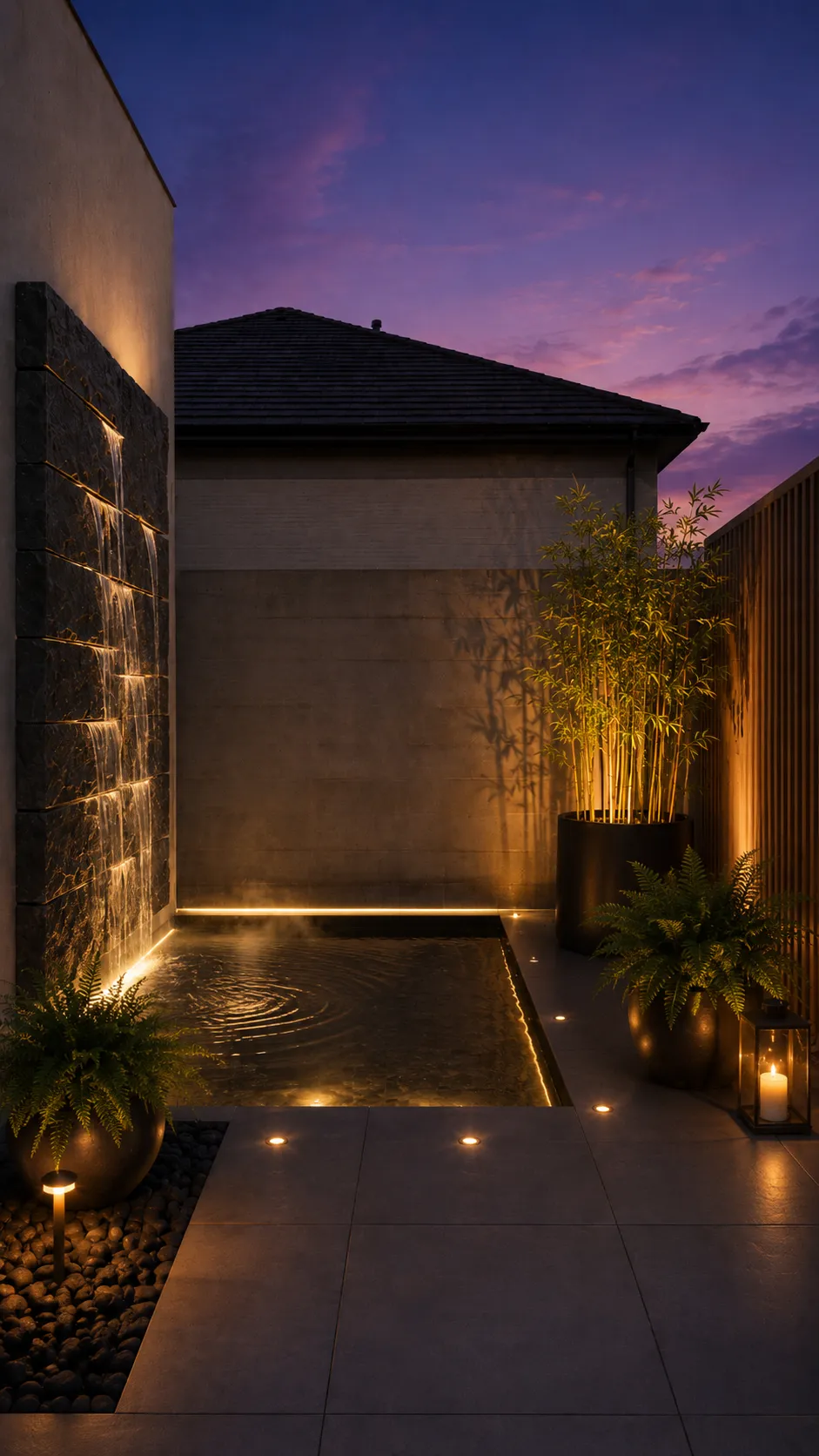
This is the side passage of a house, that narrow strip where the bins and the air-conditioning unit usually end up. Here it's been turned into a water garden, and the most interesting part isn't the waterfall: it's that the far wall carries nothing at all and is still what you look at most. What decorates it is the bamboo's shadow, thrown by a spot at the foot of the pot. The wall has been used as a screen rather than as something to hang things on.
Items shown are similar to those in the video, not necessarily identical.
Dark stone slabs with an irregular face and pronounced joints, for cladding the wall the water runs down. Unlike stacked stone, here the piece is flat and large: the water doesn't fall as a curtain but spreads into rivulets along the joints and the surface's unevenness, which is what creates the pattern. Seal it before turning the water on, because permanently wet stone picks up limescale and green growth very fast.
See similar on Amazon(paid link)An adjustable projector with a narrow beam, fifteen or twenty-four degrees, to place at the foot of a plant and throw its shadow against a wall. What you're buying here is the angle rather than the output: a wide beam lights the whole plant and blurs the shadow, while a narrow one cuts it out. Choose a spiked model with spare cable, because the final position is only found by testing at night.
See similar on Amazon(paid link)An outdoor fern such as Dryopteris or Polystichum, which takes the winter outside and doesn't want sun. It's the plant that solves a side passage, because that strip is the shadiest part of the house and almost nothing else thrives there. Use a substrate that holds some moisture and don't leave it in a small pot: in a draughty passage a small container dries out sooner than you'd expect despite the shade.
See similar on Amazon(paid link)A pot with a reservoir in the base and a wick or grid carrying water up to the substrate. In a side passage it solves the real problem, which isn't drought but forgetfulness: it's the part of the house you walk through without looking, and pots there are always the last to be watered. Check the reservoir's capacity in litres rather than in days, because days depend on the plant and the season.
See similar on Amazon(paid link)A weatherproof photocell that switches the circuit on at dusk and off at dawn, without depending on a fixed schedule. Against a timer, the advantage is that it adjusts itself through the year: a timer set in June leaves the garden dark for two hours in December. Mount it facing north and away from any of your own fittings, or the sensor sees its own light and starts cycling on and off.
See similar on Amazon(paid link)Some links on this page are affiliate links. If you make a purchase through them, we may earn a commission at no extra cost to you.
 Garden
Oasis Tropical
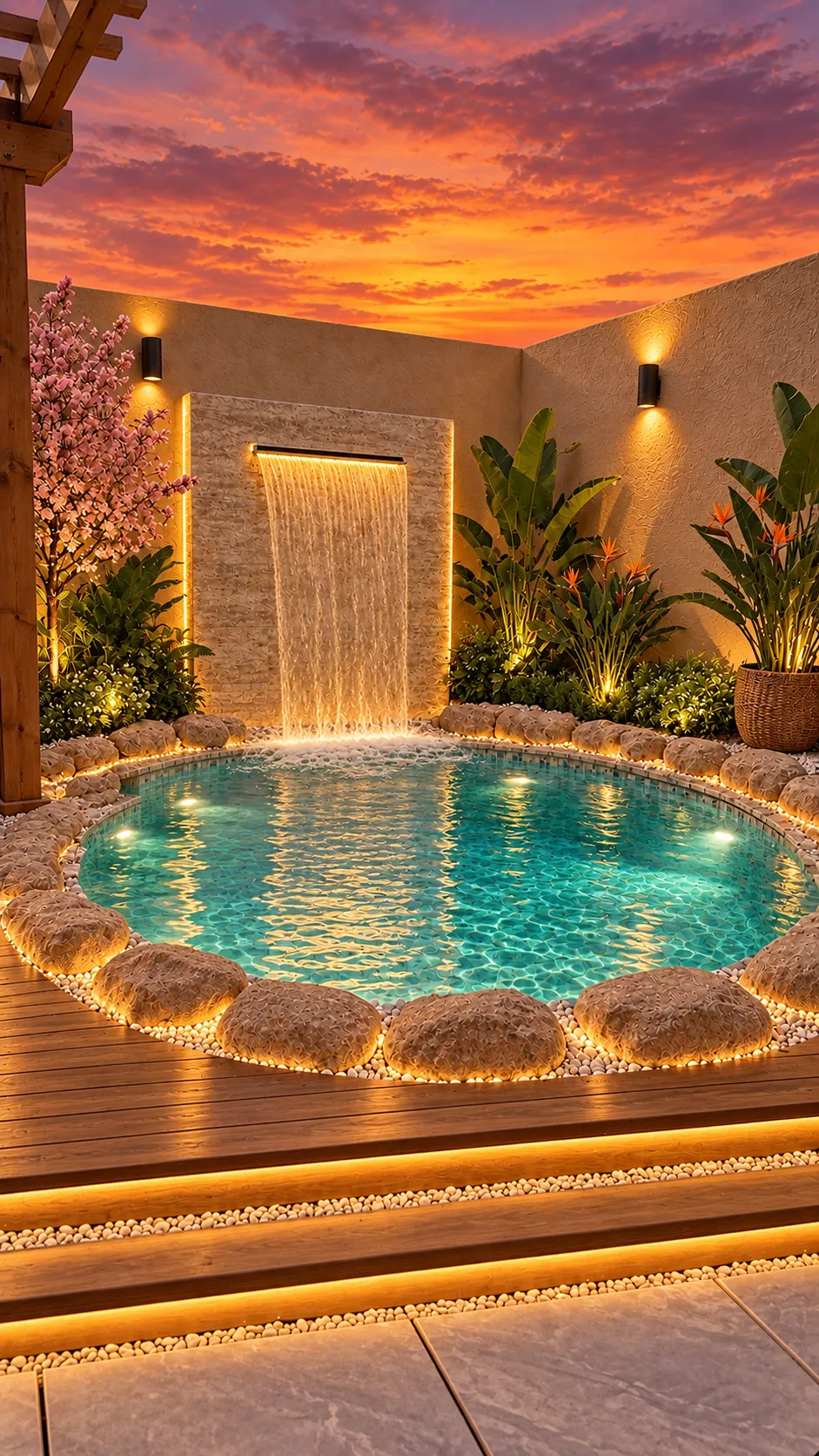
The ring of boulders around the pool is what gives it the air of a natural bathing pool, and also…
 Garden
Contemporáneo
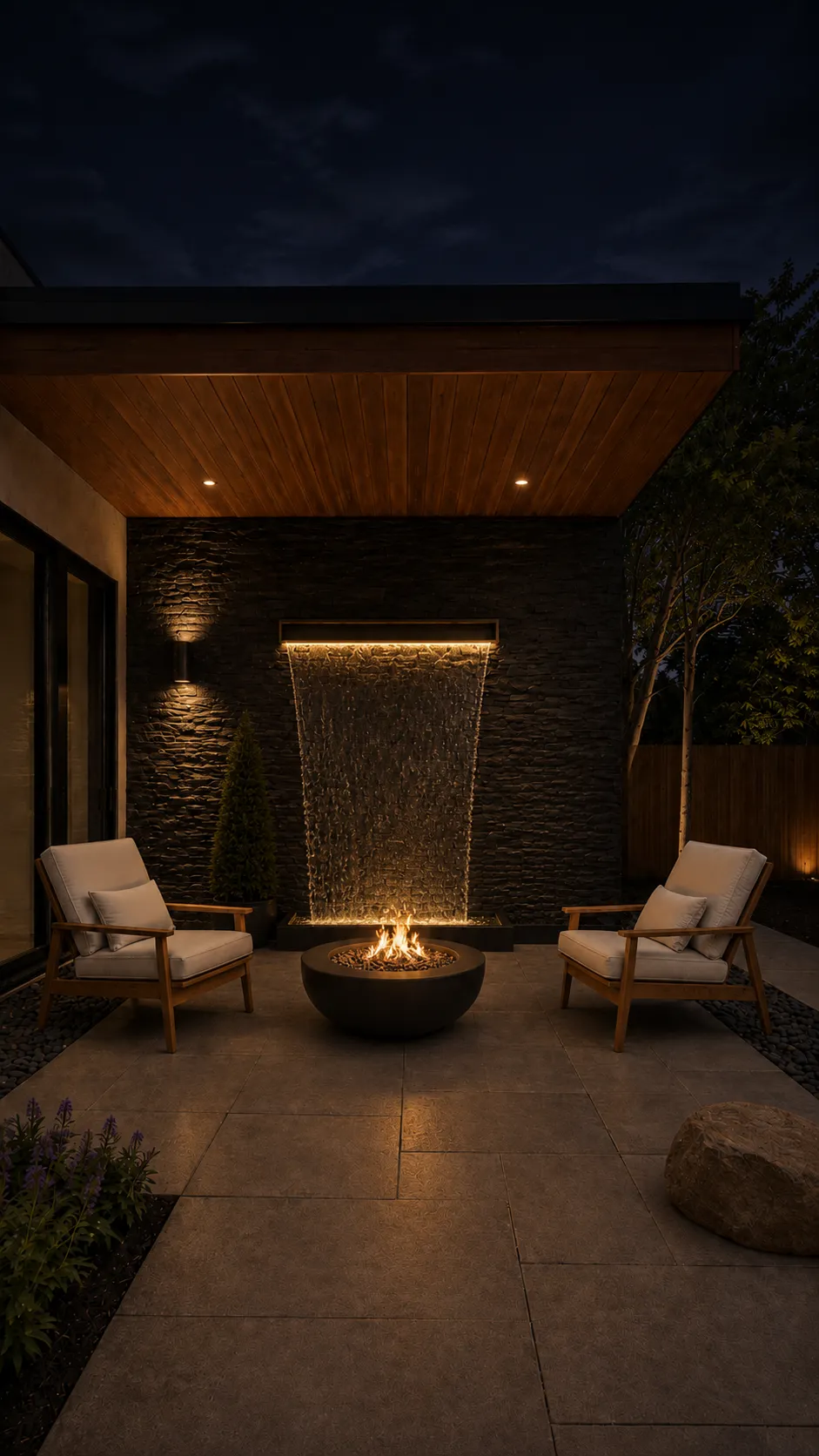
A courtyard built to be used after dark, with water and fire set facing each other on the same…
 Garden
Zen Contemporáneo
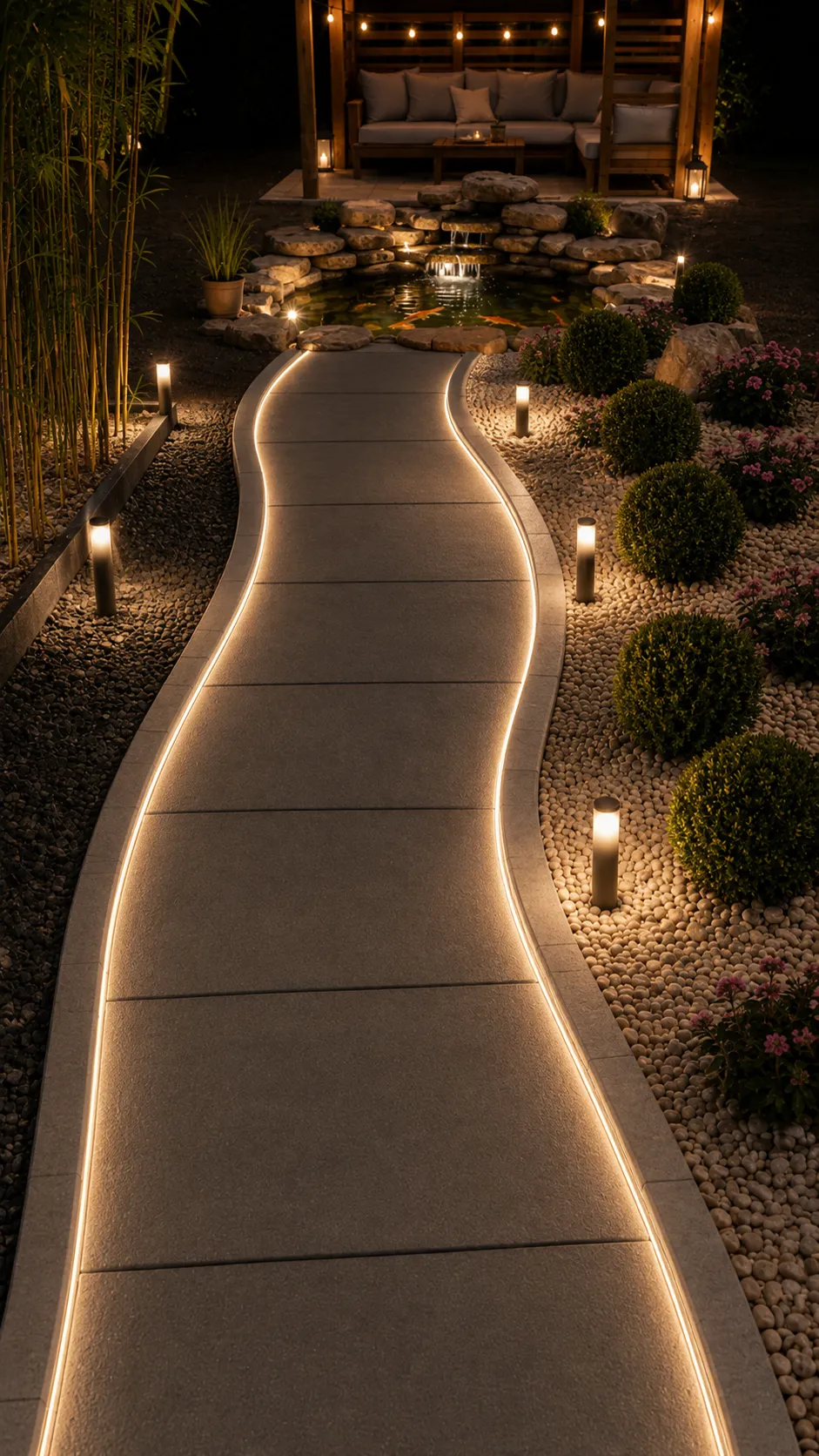
The path isn't lit by lamps aimed at it: it carries a continuous LED strip housed in both its…
 Tu Casa