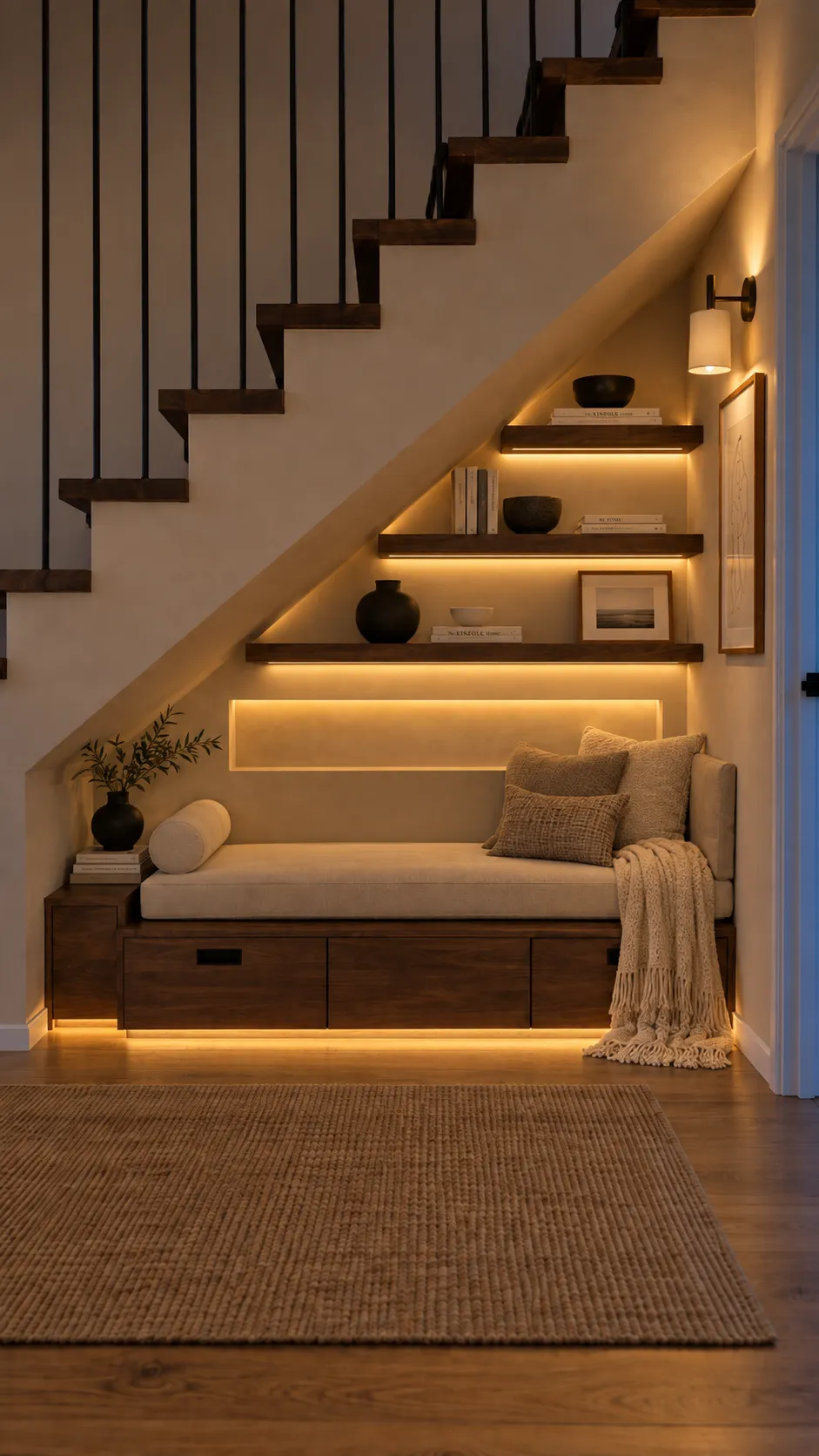
The three shelves on this wall aren't equal and aren't placed at random: each is shorter than the one below because they all die against the same sloping line, the staircase's. It's the way to occupy a triangular wall without the top looking like wasted space, and it has a practical advantage: the stepping leaves the longest shelf at the height you reach without effort and the short ones up top, where only what gets looked at goes.
Items shown are similar to those in the video, not necessarily identical.
A timber shelf with a rebate routed into the front edge to house the light profile, so the strip stays hidden and isn't visible from below. Buying it pre-grooved saves the most delicate step, because routing a straight groove a metre and a half long freehand comes out crooked. Check the rebate size against the profile you'll use, since aluminium profiles don't all share the same section.
See similar on Amazon(paid link)An aluminium profile with a diffuser cover for mounting under a shelf edge. The opal diffuser is what turns a row of diodes into a continuous line, and on a shelf it matters especially because you look at it from below and at an angle. Aluminium also dissipates heat, which is what extends the strip's life: stuck directly to timber, the same strip lasts considerably less.
See similar on Amazon(paid link)A rectangular piece let into the front, leaving the unit completely flush with nothing projecting into the route. It's the answer for a low drawer in a narrow zone, where an ordinary handle catches clothing and gets knocked by your leg. Check the routing it requires before ordering the fronts, because the recess has to be machined in the workshop and doing it afterwards rarely comes out clean.
See similar on Amazon(paid link)A short-armed wall light with a cylindrical shade, which in a corner resolved through concealed lighting is the only visible piece and the one giving a warm point at eye level. A pale shade spreads sideways as well as up and down, unlike a metal one, which throws two cones and leaves the rest dark. Check the projection: on a wall beside a route, more than fifteen centimetres gets in the way.
See similar on Amazon(paid link)A low, wide piece for the shelf, the format almost always missing from shelving: the horizontal one. With books upright and a tall vase, everything tends to the vertical and the arrangement becomes a row; a bowl breaks that rhythm without taking height. In stone or matt ceramic it works better than a glossy finish, because with a light strip above, gloss throws a reflection right at eye level.
See similar on Amazon(paid link)Some links on this page are affiliate links. If you make a purchase through them, we may earn a commission at no extra cost to you.
 Staircase
Mediterráneo Sereno
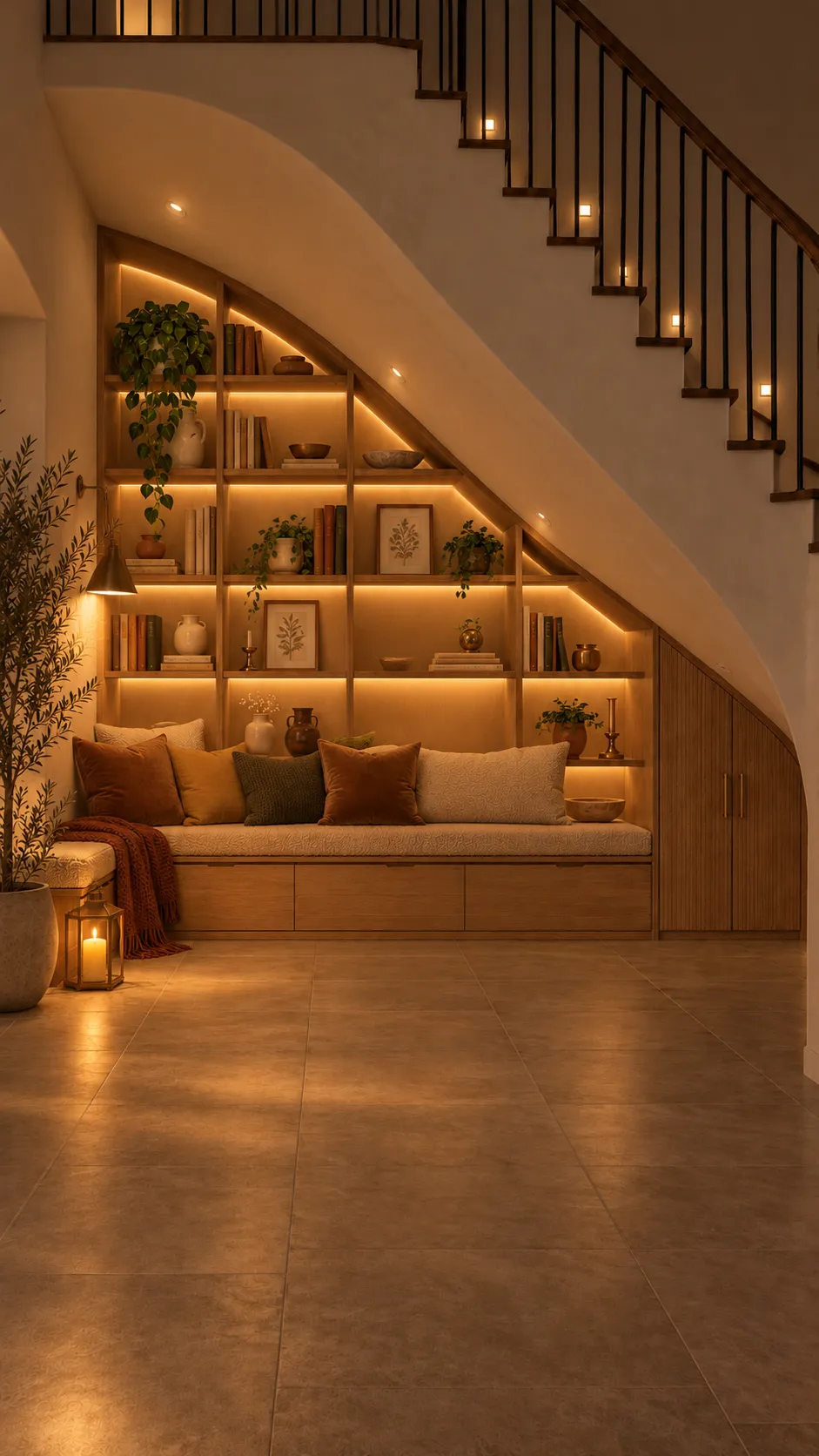
Under a curved staircase the ceiling does not come down in a straight line but describes an arc…
 Staircase
Lujo Cálido
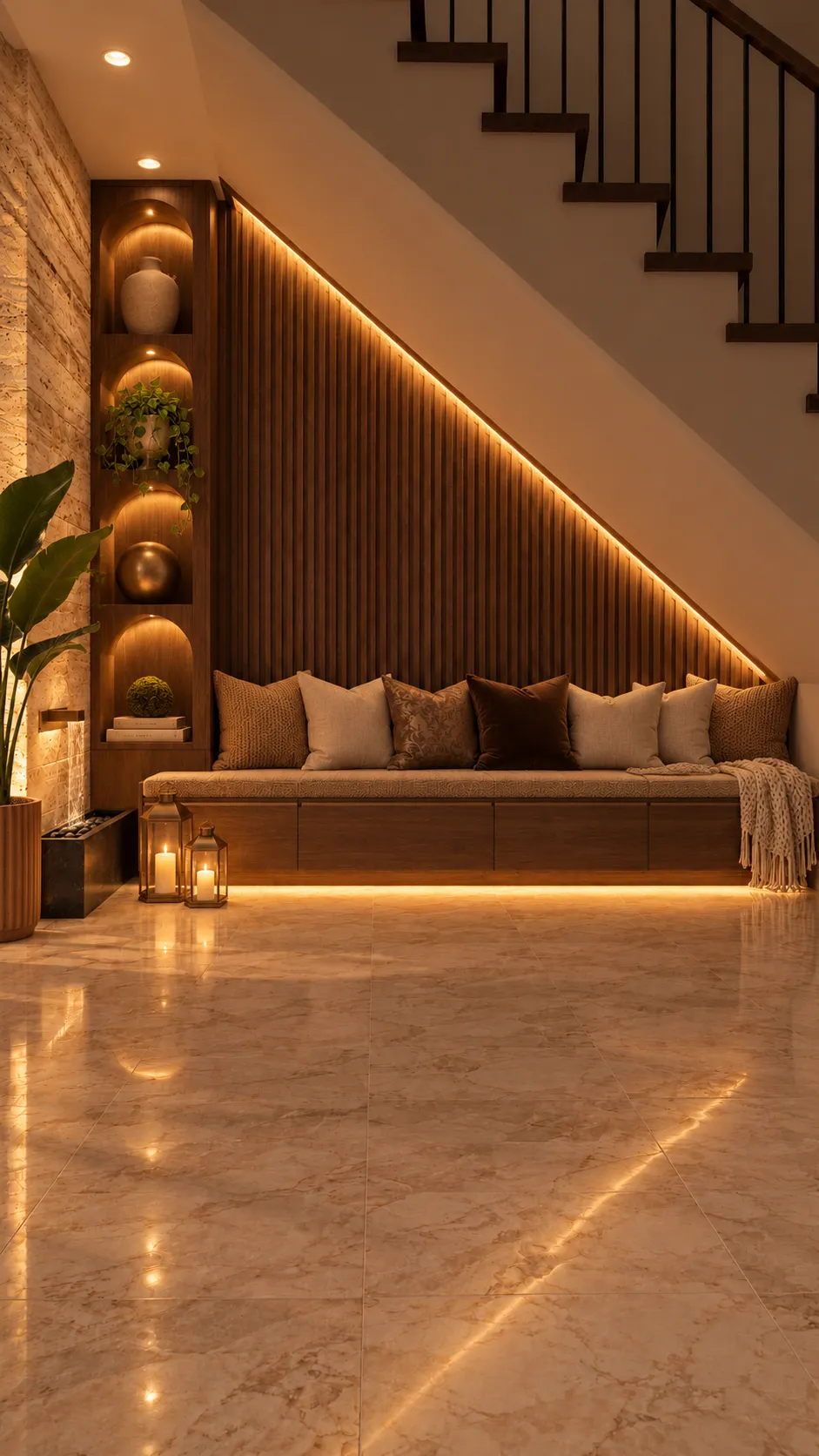
The slatted plane fills the whole triangle the staircase leaves, and along the top edge, right…
 Staircase
Natural Familiar
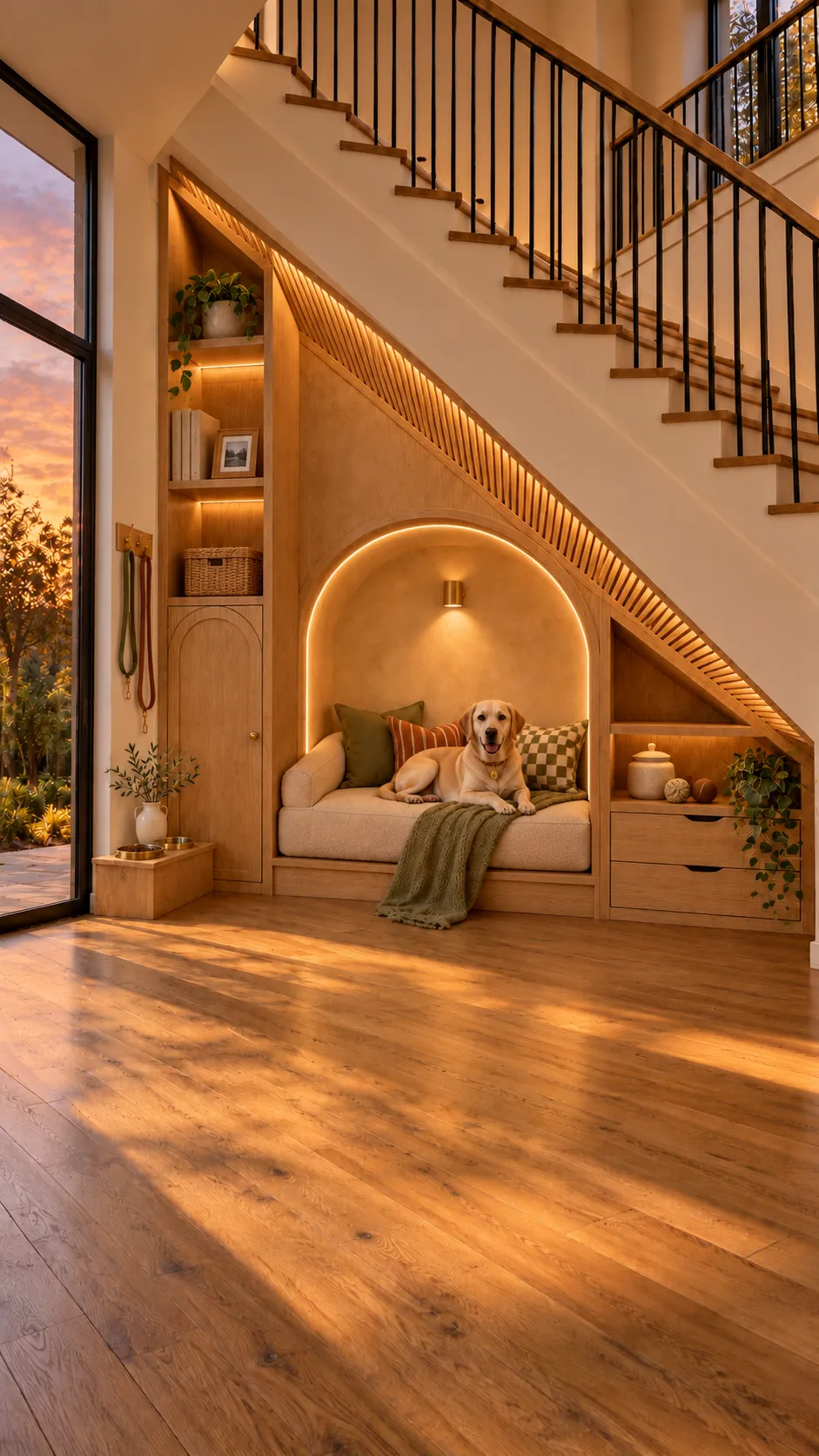
The dog's bed sits inside an arch cut into the staircase front, not against it. That difference…
 Tu Casa