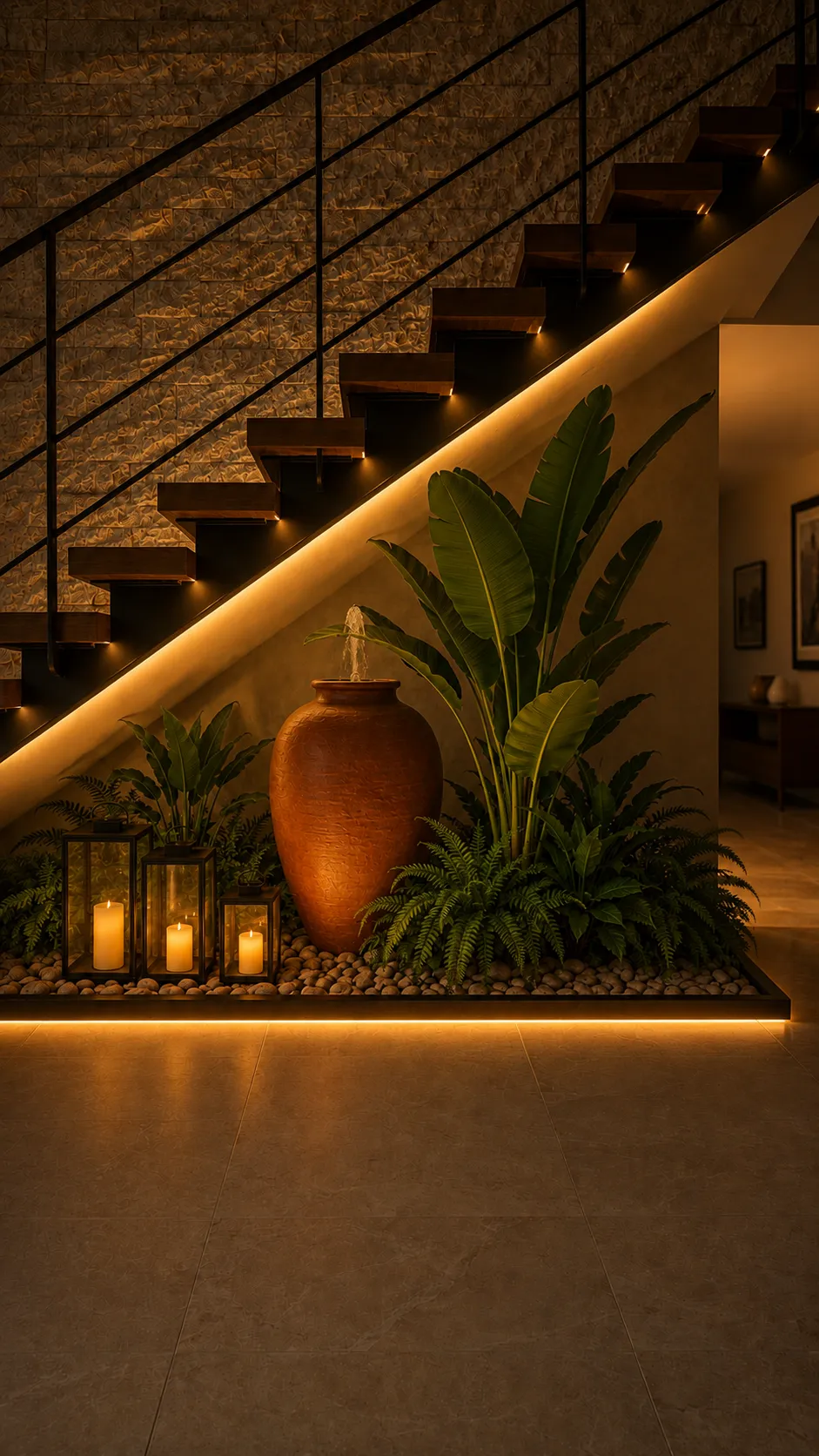
The overflowing urn in the middle isn't there only for the sound: it's what makes the rest of the bed possible. Moving water raises the humidity of the corner, and that humidity is why ferns survive in a heated hallway with no window nearby. Around it, understorey planting rather than sun plants, coarse river pebble, and an LED strip running the full diagonal of the stair stringer.
Items shown are similar to those in the video, not necessarily identical.
A clay or resin urn with a submersible pump inside and an overflow at the mouth, recirculating the same water. Indoors, choose the resin version with a clay finish over real terracotta: it weighs a fraction, doesn't breathe and won't leave a damp ring on the floor. Check the noise figure and the cable length, because the socket is almost never where you want it.
See similar on Amazon(paid link)Giant bird of paradise, with large leaves and real height — the piece that gives scale to an under-stair bed. It wants plenty of indirect light, so put it in the part of the void that gets some brightness rather than the deepest corner. The leaves split along the edges from draughts and from being brushed past, so give it room and keep it off the walking line.
See similar on Amazon(paid link)Shade ferns in small pots, to fill the low level of the bed. They're the plants that benefit most from the fountain, because what kills them indoors isn't lack of water but dry air from the heating. Plant them in a group rather than singly: together they create their own microclimate and the clump reads full instead of bare at the base.
See similar on Amazon(paid link)A steel or aluminium strip that defines the bed and holds the stone in. It's the piece that decides whether the whole thing looks built or improvised: without an edge, the pebble spreads across the floor within a week. Indoors use powder-coated or stainless steel rather than raw galvanised, because with a fountain's humidity beside it the cut edge eventually stains the floor with rust.
See similar on Amazon(paid link)A descaler made for recirculating fountains, dissolving the white tidemark without attacking the pump or the joints. Choose the continuous-dose type over a shock treatment: it keeps the water treated and saves emptying and scrubbing the urn every few weeks. With plants around, read the label and make sure treated water doesn't end up in the bed as it overflows.
See similar on Amazon(paid link)Some links on this page are affiliate links. If you make a purchase through them, we may earn a commission at no extra cost to you.
 Staircase
Nórdico Suave
The void under a straight stair is a triangular prism and it's resolved with measurements; under a…
 Staircase
Orgánico Sereno
Bringing gravel indoors sounds like an indulgence until you see it resolved as it is here: an…
 Staircase
Boho Chic
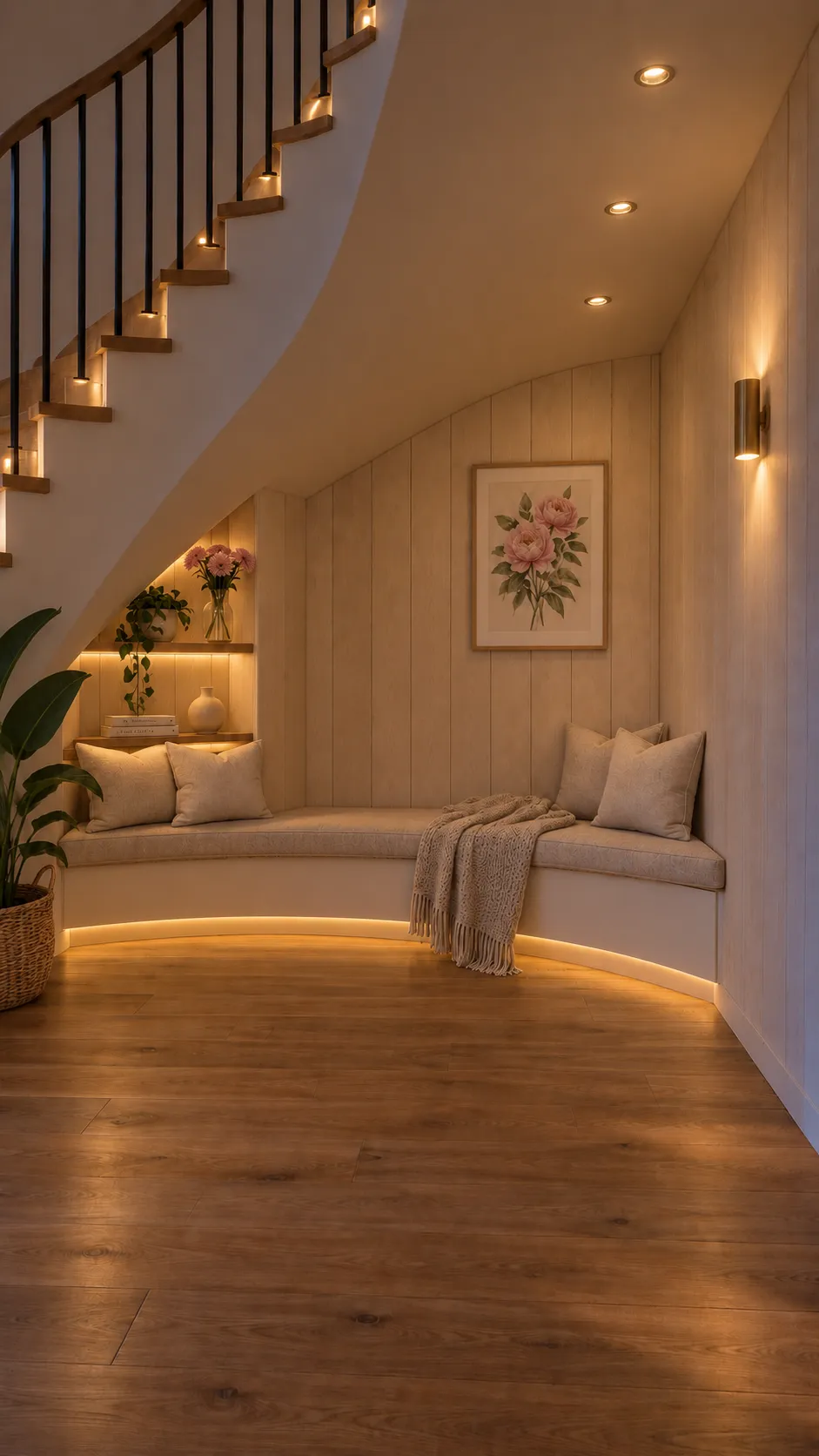
The space under the stairs stops being a leftover triangle and becomes the cosiest corner in the…
 Tu Casa