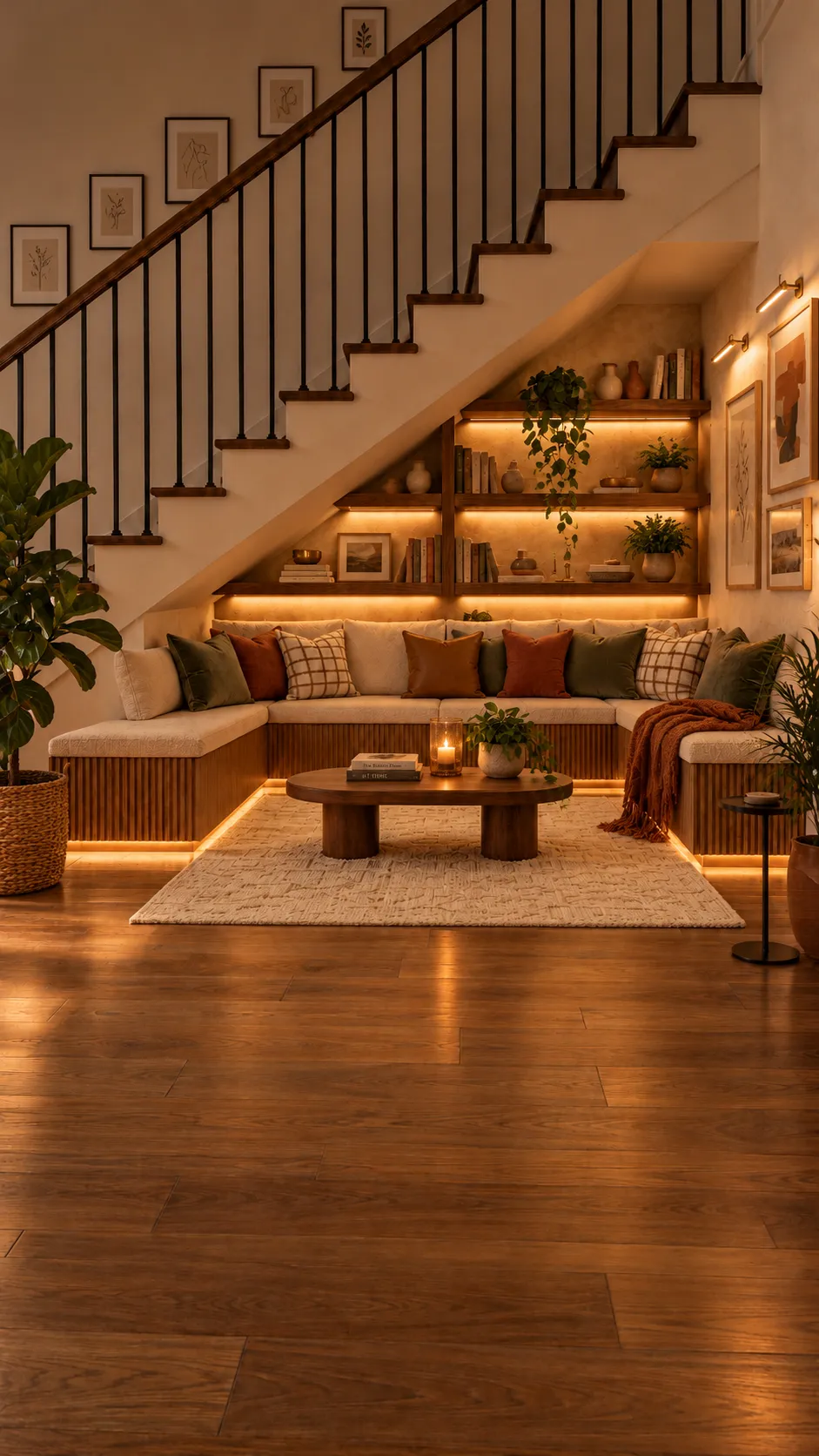
This corner uses all three walls of the void rather than one: the bench turns twice and wraps the table, which is what turns a dead end into somewhere people sit facing each other instead of in a row. It has a cost, worth knowing in advance: a U isn't walked along, it's entered, so the void stops working as accessible storage and becomes a small room within another.
Items shown are similar to those in the video, not necessarily identical.
A low oval table on a central pedestal, the format that works when surrounded by seating on three sides. With no corners and no legs at the ends, you can get in and out of the bench without knocking it or dragging it. Check the weight before buying: a solid timber pedestal version is heavy and in a U it needs to move with a foot, so a thinner top sometimes pays off.
See similar on Amazon(paid link)A half-round panel for cladding a bespoke bench front, which in a U serves a specific purpose: turning the corners, vertical channelling disguises the junction of the three sections better than a flat surface. Ask for corner pieces from the same system if they exist; mitring a channelled panel leaves half-rounds cut through right at the angle, which is where you look most.
See similar on Amazon(paid link)Frames in the same model and colour across several formats, which is what lets you build a gallery on a staircase wall without it looking disordered. Unifying frame and mount, the variety of sizes supplies the movement and nothing else is needed. Buy one or two extra: on a diagonal composition it's common to discover while hanging that a small piece is missing to close the rhythm.
See similar on Amazon(paid link)Plain covers in several tones of the same family, to distribute across the three sections of a bench without repeating the same scheme on each side. What makes an assortment work is that they all share a range and vary in size, not the other way round. Choose zipped covers with separate inners: on a bench in daily use covers get washed several times a year and the inner outlasts them considerably.
See similar on Amazon(paid link)A tall plant for the open end of a U, where something is needed to close the corner without adding furniture. In a hallway choose a species tolerating low light and door draughts, like a fiddle-leaf fig only if there's a window nearby, or a kentia if there isn't. A fibre basket hides the nursery pot, but put a saucer inside: fibre doesn't stop watering run-off.
See similar on Amazon(paid link)Some links on this page are affiliate links. If you make a purchase through them, we may earn a commission at no extra cost to you.
 Staircase
Mediterráneo Sereno
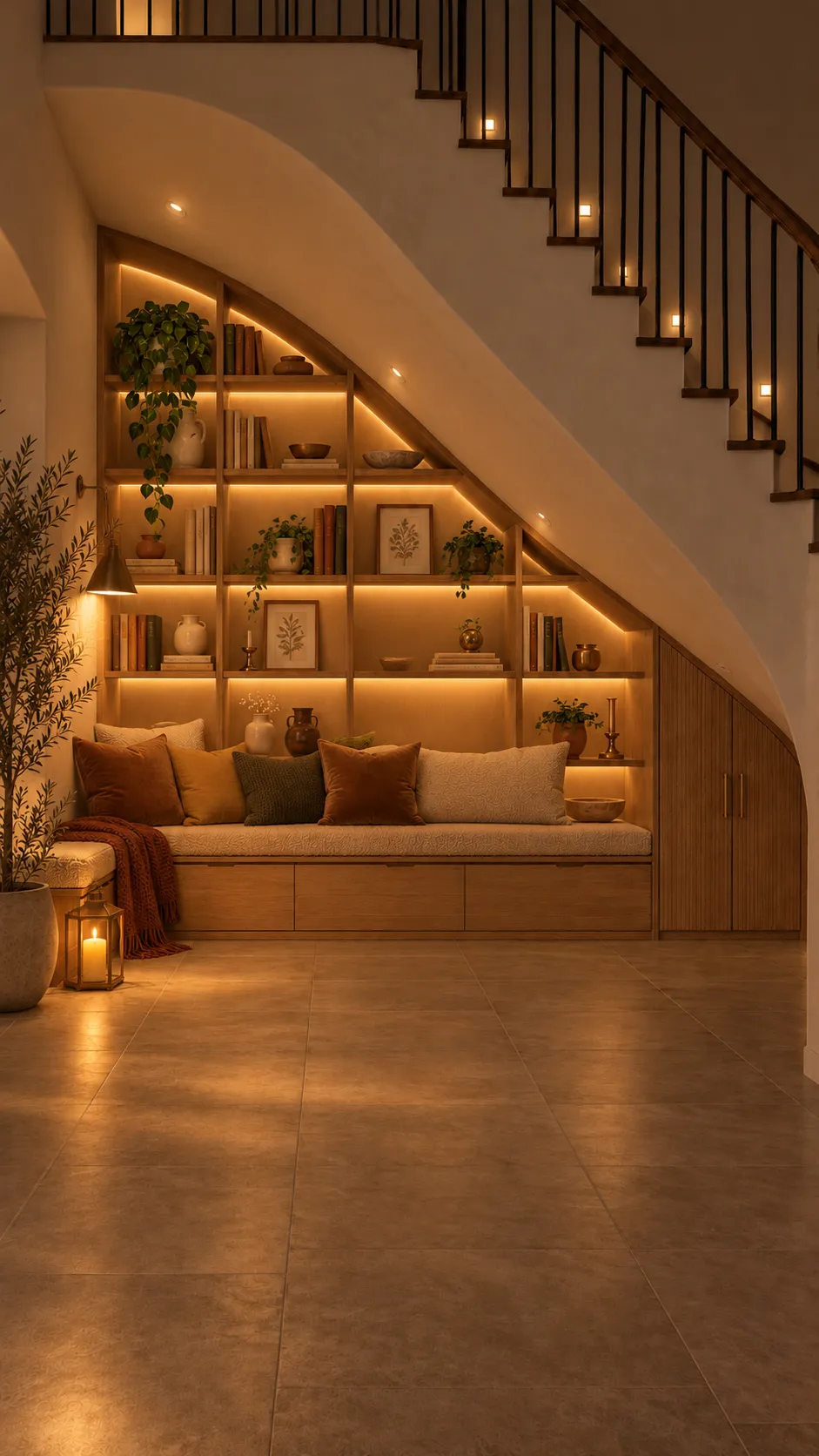
Under a curved staircase the ceiling does not come down in a straight line but describes an arc…
 Staircase
Lujo Cálido
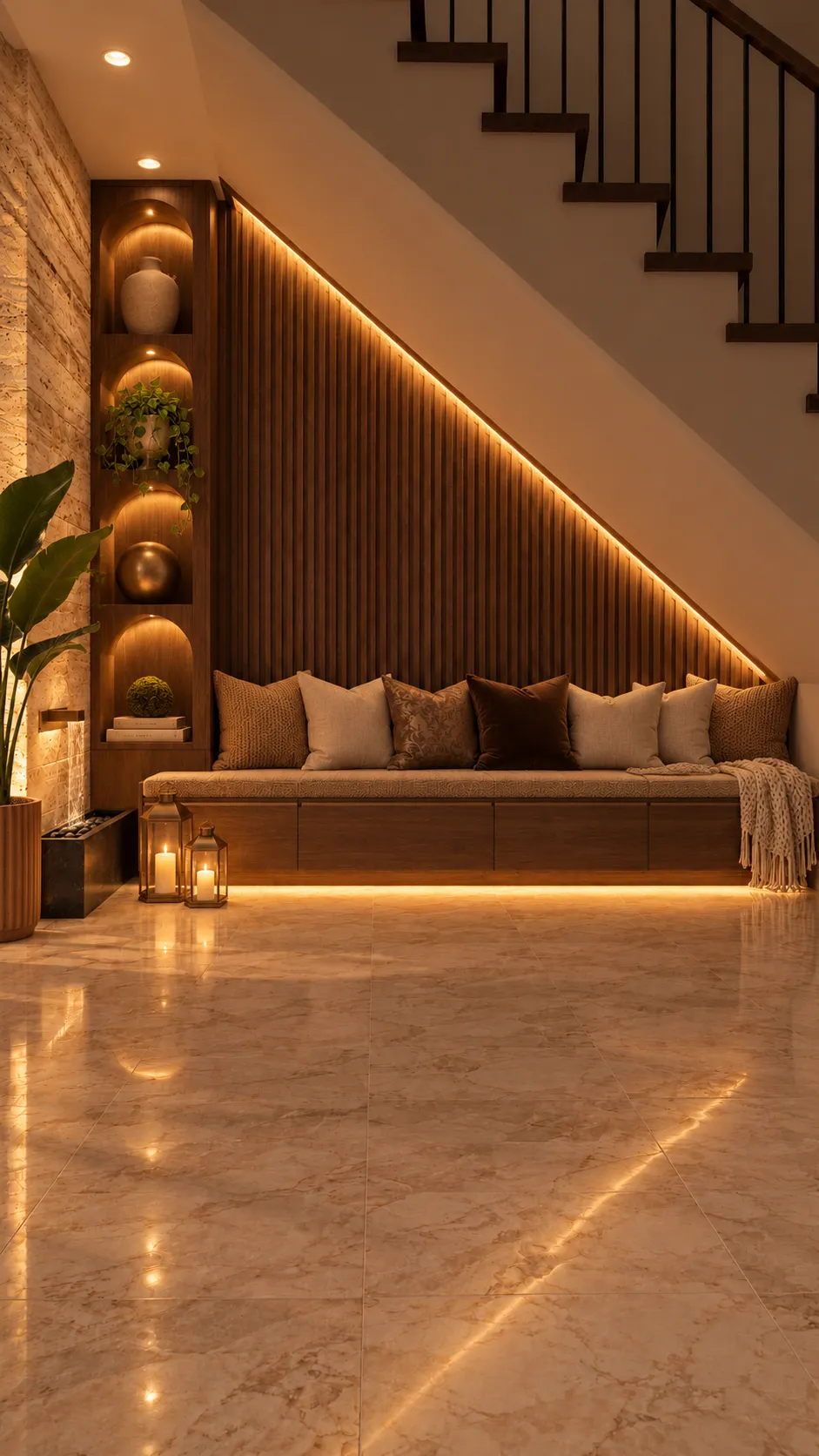
The slatted plane fills the whole triangle the staircase leaves, and along the top edge, right…
 Staircase
Natural Familiar
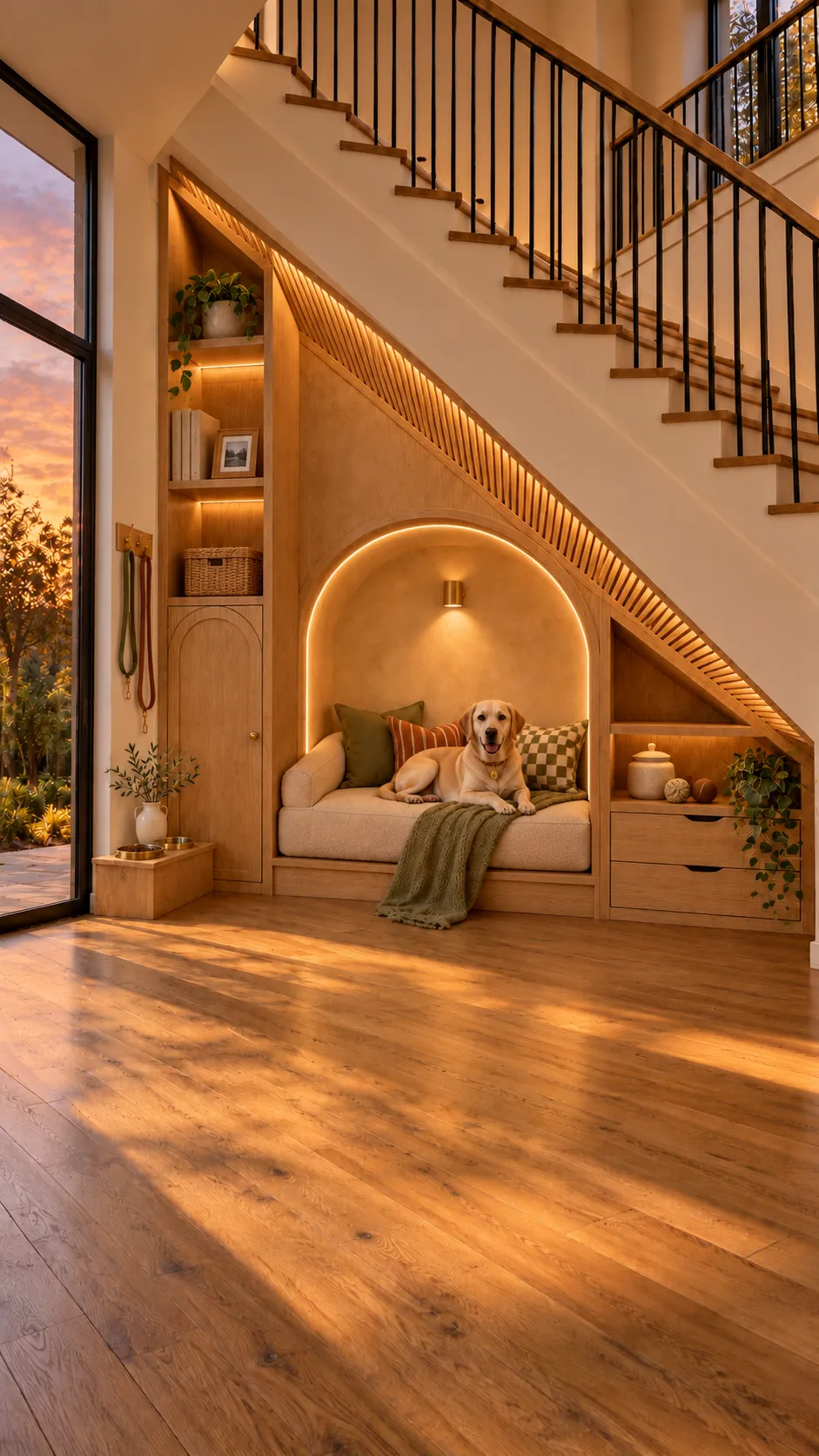
The dog's bed sits inside an arch cut into the staircase front, not against it. That difference…
 Tu Casa