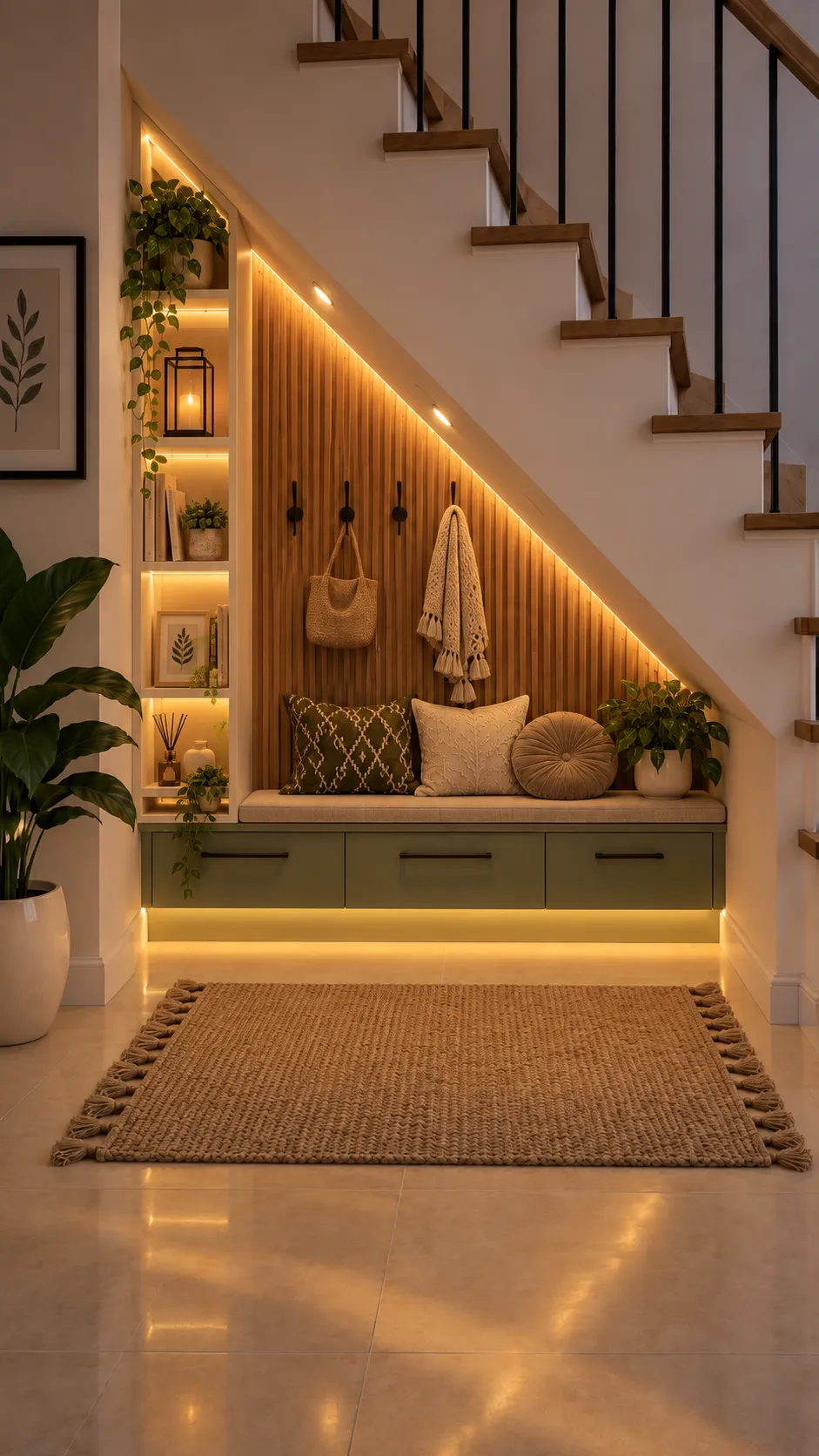
This void isn't resolved as a corner to sit in but as an entryway that works: four hooks, a bench to put shoes on and three drawers for what never finds a place. The decision holding it together is mounting the hooks on the slat panel, which looks like a detail and is the point almost everyone gets wrong, because a slat won't carry the weight of a wet coat.
Items shown are similar to those in the video, not necessarily identical.
A single-knob hook, which in a row on a slat panel reads cleaner than a multi-armed one. What to check is the fixing system: those with a single central screw rotate under weight and end up crooked, whereas two-screw versions stay put. Check the knob's distance from the wall too, because under five centimetres a broad-shouldered hanger won't fit.
See similar on Amazon(paid link)A tray or angled divider organising footwear inside a low drawer, so more pairs fit and all are visible on opening. Without one, a shoe drawer becomes a heap from which only the top layer gets used. Measure the interior height before buying: most angled dividers want at least twenty centimetres of clearance, and a low bench drawer is often only fifteen.
See similar on Amazon(paid link)A high-rimmed tray in rigid plastic or metal, for leaving wet boots by the door without water reaching the floor or the furniture. It's the piece missing from nearly every entryway and the one that prevents stains on the skirting. Choose one with a rim of at least two centimetres and a textured base, because a smooth tray full of water becomes a slippery surface right at the entrance.
See similar on Amazon(paid link)A fifteen or eighteen-millimetre board fitted behind the slatting across the band where the hooks will go, so screws grip anywhere in that zone rather than only where a batten falls. It's the answer when the battens don't coincide with hanging height, and it has to be decided before the panel goes up. Record its position in a photo during the work, because afterwards it's hidden and nobody remembers where it is.
See similar on Amazon(paid link)A natural fibre rug for the half metre in front of an entryway bench, where someone stops to take off shoes. Jute scrapes just enough to release the sole and disguises dust well, but it absorbs water, so in a rainy area pair it with a tray for wet footwear. In size, small and hand-washable beats large and fixed.
See similar on Amazon(paid link)Some links on this page are affiliate links. If you make a purchase through them, we may earn a commission at no extra cost to you.
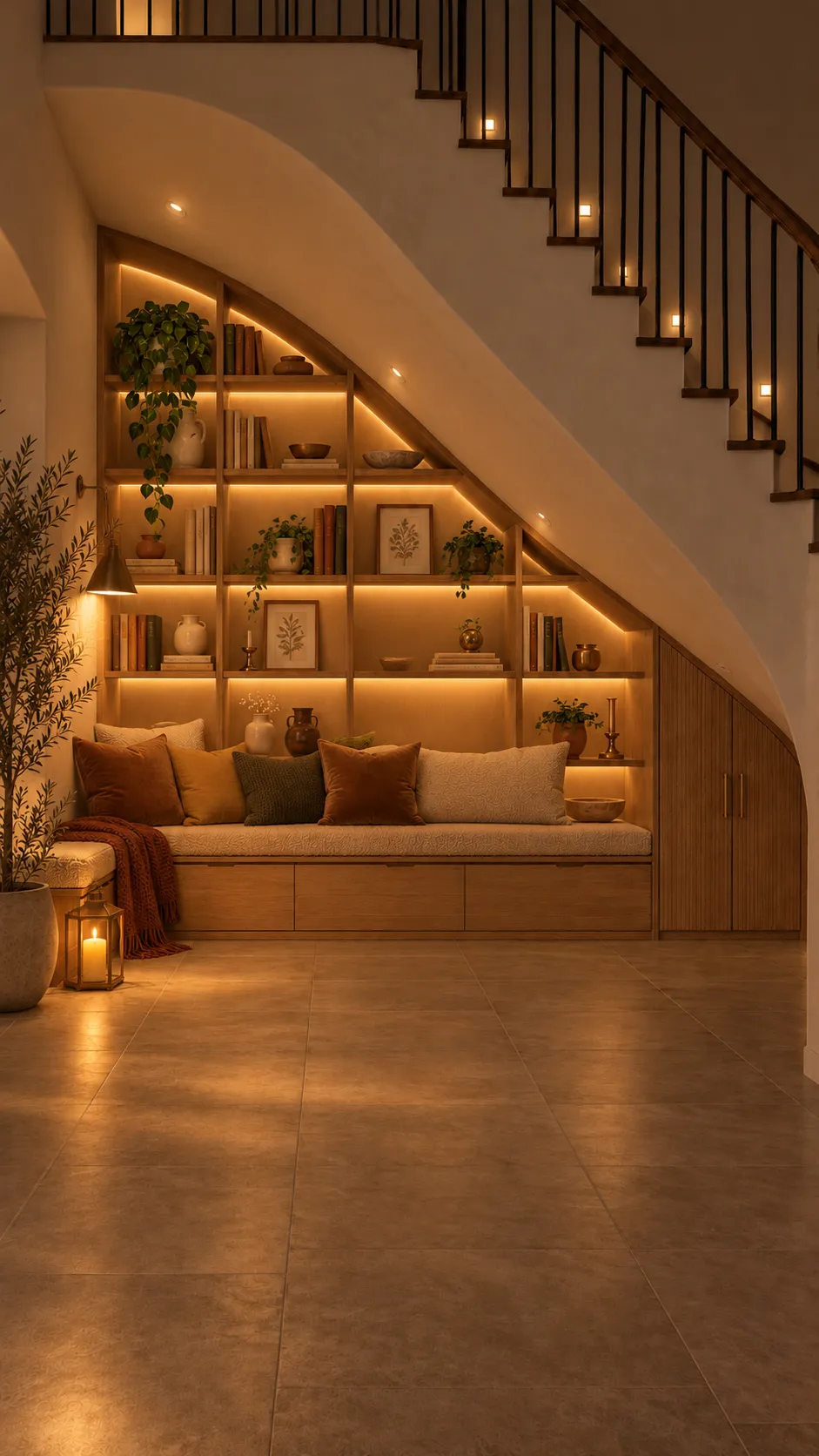 Staircase
Mediterráneo Sereno
Under a curved staircase the ceiling does not come down in a straight line but describes an arc…
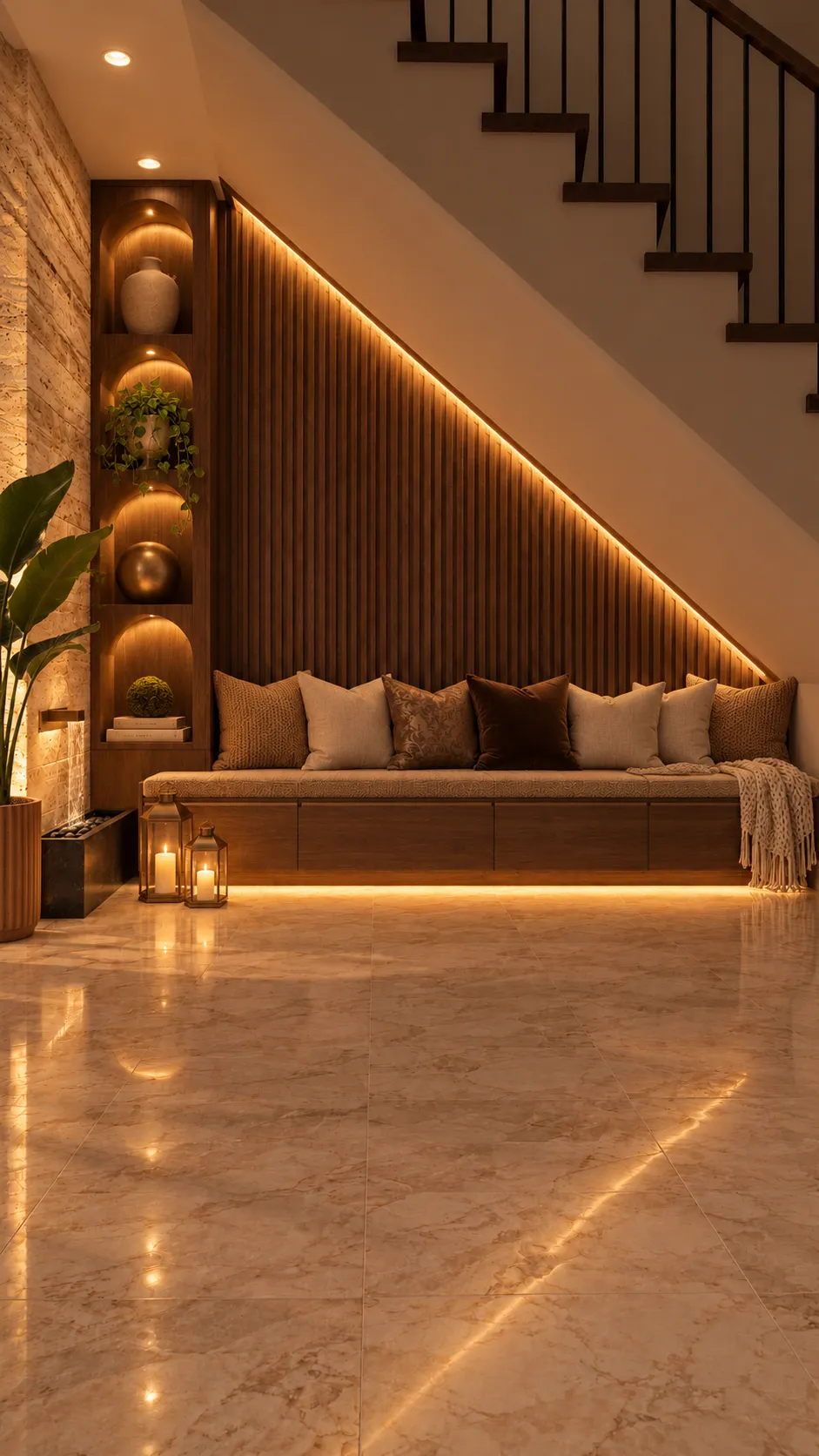 Staircase
Lujo Cálido
The slatted plane fills the whole triangle the staircase leaves, and along the top edge, right…
 Staircase
Natural Familiar
The dog's bed sits inside an arch cut into the staircase front, not against it. That difference…
 Tu Casa