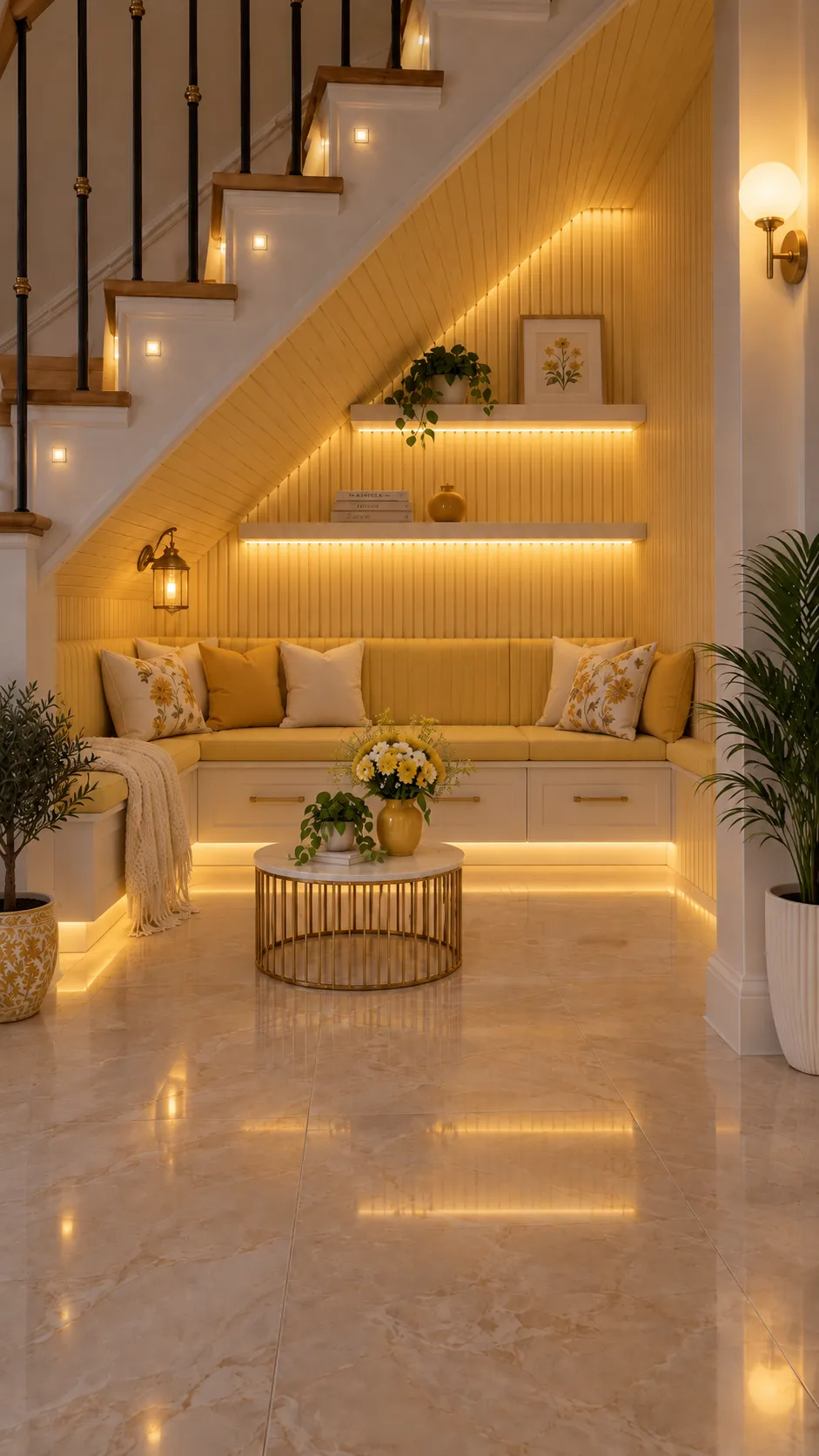
There isn't a coloured wall here: there's a whole coloured corner. The yellow covers the boarding, the seat and the cushions, and the only things escaping it are the drawer fronts and the floor. In a small space that decision works better than painting a single face, because an under-stair void has sloping ceilings and awkward junctions, and one colour erases them all. What has to be adjusted afterwards is the light, because a yellow changes a great deal depending on the bulb lighting it.
Items shown are similar to those in the video, not necessarily identical.
Panel or board with a rounded groove, the kind that comes primed and ready to paint in whatever colour you want. It's a different profile from flat tongue-and-groove: the groove is more pronounced and the shadow it casts deeper, which helps stretch the height in a low space. Ask for the factory-primed version even if it costs a little more, because it saves a whole coat and takes the colour better.
See similar on Amazon(paid link)A spraying unit that lays a thin, even coat including the bottom of the grooves, where a roller pools paint and leaves a glossy line. For painting at home an electric model with an adjustable nozzle is enough, with the precaution of masking everything around because the overspray travels considerably further than you'd estimate. Thin as the datasheet says: paint that's too thick leaves orange peel.
See similar on Amazon(paid link)Water-based enamel in a satin finish, which is what suits a strong colour applied to timber in a circulation area. Satin takes cleaning and scuffs far better than matt, which in a saturated tone marks from rubbing alone. Get tester pots and paint them on card you can move around the corner: a yellow changes so much between window light and a bulb that deciding from the chart is money thrown away.
See similar on Amazon(paid link)A 3000 or 3500 kelvin bulb with a colour rendering index above ninety, which is the combination that keeps a saturated colour clean. Warm 2700 bulbs, which suit neutral tones, add yellow over a yellow or terracotta and muddy the tone. CRI is almost never highlighted on the packaging, so look for it in the specification: below eighty any colour reads flat.
See similar on Amazon(paid link)A wall lantern with an exposed frame and glazing, in an indoor version, giving a light source with a recognisable shape against plain coloured walls. Having clear glass it shows the bulb, so use a low-output filament lamp rather than an ordinary one, which at eye level in a small corner dazzles. Check the projection from the wall: in a narrow passage a lantern standing fifteen centimetres proud gets brushed as you pass.
See similar on Amazon(paid link)Some links on this page are affiliate links. If you make a purchase through them, we may earn a commission at no extra cost to you.
 Staircase
Mediterráneo Sereno
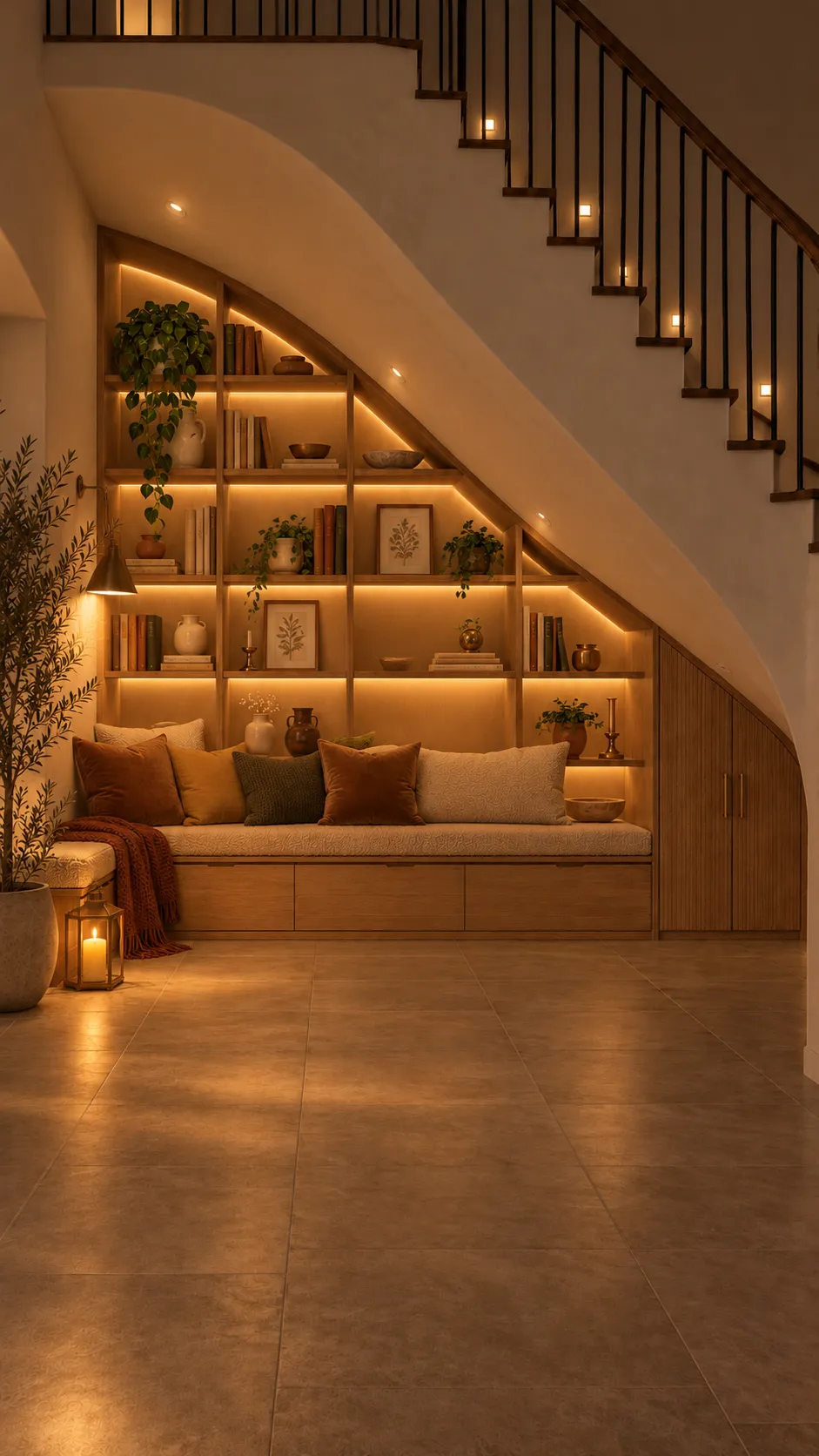
Under a curved staircase the ceiling does not come down in a straight line but describes an arc…
 Staircase
Lujo Cálido
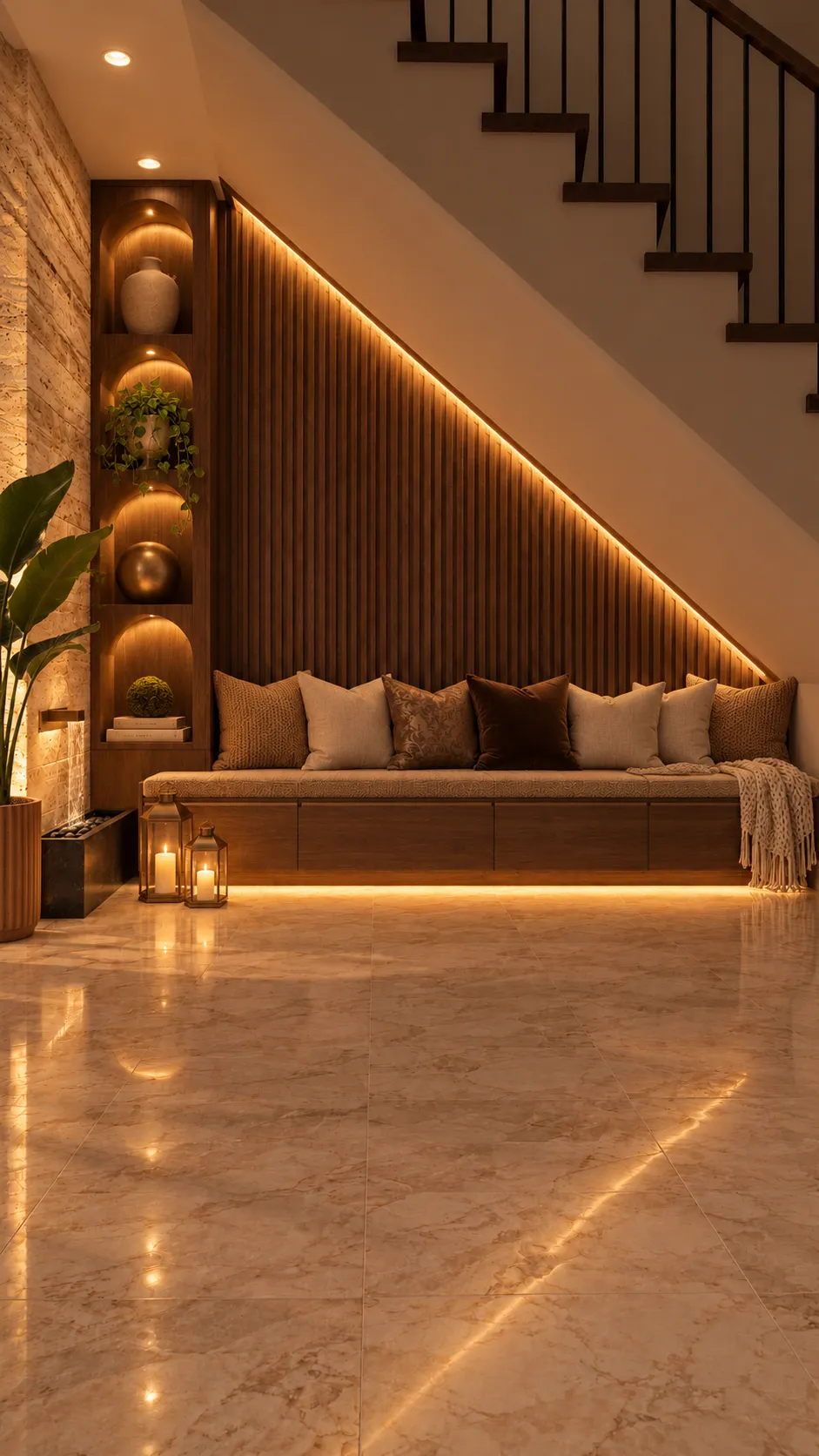
The slatted plane fills the whole triangle the staircase leaves, and along the top edge, right…
 Staircase
Natural Familiar
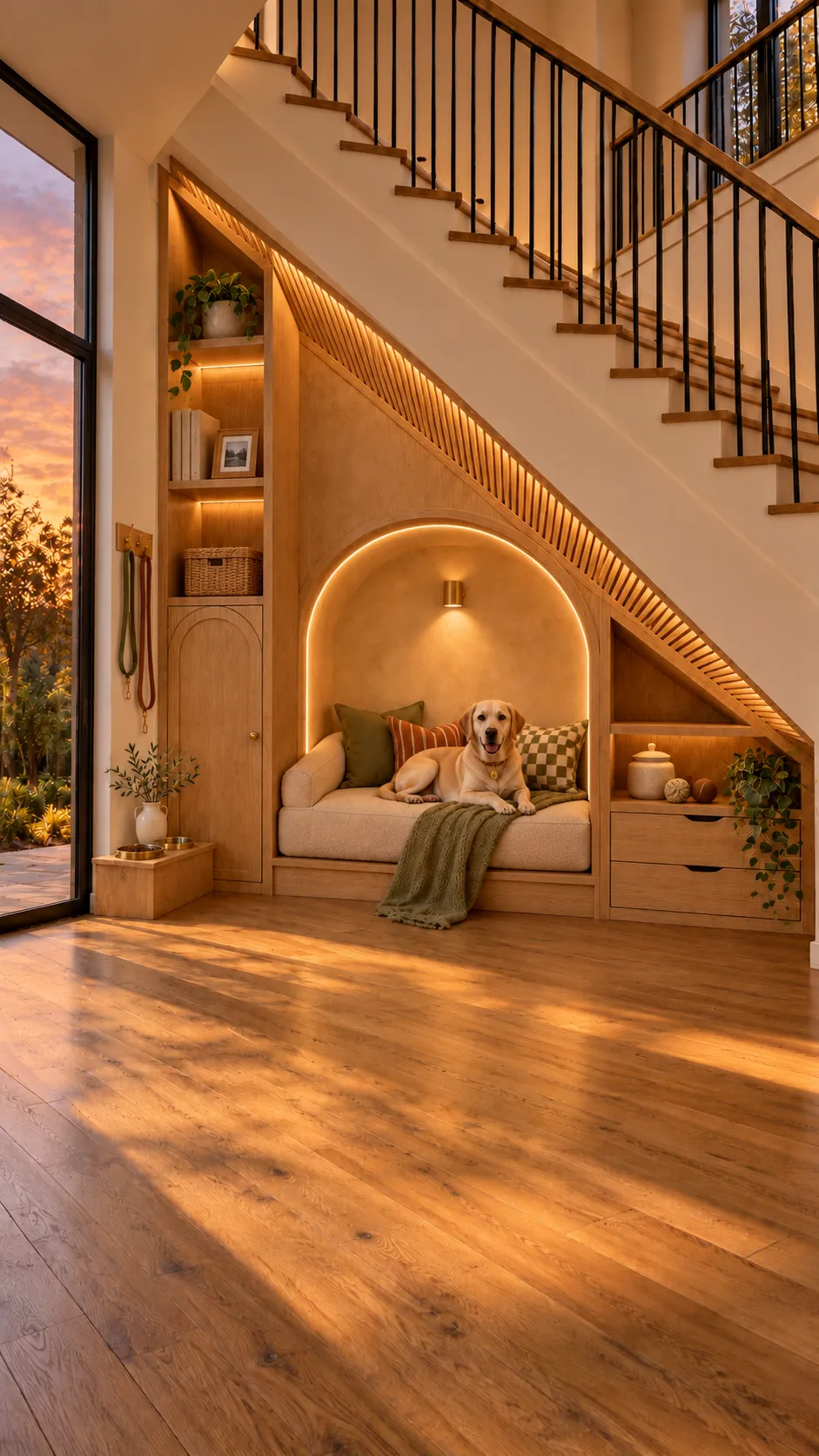
The dog's bed sits inside an arch cut into the staircase front, not against it. That difference…
 Tu Casa