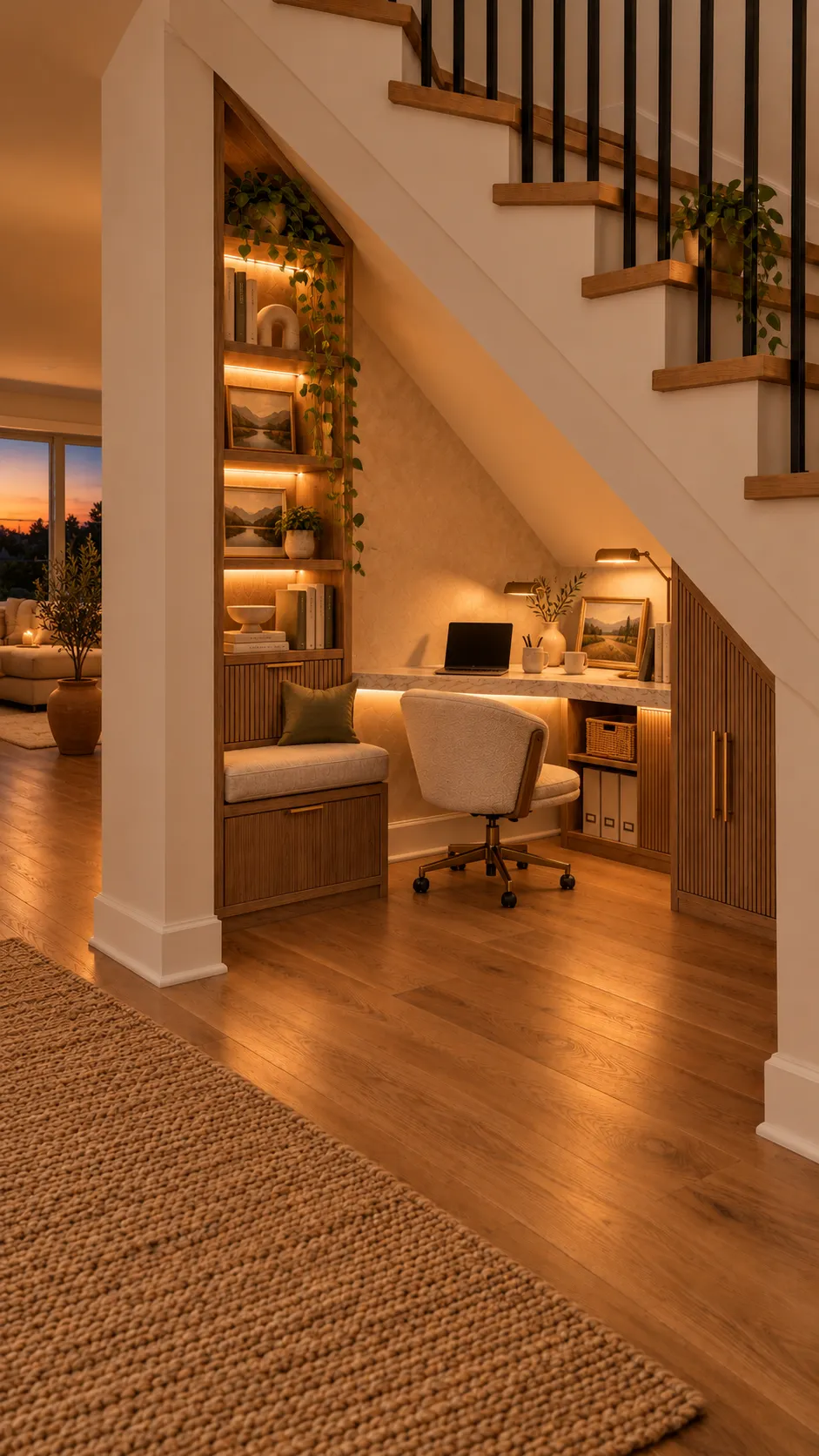
The low part of an under-stair void is the bit nobody knows what to do with: there's no height to sit, none for a shelf you can reach, barely enough to crouch. Here it's been resolved by closing it with doors, so that cubic metre becomes the hallway's cupboard and disappears from view. The rest of the void stays clear for what does need height: the desk, the chair and the shelves.
Items shown are similar to those in the video, not necessarily identical.
Fronts cut to the void's shape to close a staircase's low wedge, with vertical channelling that disguises their not being rectangular. When ordering, give three heights per leaf, because the sloping ceiling means none is the same. Decide the hand beforehand: in a narrow passage, a leaf opening into the route blocks it every time it's used.
See similar on Amazon(paid link)A swivel chair with polyurethane castors, the kind that don't mark boards or laminate. Most chairs come with hard castors meant for carpet, and swapping them costs little and needs no tools: they pull out and push in. Measure it including the back, because in an under-stair void what meets the slope isn't the seat but the top of the backrest.
See similar on Amazon(paid link)A steel plate recessed into the wall and buried under the worktop, so the top appears to float unsupported. For a two-metre stone top you need one every eighty centimetres at least, and the wall has to be masonry: in a hollow partition it won't take even the marble's own weight. Check the plate's thickness against the edge you intend to leave visible.
See similar on Amazon(paid link)Files and boxes of the same model to fill open compartments under a worktop, which is what turns an untidy shelf into something reading as a closed unit. The key is buying them all identical and in a tone close to the joinery: variety of boxes is what makes open shelving look messy, not the quantity of things.
See similar on Amazon(paid link)An arm lamp with a clamp or small base, resolving task light without taking up worktop on a narrow desk. The figure that matters is the arm's reach: it has to come in front of your head, because a lamp sitting at the back lights the wall and leaves the keyboard in your own shadow. In a metal finish, choose a closed shade that hides the bulb from the chair.
See similar on Amazon(paid link)Some links on this page are affiliate links. If you make a purchase through them, we may earn a commission at no extra cost to you.
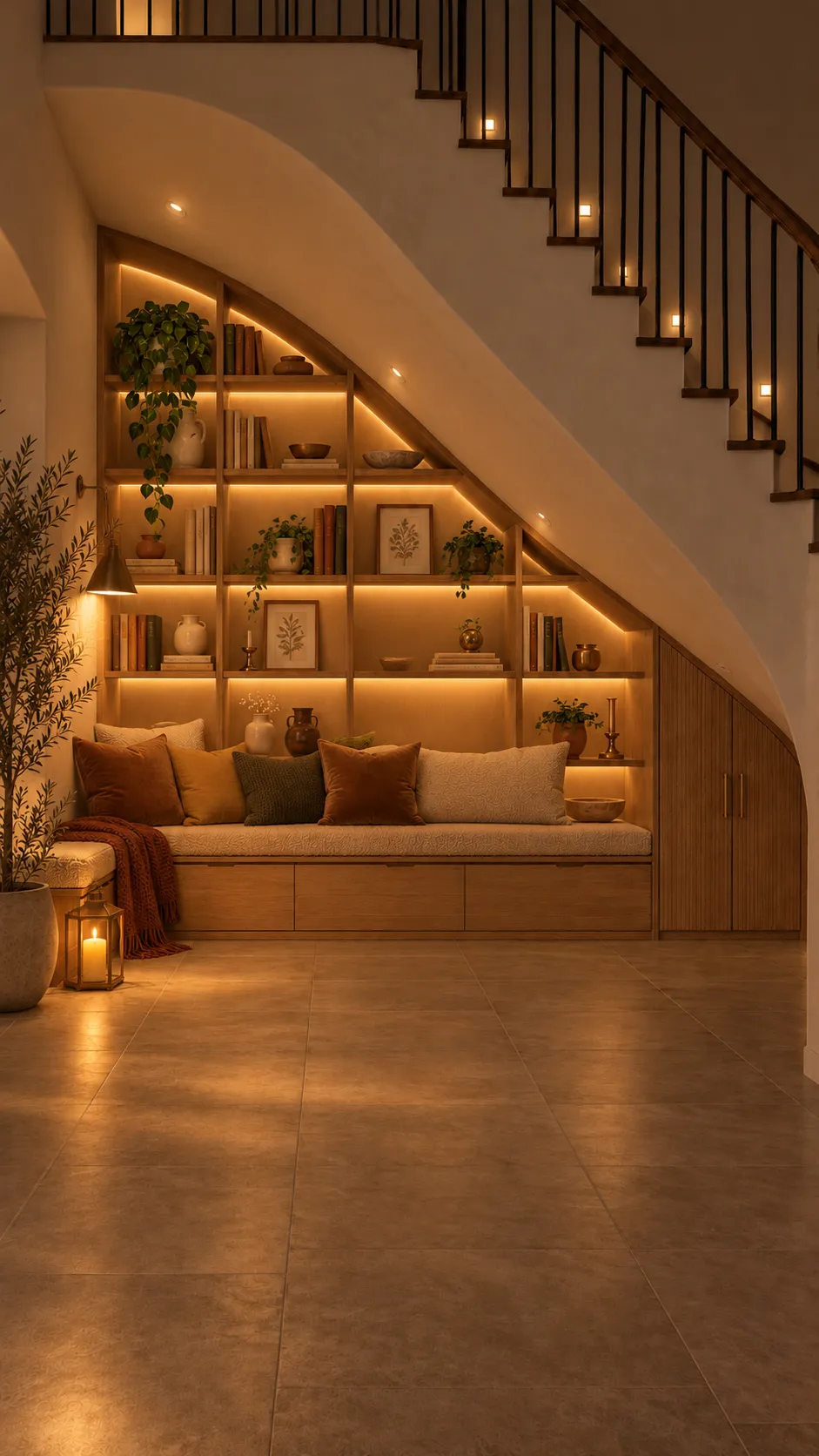 Staircase
Mediterráneo Sereno
Under a curved staircase the ceiling does not come down in a straight line but describes an arc…
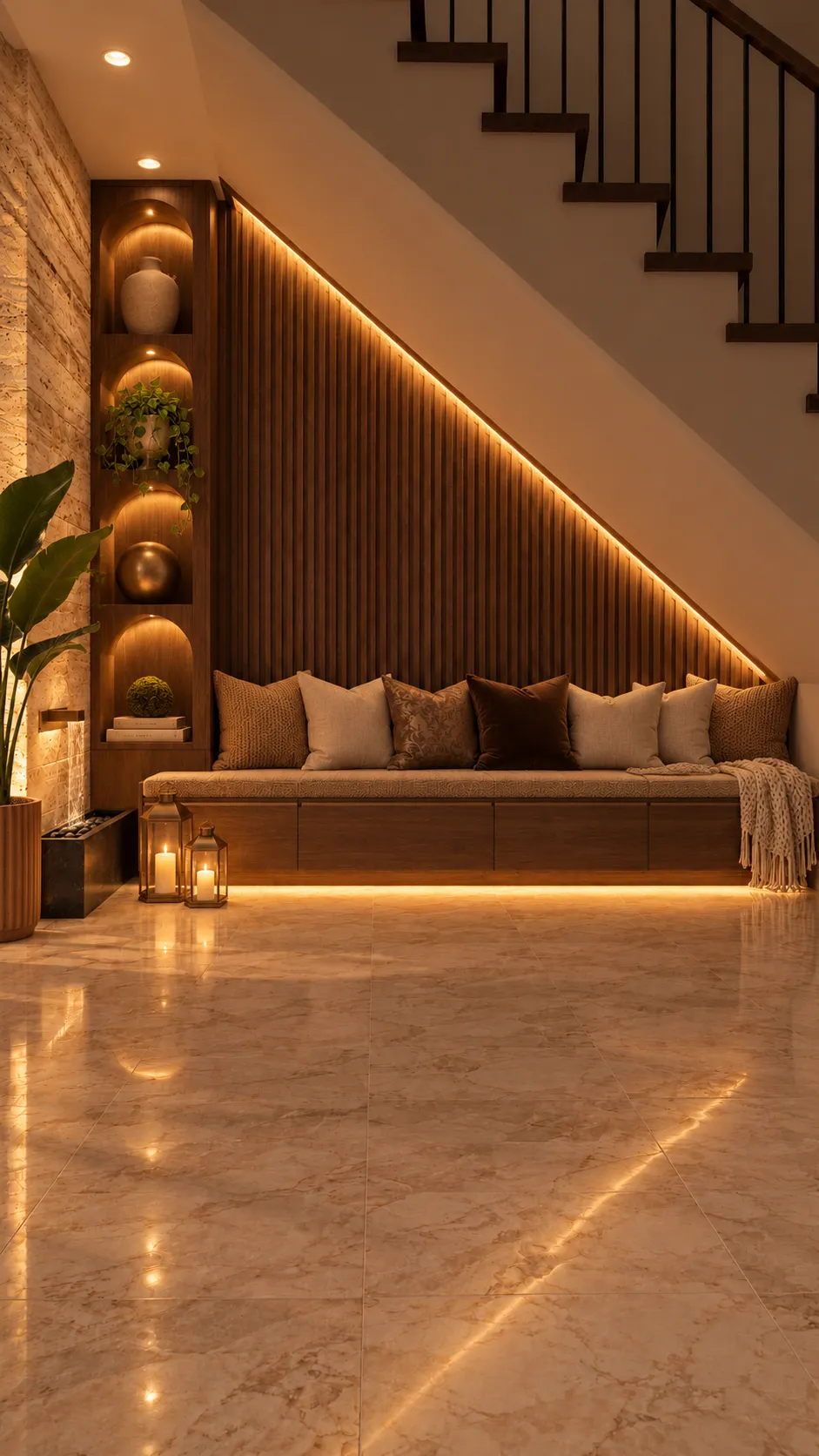 Staircase
Lujo Cálido
The slatted plane fills the whole triangle the staircase leaves, and along the top edge, right…
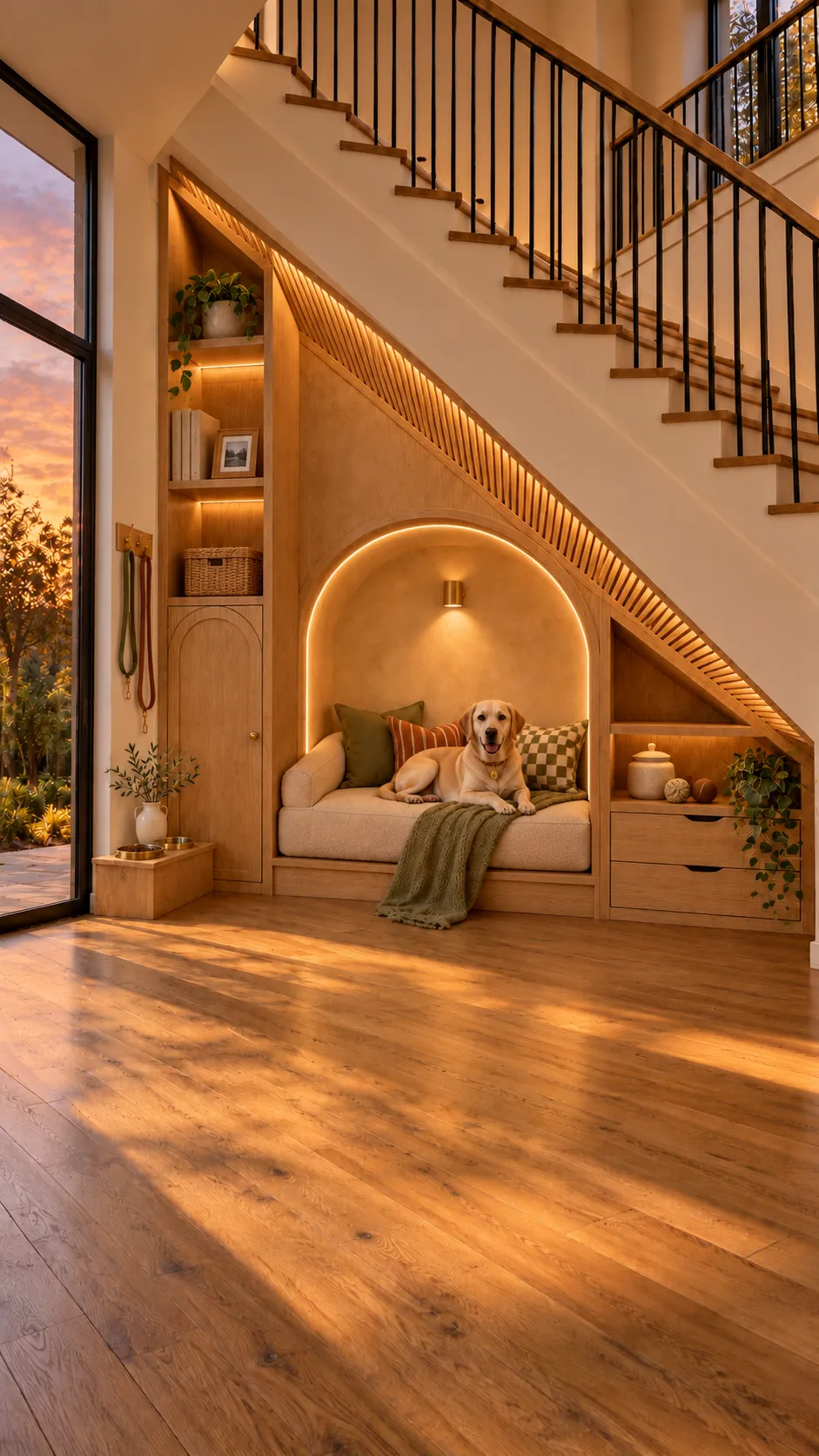 Staircase
Natural Familiar
The dog's bed sits inside an arch cut into the staircase front, not against it. That difference…
 Tu Casa