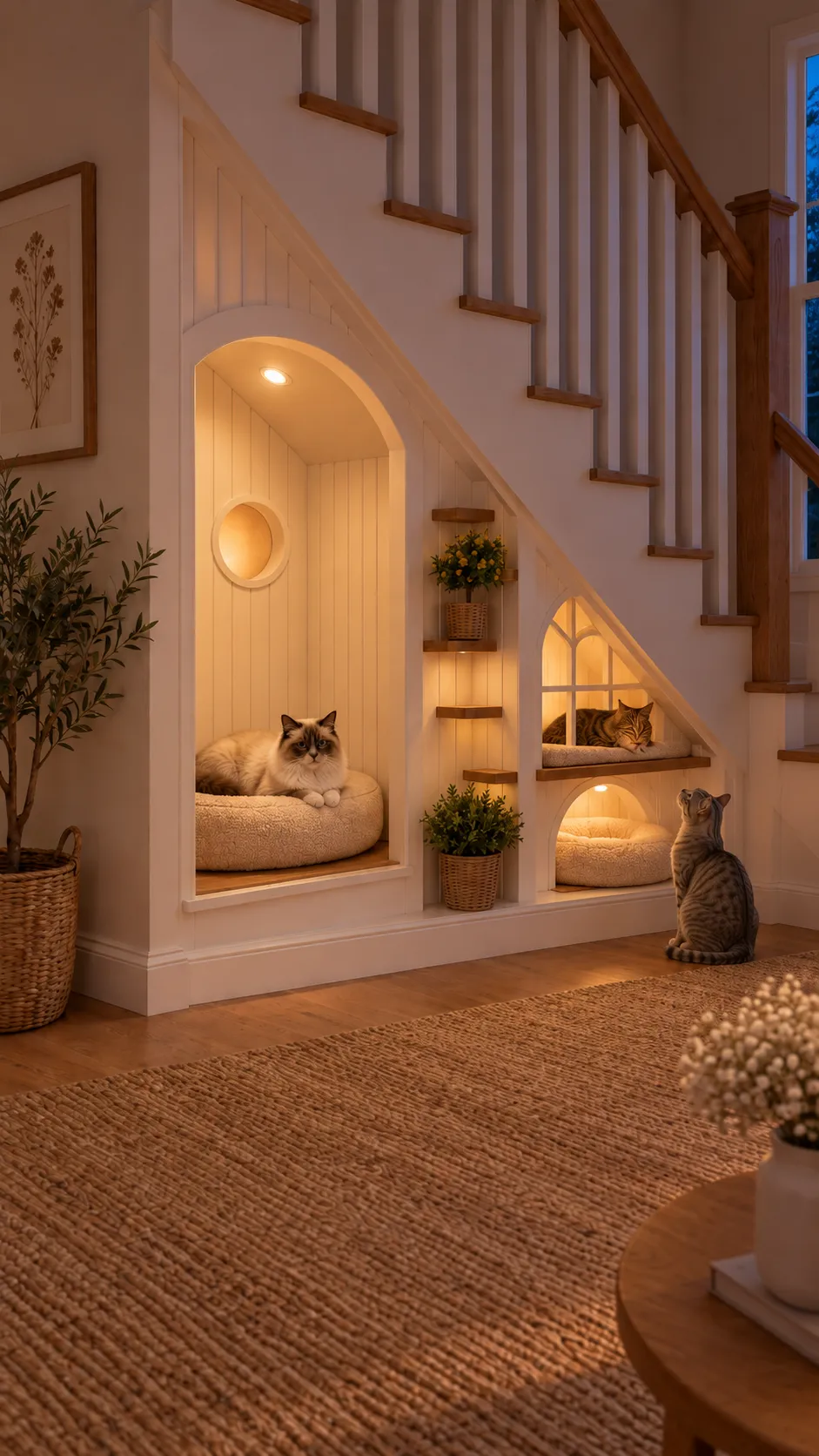
With cats, an under-stair void isn't resolved with a bed on the floor: it's resolved vertically. Here there are two caves at different heights, linked by shelves acting as a staircase, and that difference in level is precisely what lets two animals use the corner at once without bothering each other. The upper one also has a round window, which for a cat isn't decoration but the chance to see who's arriving without coming out.
Items shown are similar to those in the video, not necessarily identical.
A bed with a raised rim and soft filling, the shape a cat looks for to rest its head and close its body. Inside a cave keep it loose rather than fixed, because that's what lets it come out and be washed without dismantling anything. Check the diameter leaves a finger's clearance against the void's walls: a tight fit won't come out, and too small it shifts every time the animal goes in.
See similar on Amazon(paid link)Shelves meant for a cat to climb, with carpet or sisal bonded to the top face and reinforced fixings. The figure that matters is depth, because under twenty centimetres all four paws won't fit when turning and it stops using them. Check the stated load too: a five-kilo cat landing exerts considerably more than five kilos at the moment of impact, and a plasterboard shelf without the right fixing works loose within weeks.
See similar on Amazon(paid link)A board covered in sisal rope to screw vertically beside the cave entrance, which is where the cat stretches on the way out. Fit it at the height the animal reaches standing rather than at floor level, because the movement it wants is to lengthen its body. If it already scratches the sofa, placing the panel on the route between its spot and the living room works better than putting it in an out-of-the-way corner.
See similar on Amazon(paid link)A small realistic-leaved plant for shelves in an area with cats, the way to have greenery without checking every species for toxicity. Rigid plastic leaves give themselves away at a metre, so choose real-touch with visible veining. One safety detail: avoid those with loose decorative soil or small stones in the pot, because that's exactly what a cat paws out.
See similar on Amazon(paid link)A small fitting for the interior ceiling of a cave, where very little light is needed. Go for low output and preferably dimmable, because a strong beam in a forty-centimetre void dazzles an animal lying directly beneath it. Check it barely warms: in such an enclosed space, a fitting that rises in temperature turns the refuge into somewhere the cat stops using in summer.
See similar on Amazon(paid link)Some links on this page are affiliate links. If you make a purchase through them, we may earn a commission at no extra cost to you.
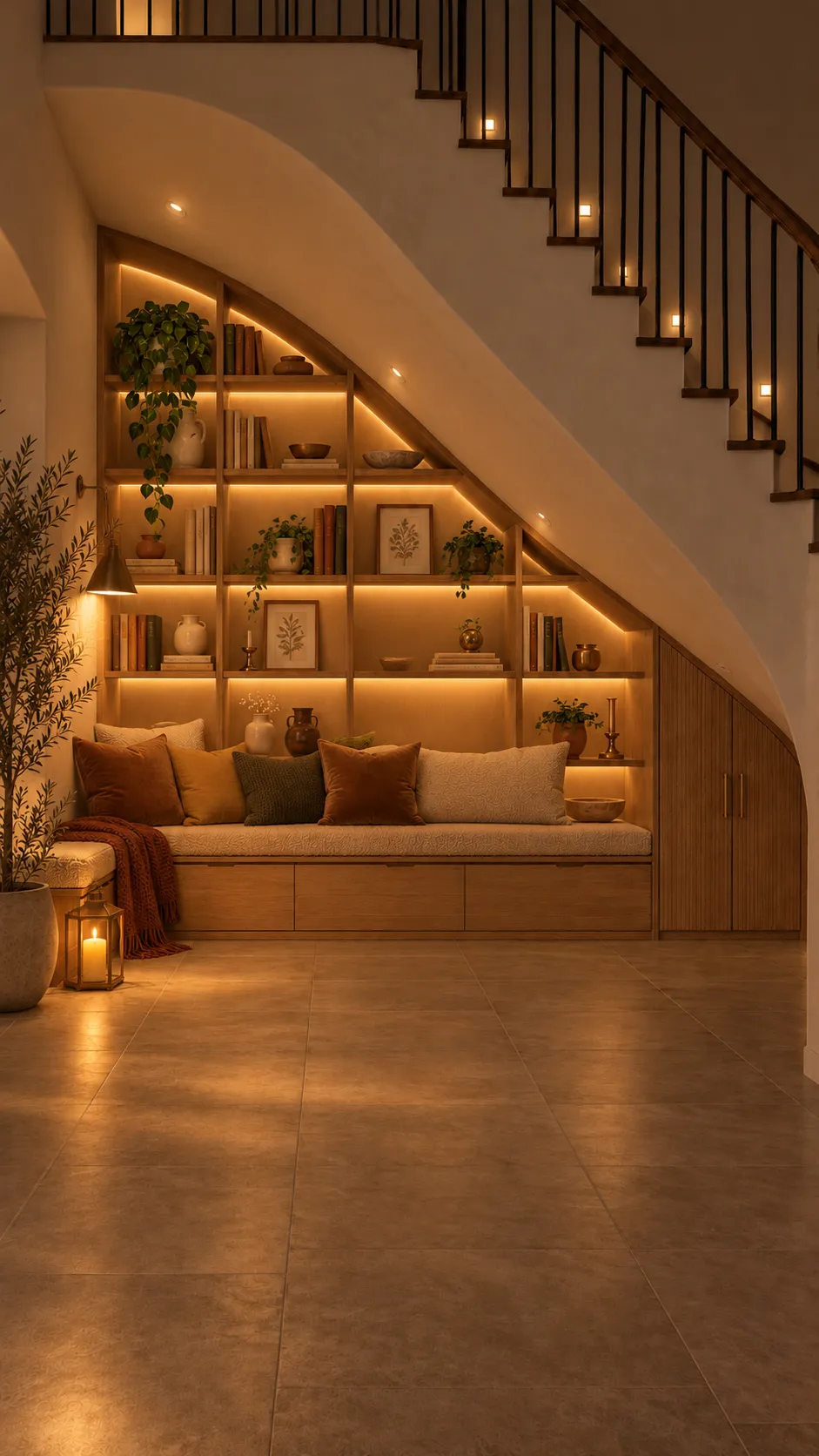 Staircase
Mediterráneo Sereno
Under a curved staircase the ceiling does not come down in a straight line but describes an arc…
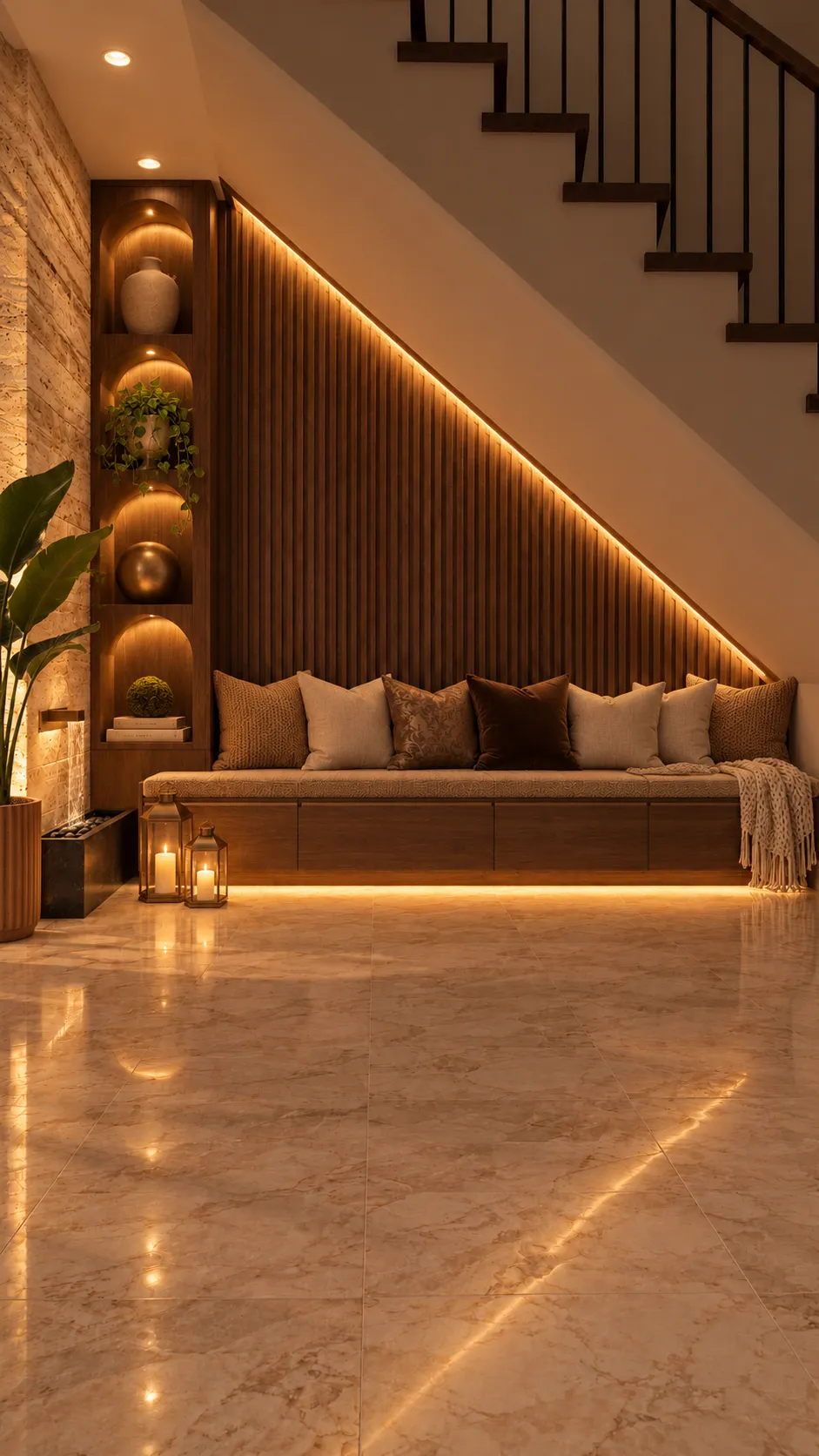 Staircase
Lujo Cálido
The slatted plane fills the whole triangle the staircase leaves, and along the top edge, right…
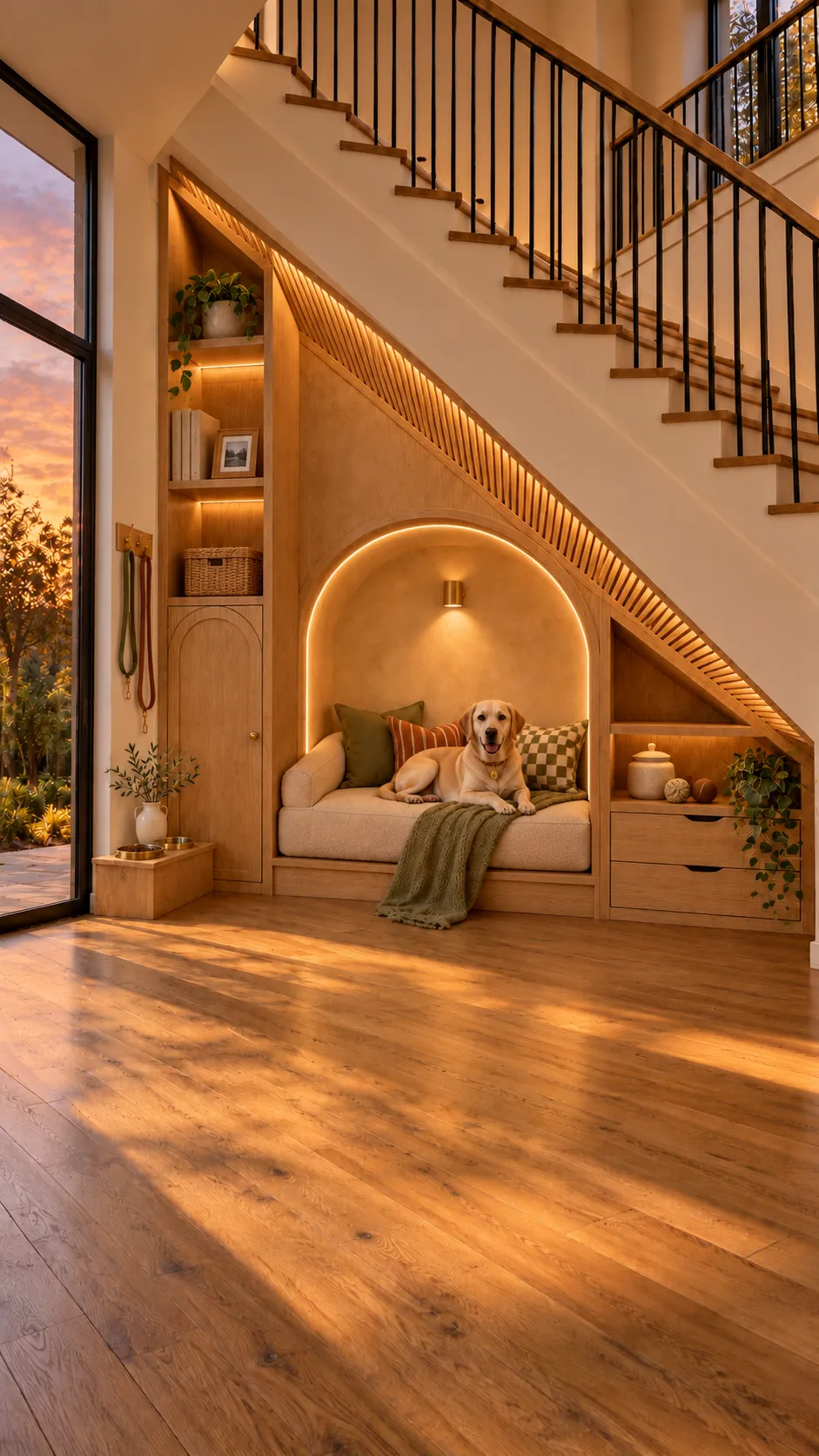 Staircase
Natural Familiar
The dog's bed sits inside an arch cut into the staircase front, not against it. That difference…
 Tu Casa