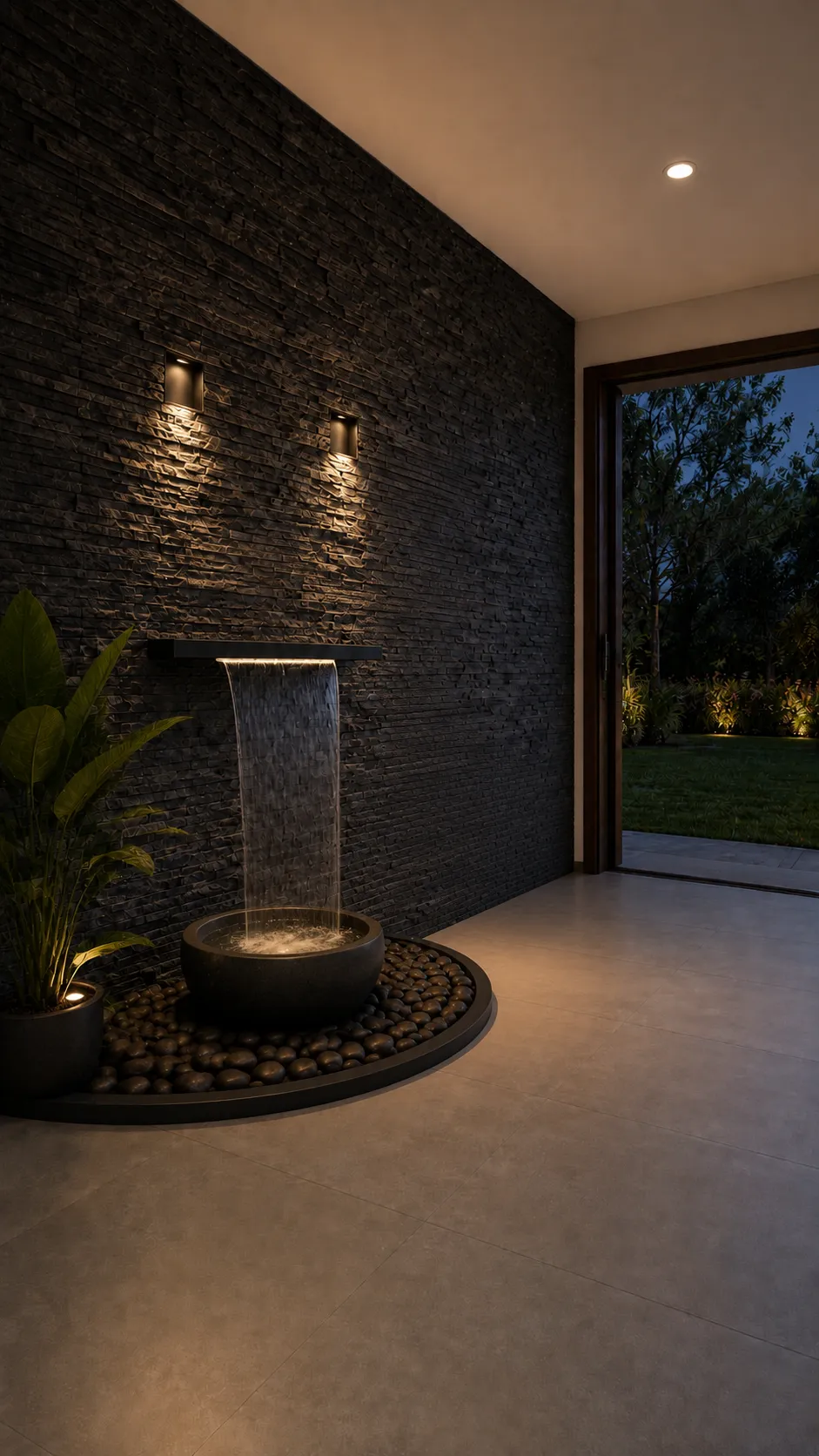
This waterfall has no built basin and no light of its own, and both absences are decisions. The water falls from a channel set into the stone into a stone bowl standing on the floor, which serves as both basin and reservoir, so nothing had to be cut into the paving. And the flow carries no LED at all: you see it because the two sconces graze the stacked stone behind, and the sheet picks up that shine. Around it, a ring of dark pebble catches the spray before it reaches the porcelain.
Items shown are similar to those in the video, not necessarily identical.
A round bowl in cast stone or granite, used as basin and reservoir at once. What to check is capacity in litres rather than diameter: with a sheet falling into it, a shallow bowl means topping up every couple of days. Check the inside is sealed too, because porous stone weeps and leaves the floor damp around the base.
See similar on Amazon(paid link)A stopcock or regulator fitted into the pipe between pump and weir. It's the part almost nobody plans for and the one that changes the result most: it lets you turn the flow down until it stops splashing and sounding like a shower, without changing the pump. Mount it somewhere accessible, not inside the bowl, so you can adjust it without putting a hand in the water.
See similar on Amazon(paid link)An EPDM rubber liner laid under the pebble and beneath the bowl, catching what splashes and either returning it or at least keeping it off the paving. It's what separates a setup that lasts years from one that eventually stains the floor. Buy it in one piece and oversized: joins are where water always ends up getting through.
See similar on Amazon(paid link)A colourless matt-effect sealer that closes the pores without adding shine, applied to the stacked stone before the water is switched on. The finish matters: wet-look sealers darken the stone and leave a glossier patch exactly where it splashes, which is worse than not sealing. Two thin coats on completely dry stone, never on a freshly laid wall.
See similar on Amazon(paid link)A mini projector that stands on the floor or spikes into the pot, aimed up through the plant. With a large leaf, the point is the shadow it throws on the wall, so place it fairly close to the stem and slightly off centre. Indoors it needn't be weatherproof, but it does want a slim cable and a small plug, because it will be visible behind the planter.
See similar on Amazon(paid link)Some links on this page are affiliate links. If you make a purchase through them, we may earn a commission at no extra cost to you.
 Living room
Japonés Contemporáneo
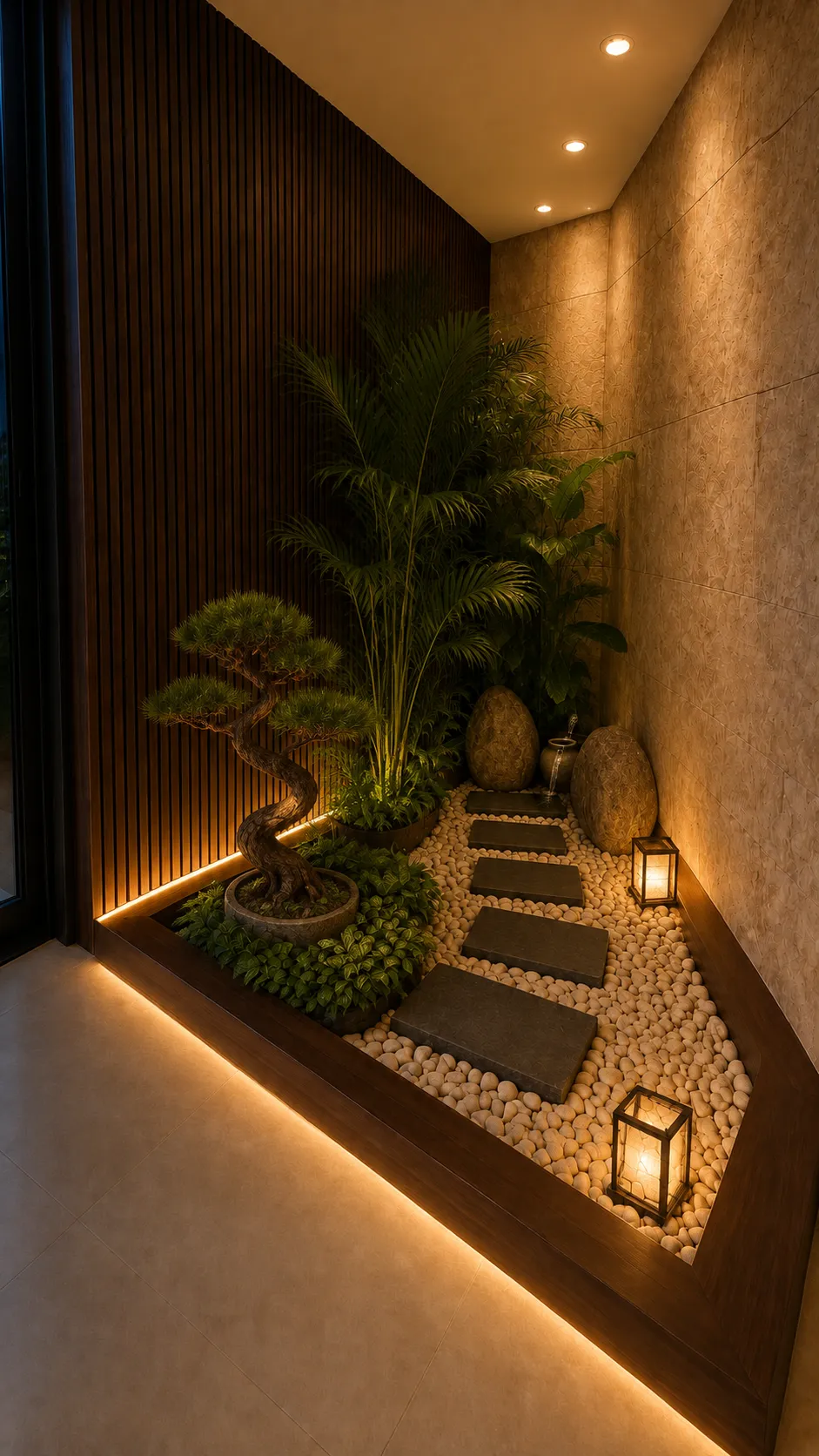
This corner is barely a metre and a half across and nobody walks into it: it's looked at, and…
 Living room
Cálido Contemporáneo
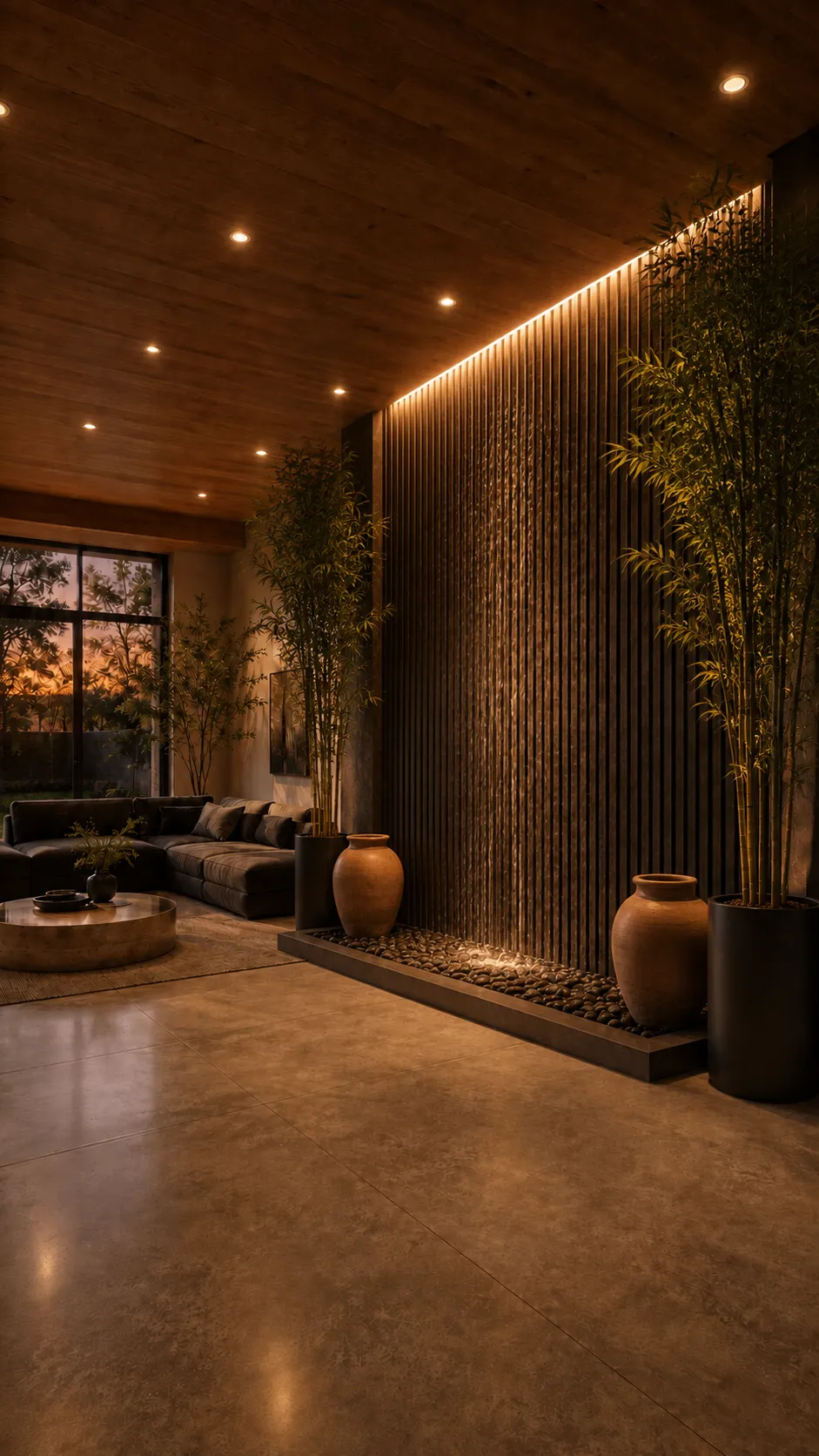
This water curtain isn't set against a wall: it is the wall. It separates the living room from…
 Living room
Moderno Nórdico
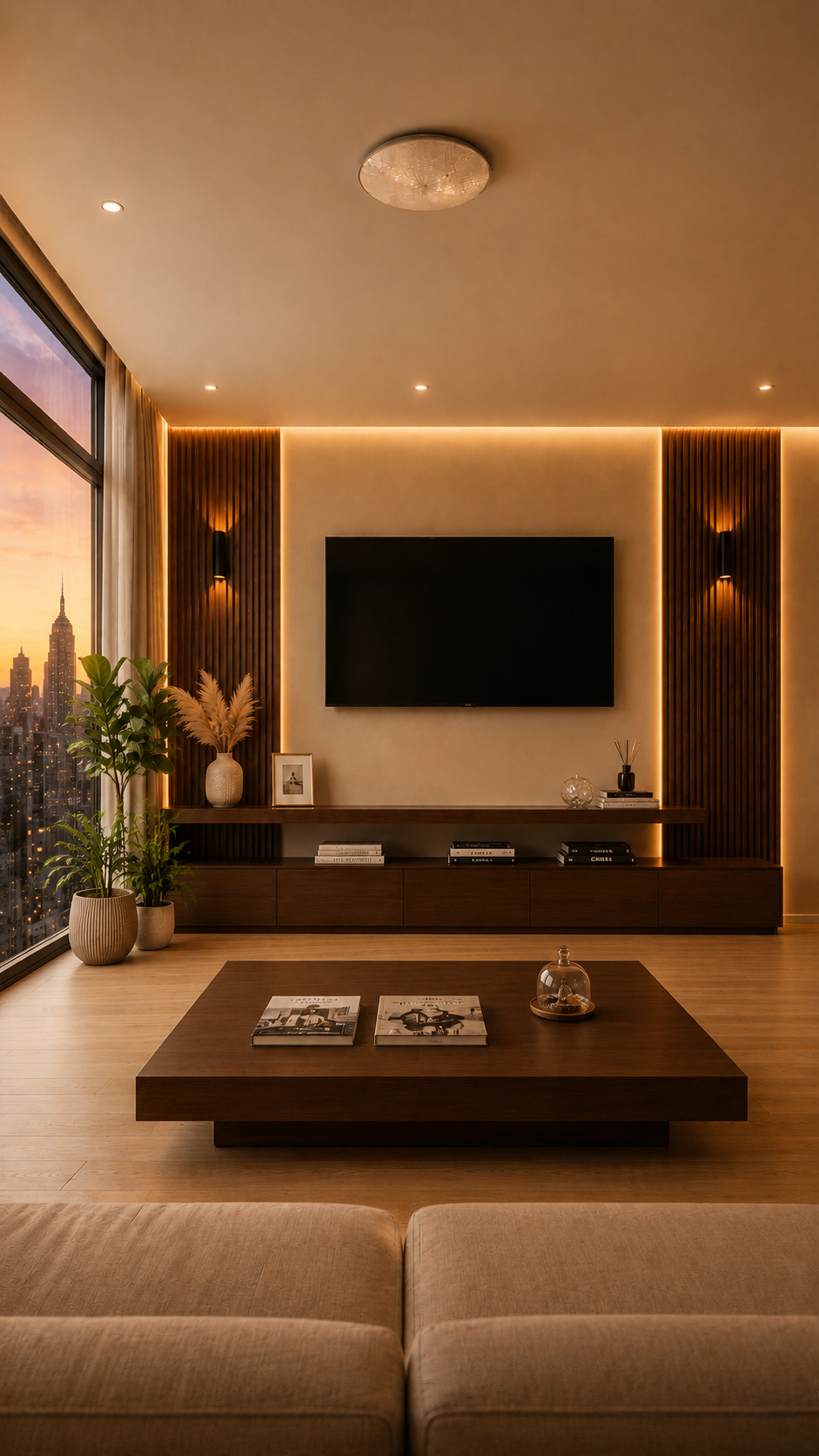
A city-view living room where dark wood slat panels flank the TV, illuminated by black cylindrical…
 Tu Casa