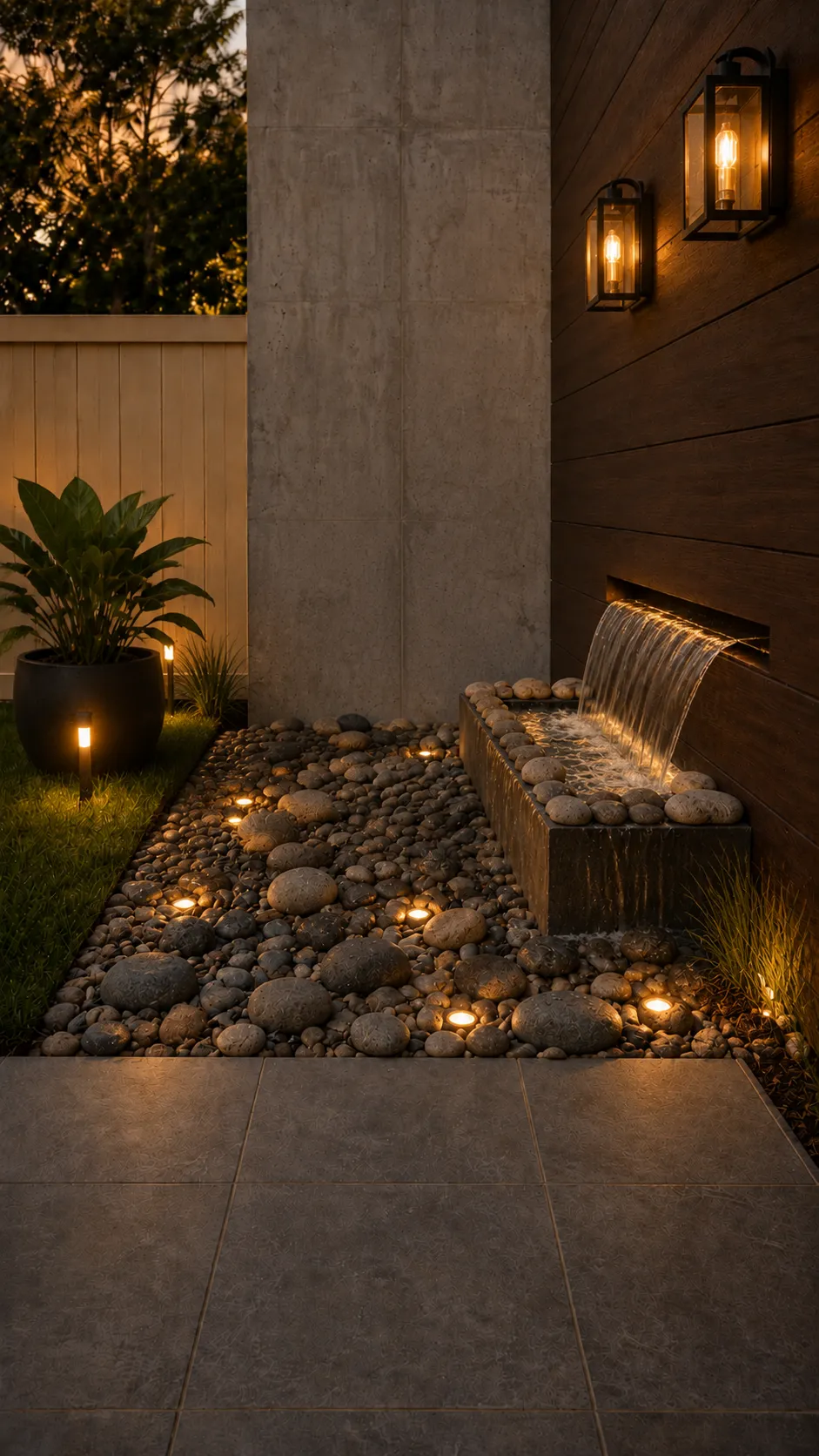
What stops this corner reading as a gravel bed is that the stones aren't all the same. There are large loose boulders, intermediate sizes and fine aggregate filling between them, which is exactly how water sorts stone after years of running over it. The waterfall's trough ends precisely where the stone begins, so the eye reads the two as one thing: the water falling and the dry channel it would have run off along.
Items shown are similar to those in the video, not necessarily identical.
A rake with widely spaced tines, which is the sort that works on a stone bed: it passes between the stones dragging leaves without carrying the aggregate along with it. An ordinary close-tined garden rake does the opposite and leaves the bed churned up. Go for a wide head and a long handle, because on a stone surface you work standing and pulling towards you, not crouched.
See similar on Amazon(paid link)The tool that genuinely solves a stone bed, because it lifts leaves out from between the stones without shifting the aggregate, provided you work at an angle rather than straight on. At full power aimed downward the opposite happens: the fine material lifts and leaves a bare patch. For a courtyard a mid-range battery model is plenty, and variable speed matters for exactly this reason.
See similar on Amazon(paid link)Tongue-and-groove board for cladding an exterior face, which is what forms the backdrop to the waterfall here. It has to go on battens with a ventilated cavity behind, never flat against the wall, and with water involved the bottom board shouldn't reach the ground. If the face will take constant splash, thermally modified timber or composite lasts far better than ordinary treated pine.
See similar on Amazon(paid link)A wall lantern with an exposed frame and glass on all four faces, spreading light in every direction rather than throwing it against the wall. On a timber face, mount them in pairs at different heights following the line of the boards, because set at the same level they compete with the horizontal joints. Check the IP rating and, if the face catches spray from a water feature, make it at least IP44.
See similar on Amazon(paid link)A large-format planter in concrete or fibre cement, the sort that takes the weight of a big-leaved plant without blowing over. The practical difference is the material: solid concrete is so heavy that once placed it doesn't move, while fibre cement copies the finish at a fraction of the weight, which is what you want on a slab or if you plan to move it. In both cases check it comes with a drainage hole.
See similar on Amazon(paid link)Some links on this page are affiliate links. If you make a purchase through them, we may earn a commission at no extra cost to you.
 Garden
Oasis Tropical
The ring of boulders around the pool is what gives it the air of a natural bathing pool, and also…
 Garden
Contemporáneo
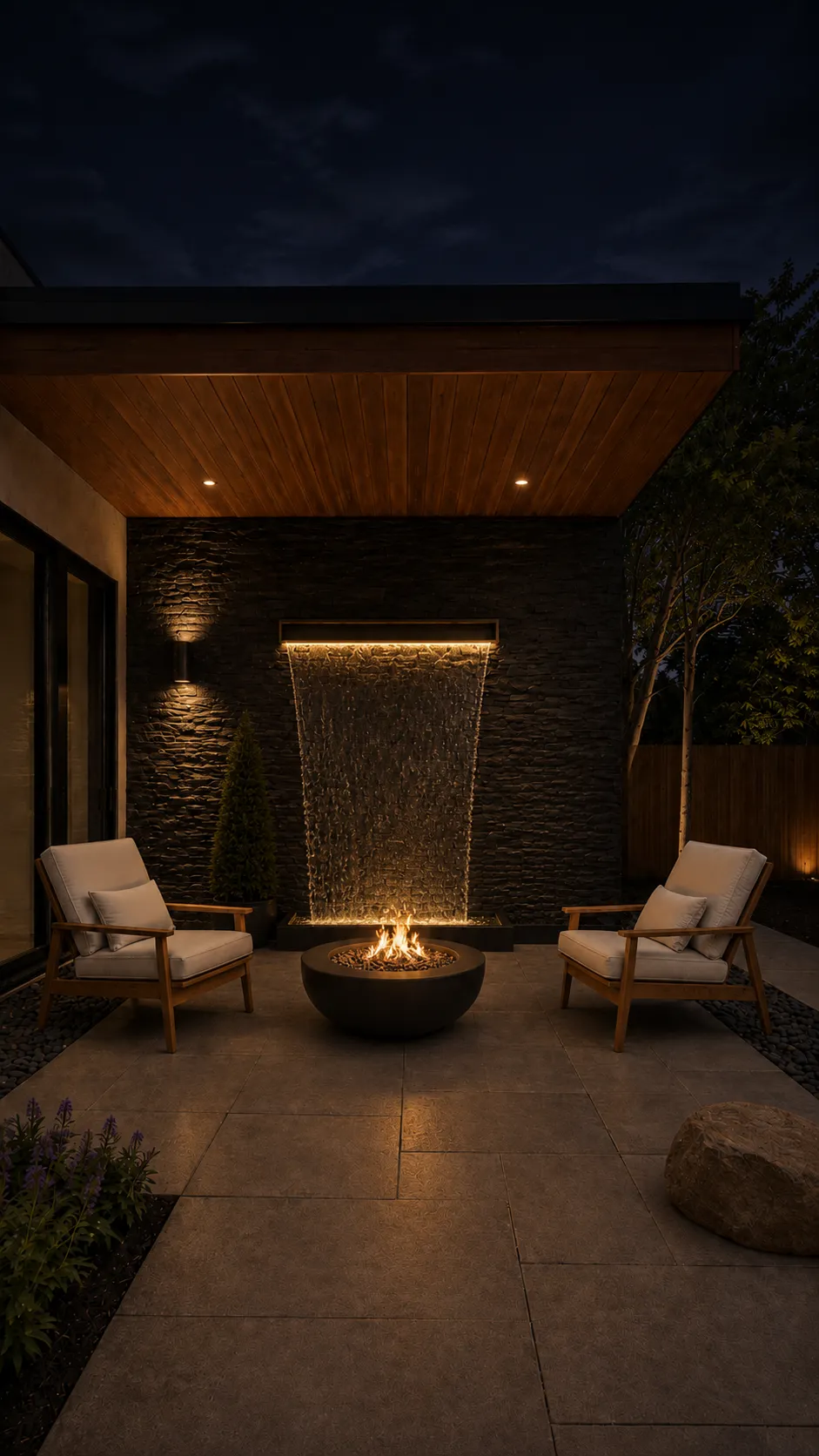
A courtyard built to be used after dark, with water and fire set facing each other on the same…
 Garden
Zen Contemporáneo
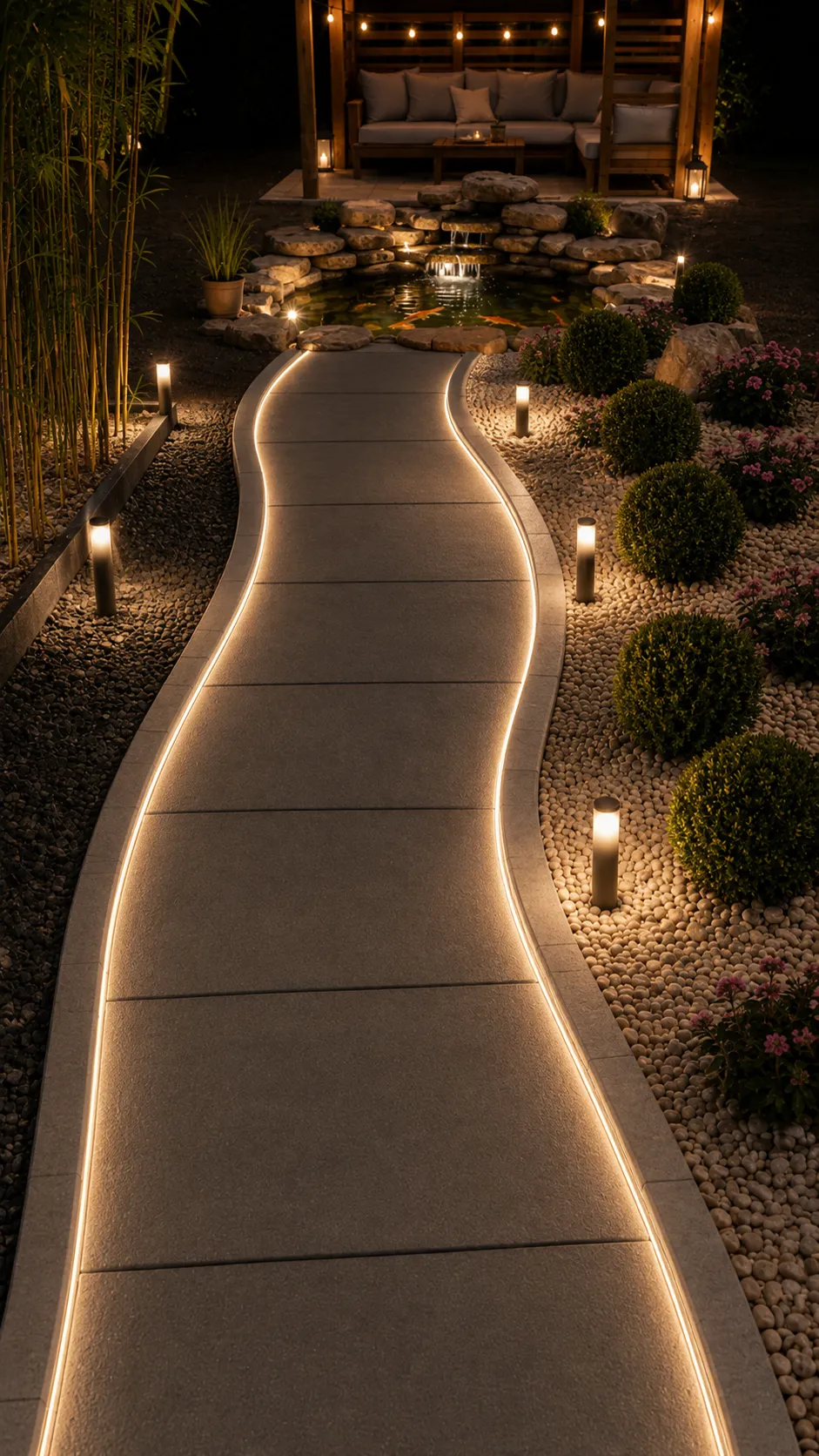
The path isn't lit by lamps aimed at it: it carries a continuous LED strip housed in both its…
 Tu Casa